Anthropomorphic Chert/Flint Stone Effigy
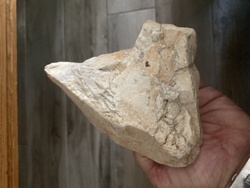
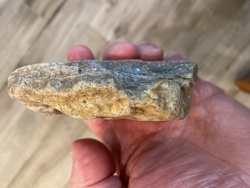
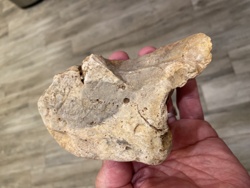
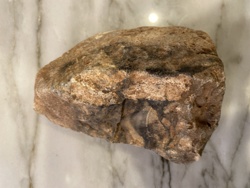
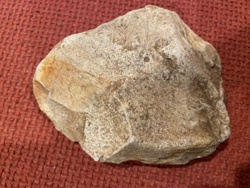
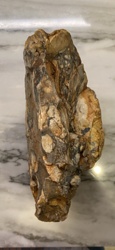
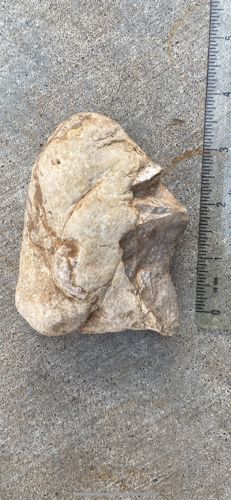
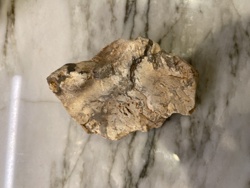
This item is an irregular, weather-worn stone object measuring approximately 4 inches by 3 inches, composed of a light tan to beige sedimentary stone, likely chert or a high-silica flint common to the Oklahoma region. The object is being identified as a potential prehistoric anthropomorphic or zoomorphic effigy. It exhibits a natural, rounded profile on one side with a more jagged, fractured surface on the opposite, creating a silhouette that resembles a human head in profile with a defined brow, recessed eye area, and protruding jawline or 'nose' feature. The surface shows a mixture of river-worn smoothness and more recent mechanical fracturing, which may be interpreted as intentional flaking or debitage. The coloration is fairly uniform with minor iron staining or mineral patina (brownish streaks) consistent with being buried or exposed to the elements over a long period. There are no definitive maker's marks or clear percussion bulbs that unmistakably prove human modification; however, the ergonomic shape suggests it could have served as a hand-held multi-tool (scraper or chopper) in addition to its symbolic appearance. The condition is raw and uncleaned, with significant natural pitting and edge wear. While the resemblance to a profile may be pareidolia (finding patterns in natural objects), the context of its find in Guthrie, OK suggests it originates from geological strata associated with indigenous nomadic populations, potentially dating from the Archaic to Woodland periods.
AI-Generated Appraisal Disclaimer
Estimated Value
$10 - $25
Basic Information
Category
Archaeological Artifacts / Prehistoric Stone Tools
Appraised On
February 17, 2026
Estimated Value
$10 - $25
Additional Details Provided By Owner
User Provided Information
Prehistoric stone age multi tool/ effigy measuring 4" x 3" and found in Guthrie, OK
Item Description
This item is an irregular, weather-worn stone object measuring approximately 4 inches by 3 inches, composed of a light tan to beige sedimentary stone, likely chert or a high-silica flint common to the Oklahoma region. The object is being identified as a potential prehistoric anthropomorphic or zoomorphic effigy. It exhibits a natural, rounded profile on one side with a more jagged, fractured surface on the opposite, creating a silhouette that resembles a human head in profile with a defined brow, recessed eye area, and protruding jawline or 'nose' feature. The surface shows a mixture of river-worn smoothness and more recent mechanical fracturing, which may be interpreted as intentional flaking or debitage. The coloration is fairly uniform with minor iron staining or mineral patina (brownish streaks) consistent with being buried or exposed to the elements over a long period. There are no definitive maker's marks or clear percussion bulbs that unmistakably prove human modification; however, the ergonomic shape suggests it could have served as a hand-held multi-tool (scraper or chopper) in addition to its symbolic appearance. The condition is raw and uncleaned, with significant natural pitting and edge wear. While the resemblance to a profile may be pareidolia (finding patterns in natural objects), the context of its find in Guthrie, OK suggests it originates from geological strata associated with indigenous nomadic populations, potentially dating from the Archaic to Woodland periods.
Get Your Items Appraised
Instant estimates of your treasures with AI-powered instant appraisals