Antique Cast Iron Comal or Griddle Plate
Antique Kitchenware / Cast Iron Cookware

Antique Cast Iron Comal or Griddle Plate

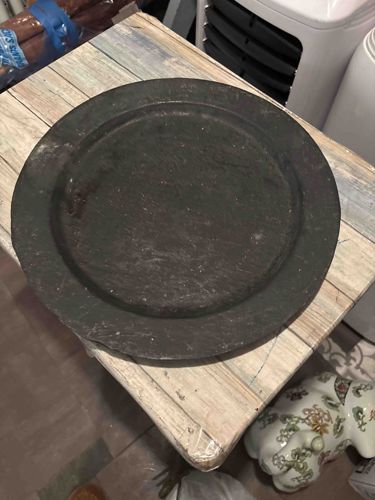
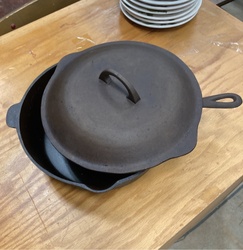
This item is an antique circular griddle plate, commonly known as a 'comal' in Mexican and Central American traditions, or a bake stone. It is constructed from heavy-duty cast iron, characterized by a dark, matte, and heavily weathered surface. The plate features a wide, flat cooking surface with a shallow rim around the outer edge to contain oils or batter. The metal shows significant signs of age and long-term use, including a thick layer of carbon buildup, oxidation, and surface pitting. There is a deep, dark patina consistent with years of seasoning or exposure to high-heat open-flame cooking. The edges are somewhat irregular and lack the precision of modern machine-tooled cookware, suggesting a late 19th to early 20th-century casting method. No visible maker's marks or stamps are discernible in this view, which is common for utilitarian hearth tools of this age. The overall condition indicates a functional tool that has endured significant environmental exposure, resulting in some surface scaling and potential rust beneath the carbon layer. Its rustic appearance and heavy mass are indicators of traditional craftsmanship designed for durability.

Estimated Value

$45.00 - $75.00

Basic Information

Category

Antique Kitchenware / Cast Iron Cookware

Appraised On

February 4, 2026

Estimated Value

$45.00 - $75.00

Item Description

This item is an antique circular griddle plate, commonly known as a 'comal' in Mexican and Central American traditions, or a bake stone. It is constructed from heavy-duty cast iron, characterized by a dark, matte, and heavily weathered surface. The plate features a wide, flat cooking surface with a shallow rim around the outer edge to contain oils or batter. The metal shows significant signs of age and long-term use, including a thick layer of carbon buildup, oxidation, and surface pitting. There is a deep, dark patina consistent with years of seasoning or exposure to high-heat open-flame cooking. The edges are somewhat irregular and lack the precision of modern machine-tooled cookware, suggesting a late 19th to early 20th-century casting method. No visible maker's marks or stamps are discernible in this view, which is common for utilitarian hearth tools of this age. The overall condition indicates a functional tool that has endured significant environmental exposure, resulting in some surface scaling and potential rust beneath the carbon layer. Its rustic appearance and heavy mass are indicators of traditional craftsmanship designed for durability.
Get Your Items Appraised

Instant estimates of your treasures with AI-powered instant appraisals

Browse More Appraisals