AI Appraisal Estimate

AI-generated estimates · not official valuations

From the user

What was submitted

Photo and notes provided by the user — not generated by AI

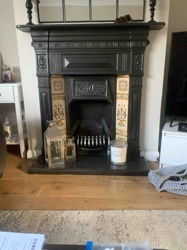
Submitted item photo
Submitted photo · May 24, 2026

User's notes

Cast iron (pair)

AI analysis below

AI appraisal

AI analysis & estimate

AI-Generated · Verify before acting

Everything below is generated by AI for informational purposes only. AI can make mistakes — the AI may misidentify items or misattribute them (artist, maker, brand, designer, origin, era). This is not an official valuation and should not be used for insurance, sale, tax, estate, legal, or lending purposes — or any decision requiring a certified appraisal. It is not an authoritative claim about any person, brand, or rights holder — do not share or rely on it as a factual statement about a third party. Always consult qualified professionals before making financial decisions.

Note

This analysis also relies on unverified notes provided by the user, which may be incomplete or inaccurate and could affect the result.

Read the full disclaimer

AI Identification

·Not independently authenticated·Verify before acting

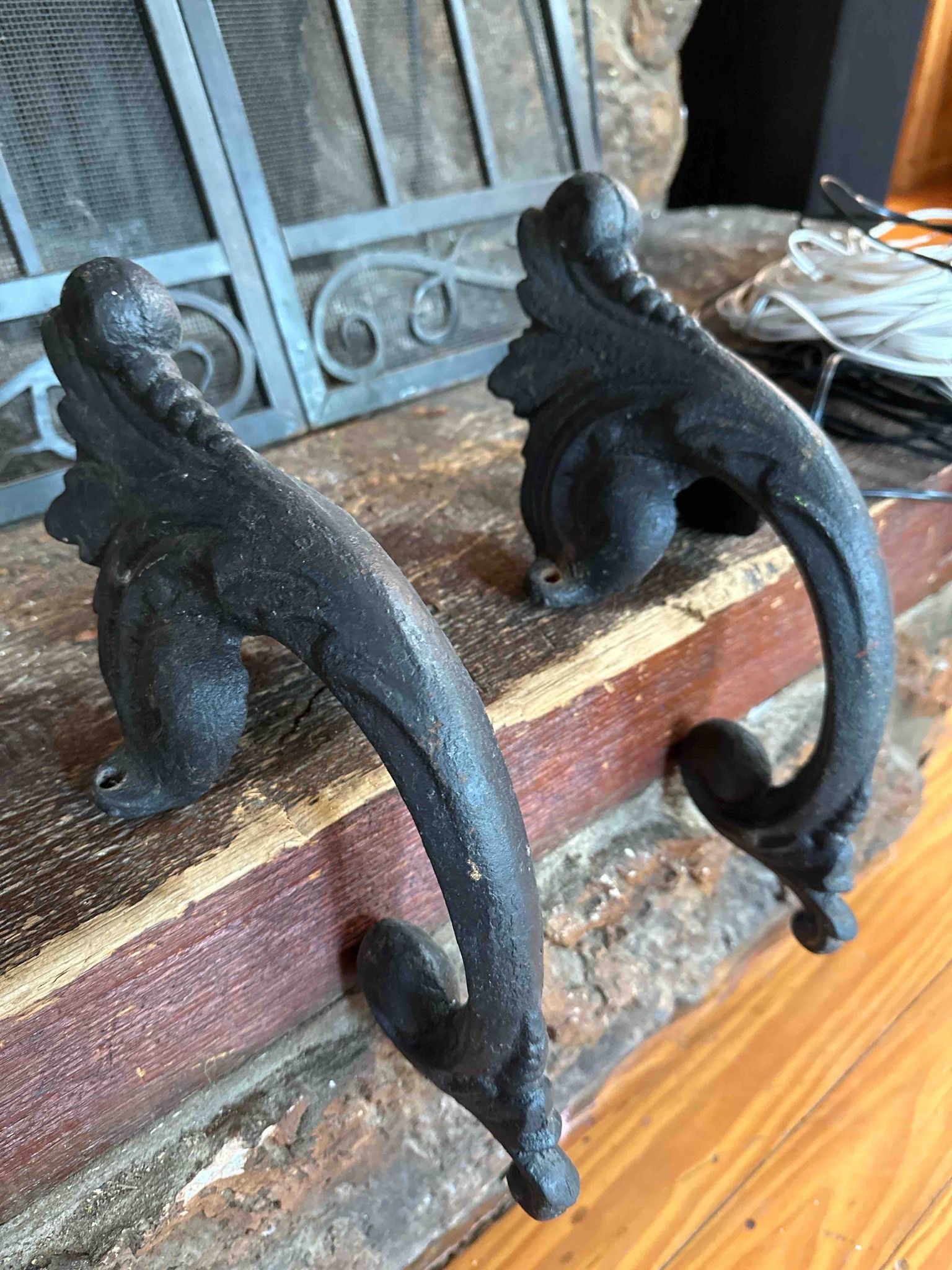
Pair of Antique Victorian Style Cast Iron Hearth Fenders/Andirons

Antique Architectural Hardware / Fireplace Accessories

AI Estimated Value

·Not an official valuation·Verify before acting

$150 - $250

As of May 24, 2026

AI Item Analysis

·AI can make mistakes·Verify before acting
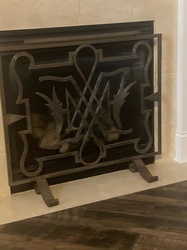
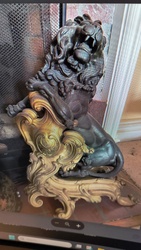
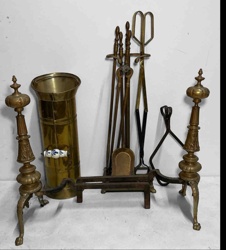
This is a matching pair of decorative cast iron fireplace accessories, likely serving as hearth fenders or short decorative andirons. Each piece is constructed from heavy-duty cast iron and features an ornate Rococo or Victorian-inspired aesthetic with heavy scrollwork, acanthus leaf detailing, and beaded ridges. They exhibit a characteristic matte black finish, typical of coal or wood-burning fireplace equipment. The items are approximately 8 to 12 inches in length with a distinctive curved silhouette that arches outward, terminating in a rounded finial on one side and an mounting foot on the other. The condition presents significant age-appropriate wear. There is visible surface oxidation and light rust pitting appearing through the finish, particularly along the lower undersides and edges where heat exposure is most intense. The cast iron shows the granular texture typical of older sand-molding techniques, indicating late 19th to early 20th-century manufacture. No specific maker’s marks are visible in the current orientation, but the high-relief casting suggests quality industrial production of the Victorian era. The heavy weight and robust material construction are indicators of durability and practical utility in a high-heat environment. These pieces are intended to be secured to a hearth or used as guards to prevent logs from rolling out, combining both functional protection and architectural ornamentation.
AI Appraisal Report

·AI can make mistakes·Verify before acting
I have carefully examined the pair of cast iron hearth fenders/andirons. Based on the ocular evidence, these pieces exhibit the stylistic hallmarks of the late Victorian era, specifically the Rococo Revival movement characterized by flamboyant C-scrolls and acanthus leaf molding. The granular surface texture is consistent with late 19th-century sand-casting methods. The condition is fair to good; the oxidation and pitting noted are typical for ironware subject to thermal cycling, actually supporting the item's age, though the rust slightly diminishes the decorative value for collectors seeking pristine architectural salvage. The market for antique fireplace hardware remains steady, though values have softened since the mid-20th century as modern heating replaces traditional hearths. Comparables for unsigned cast iron guards of this size typically fluctuate between $75 and $125 per piece. Because these are a matching pair, they command a slight premium due to the difficulty of finding symmetrical sets in the secondary market. Rarity is moderate; while such patterns were mass-produced in industrial centers like Philadelphia or Birmingham, many were scrapped for iron during wartime drives. Limitations: My assessment is based on visual analysis only. Full authentication would require an in-person inspection to verify the presence of hidden foundry marks (often found on the reverse mounting flange) and a 'ring test' to check for hairline fractures in the iron. To definitively confirm the era, one would need provenance documentation or a metallurgical analysis of the slag content. Without these, I am attributing the date based on aesthetic finish and wear patterns. The current valuation assumes the structural integrity of the mounting feet remains sound.

Get your items appraised

Instant estimates of your treasures with AI-powered appraisals

Browse More Appraisals