Sauropod Dinosaur Rib Bone Fragment
Paleontological Specimens / Fossils

Sauropod Dinosaur Rib Bone Fragment

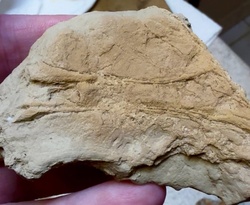
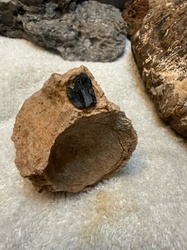
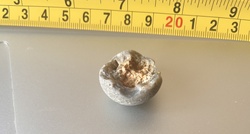
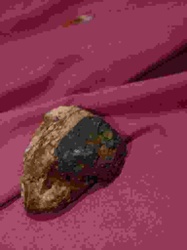
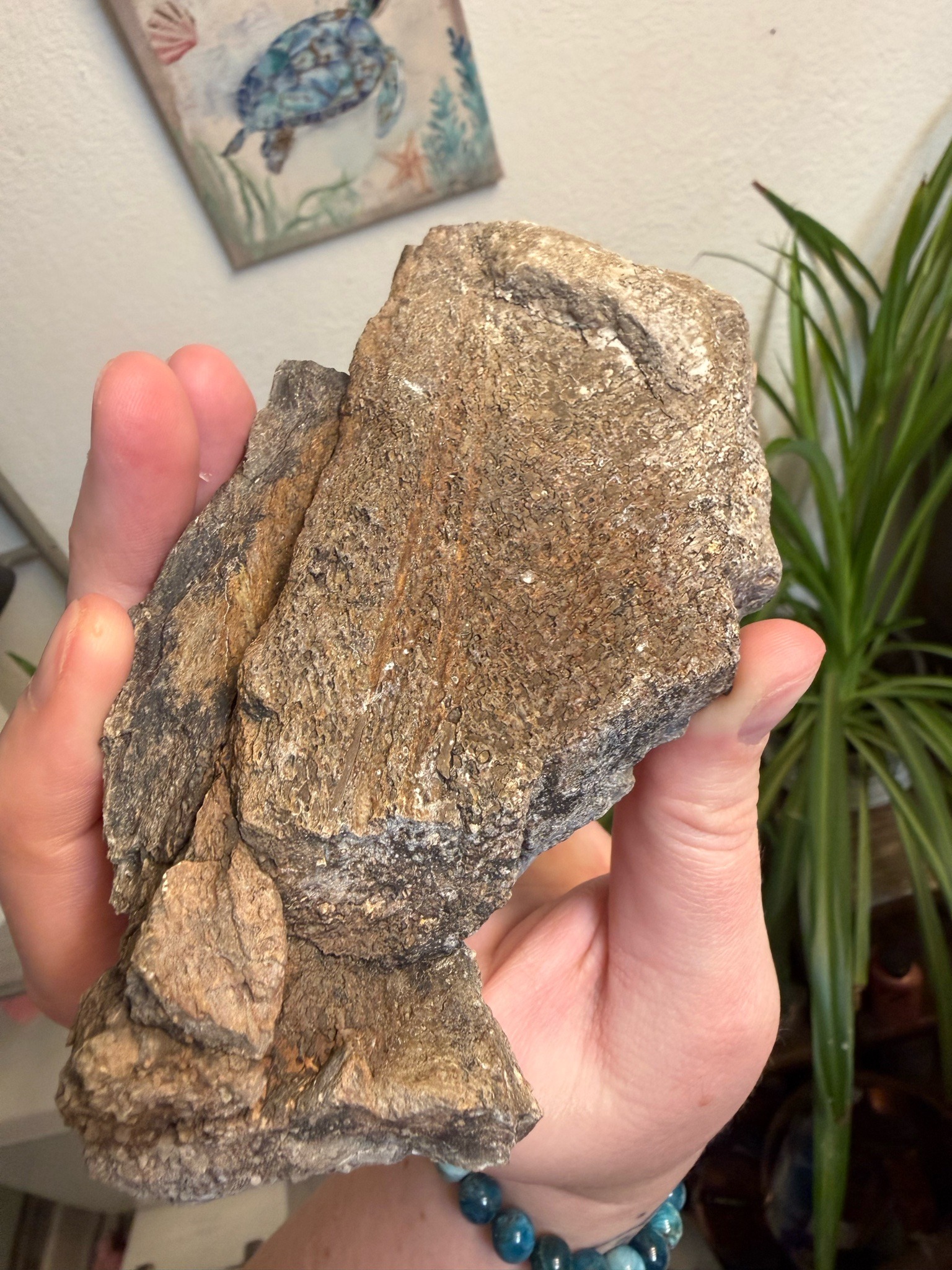
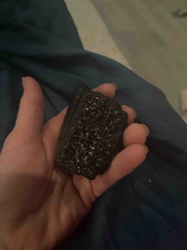
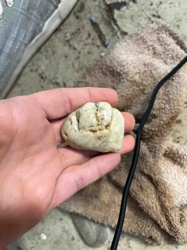
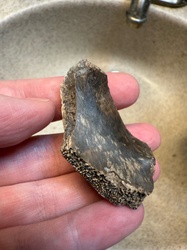
This specimen is a fossilized rib bone fragment from a Sauropod dinosaur, recovered from Moffat County, Colorado. Physically, the item measures approximately 4 to 5 inches in length, exhibiting a flattened, blade-like cross-section characteristic of large herbivorous dinosaur ribs. The material is fully permineralized, displaying a range of earth tones including tan, ochre, and deep charcoal gray. The surface texture is notable for its preserved cortical bone and visible trabecular (spongy) internal structure, which is common in dinosaurian remains. There are visible longitudinal striations along the flat surface, indicating original bone grain. The condition is representative of field-collected material; it is a partial section with rough, weathered edges and missing terminal ends. There is evidence of natural fractures and some matrix adhesion in the recesses. The presence of internal 'honeycomb' structures confirms its biological origin. Based on the locality and specimen morphology, it is likely from the Morrison Formation, dating to the Late Jurassic period (approximately 150 million years ago). The specimen lacks formal preparator marks but shows high-quality mineral replacement that retains significant anatomical detail.
Estimated Value

$125.00 - $225.00

Basic Information

Category

Paleontological Specimens / Fossils

Appraised On

May 13, 2026

Estimated Value

$125.00 - $225.00

Additional Details Provided By Owner

User Provided Information

Sauropod rib fragment from Moffat county Colorado

Item Description

This specimen is a fossilized rib bone fragment from a Sauropod dinosaur, recovered from Moffat County, Colorado. Physically, the item measures approximately 4 to 5 inches in length, exhibiting a flattened, blade-like cross-section characteristic of large herbivorous dinosaur ribs. The material is fully permineralized, displaying a range of earth tones including tan, ochre, and deep charcoal gray. The surface texture is notable for its preserved cortical bone and visible trabecular (spongy) internal structure, which is common in dinosaurian remains. There are visible longitudinal striations along the flat surface, indicating original bone grain. The condition is representative of field-collected material; it is a partial section with rough, weathered edges and missing terminal ends. There is evidence of natural fractures and some matrix adhesion in the recesses. The presence of internal 'honeycomb' structures confirms its biological origin. Based on the locality and specimen morphology, it is likely from the Morrison Formation, dating to the Late Jurassic period (approximately 150 million years ago). The specimen lacks formal preparator marks but shows high-quality mineral replacement that retains significant anatomical detail.
Get Your Items Appraised

Instant estimates of your treasures with AI-powered instant appraisals

Browse More Appraisals