Ametrine Crystal Cluster
Minerals & Semiprecious Stones

Ametrine Crystal Cluster

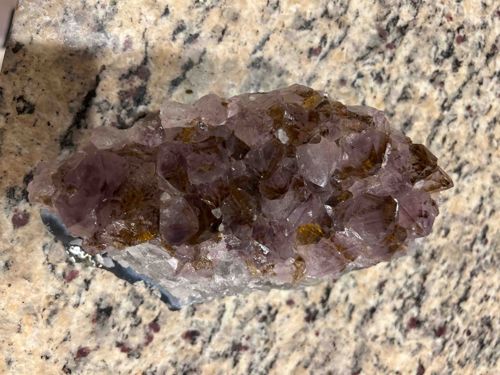
This specimen is a natural ametrine crystal cluster, which is a rare, naturally occurring combination of amethyst and citrine quartz within the same crystal. The piece features an elongated, roughly horizontal form with numerous protruding crystalline terminations of varying sizes. The color palette is dominated by pale lavender to medium purple (amethyst) interspersed with distinct golden-amber to brownish-yellow zones (citrine), indicative of iron impurities at different oxidation states during the mineral's formation. The crystals exhibit a vitreous luster and varying degrees of transparency, transitioning from translucent to nearly opaque at the base. Physically, the piece appears to be a section of a larger geode or mineral vein, with a matrix of lighter-colored quartz at the bottom. The terminations appear largely intact, though some minor chipping or natural abrasions on the crystal faces are visible, consistent with mining and handling of raw mineral specimens. Such specimens are highly sought after by collectors for their unique bi-color aesthetic and are primarily sourced from the Anahi mine in Bolivia. The craftsmanship is entirely geological, showing no signs of artificial cutting, polishing, or synthesis.
Estimated Value

$450 - $650

Basic Information

Category

Minerals & Semiprecious Stones

Appraised On

February 6, 2026

Estimated Value

$450 - $650

Item Description

This specimen is a natural ametrine crystal cluster, which is a rare, naturally occurring combination of amethyst and citrine quartz within the same crystal. The piece features an elongated, roughly horizontal form with numerous protruding crystalline terminations of varying sizes. The color palette is dominated by pale lavender to medium purple (amethyst) interspersed with distinct golden-amber to brownish-yellow zones (citrine), indicative of iron impurities at different oxidation states during the mineral's formation. The crystals exhibit a vitreous luster and varying degrees of transparency, transitioning from translucent to nearly opaque at the base. Physically, the piece appears to be a section of a larger geode or mineral vein, with a matrix of lighter-colored quartz at the bottom. The terminations appear largely intact, though some minor chipping or natural abrasions on the crystal faces are visible, consistent with mining and handling of raw mineral specimens. Such specimens are highly sought after by collectors for their unique bi-color aesthetic and are primarily sourced from the Anahi mine in Bolivia. The craftsmanship is entirely geological, showing no signs of artificial cutting, polishing, or synthesis.
Get Your Items Appraised

Instant estimates of your treasures with AI-powered instant appraisals

Browse More Appraisals