AI estimate as of August 9, 2025 · verify with a professional before acting
AI-Generated · Verify before acting
Everything on this page is generated by AI for informational purposes only. AI can make mistakes — the AI may misidentify items or misattribute them (artist, maker, brand, designer, origin, era). This is not an official valuation and should not be used for insurance, sale, tax, estate, legal, or lending purposes — or any decision requiring a certified appraisal. It is not an authoritative claim about any person, brand, or rights holder — do not share or rely on it as a factual statement about a third party. Always consult qualified professionals before making financial decisions.
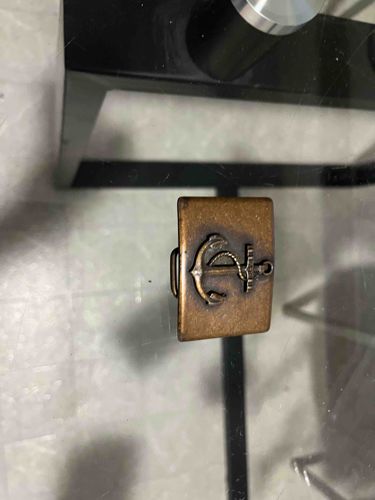
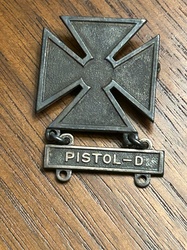
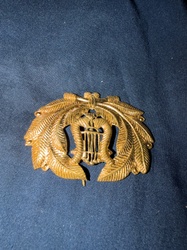
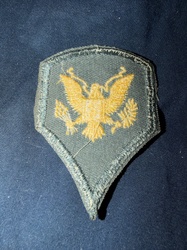
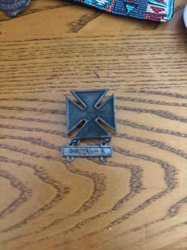
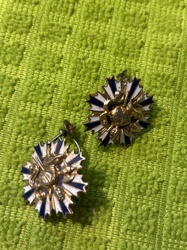
This item is a rectangular bronze or brass military buckle or insignia, featuring a prominent embossed anchor design. The material displays a deep, rich brown patina consistent with aged bronze or brass, indicating a moderate level of oxidation. The anchor motif, typically associated with naval or maritime forces, is rendered in relief, showing a clear stock, shank, and flukes, with what appears to be a rope or chain entwined around its upper portion. The overall dimensions appear to be small, suggesting it could be a belt buckle for a smaller strap, a uniform insignia, or even part of a jewelry piece. The surface shows some minor scratches and wear on the raised areas of the anchor, which is typical for an object of this type that has seen some use or handling. There are no immediately visible maker's marks, signatures, or specific dates, but the style of the anchor and the material suggest it could date from the early to mid-20th century. The craftsmanship appears to be industrial, with a well-defined relief, but not necessarily fine artistic detail. The reverse side, though not fully visible, seems to have a loop mechanism for attachment, indicating its function as a buckle or clasp.
AI Appraisal Report
Upon visual examination of this Naval Anchor Motif Buckle/Insignia, I assess its condition as good, displaying a consistent, aged bronze or brass patina indicative of moderate oxidation. The embossed anchor design is well-preserved with clear detailing of the stock, shank, flukes, and entwined rope/chain. Minor surface wear and scratches on raised areas are consistent with an object of this type, suggesting past use and handling but not abuse. Authenticity, based solely on visual attributes, appears favorable for a period piece; the craftsmanship aligns with industrial production of the early to mid-20th century. However, definitive authentication is limited without physical inspection.
In terms of market conditions, similar military buckles and insignias, particularly those with naval motifs, generally find a stable but niche market among militaria collectors, maritime history enthusiasts, and reenactors. Comparables for generic un-attributed pieces of this era typically range from $20 to $75. Factors significantly impacting value include specific unit attribution, known provenance, rare design variations, or a connection to a significant historical event or figure. Without such details, this piece falls into a more common category.
Demand for generic naval insignias is moderate, but this item is not particularly rare given the widespread use of anchor motifs. Its smaller size might broaden its appeal if it were definitively identified as a uniform component for a specific branch or rank.
Limitations in authenticity verification are significant based on images alone. A full in-person examination would be crucial to confirm material composition through non-destructive testing (e.g., XRF analysis) to rule out modern reproductions made from similar-looking alloys. Physical inspection would also allow for detailed examination of the reverse side for maker's marks, attachment mechanisms, construction methods, and subtle signs of wear that can differentiate genuine age from artificial aging. Provenance documentation, such as service records or period photographs showing the item in use, would substantially enhance its value and confirm its historical context.