Acheulean Style Chert Hand Axe Scraper
Archaeological Artifact / Lithic Tool

Acheulean Style Chert Hand Axe Scraper

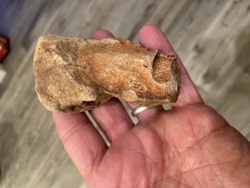
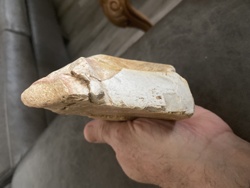
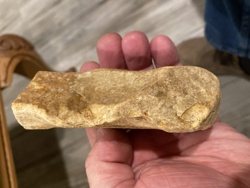
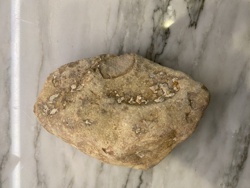
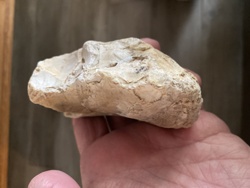
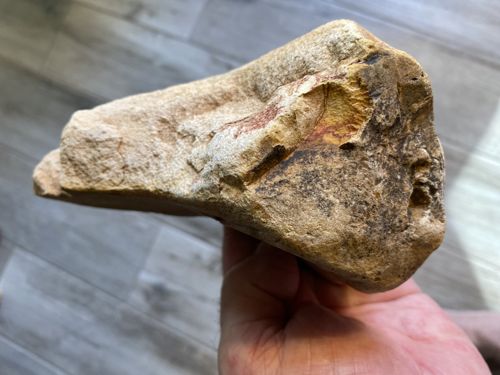
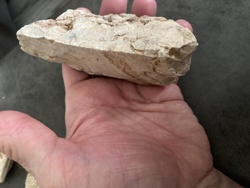
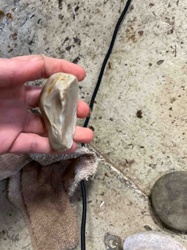
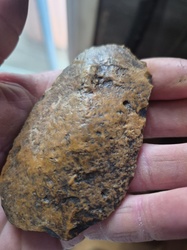
This specimen is a large lithic implement identified as a hand axe or scraper tool, originating from Guthrie, Oklahoma. Measuring approximately 5.50 inches by 4 inches, the object is crafted from a light tan to ochre-colored chert, showcasing the natural mineral variation and heavy patina typical of ancient stone tools. The physical construction features a robust, thick bifacial form with evidence of primary percussion flaking along the edges to create a functional cutting or scraping surface. One side reveals a more weathered, cortex-covered area, while the opposite side shows distinct flake scars and concavities where material was intentionally removed. The color palette includes shades of cream, sandstone, and deep rust-colored iron oxide staining, which penetrates the fissures of the stone. Notable features include a tapered butt end for gripping and a broader, more worked edge for utility. The condition appears stable but bears the marks of significant age, including rounded edges from fluvial or environmental smoothing and a thick surface oxidation that masks some of the finer knapping details. While the user identifies this as Acheulean, which is traditionally associated with Lower Paleolithic Old World hominids (Homo erectus), the presence of such a technology in Oklahoma would typically correspond to much later prehistoric North American lithic traditions or unique local variants of heavy-duty macrolithic tools. The quality of the craftsmanship indicates a functional, utilitarian object rather than a refined ceremonial piece, displaying clear intentionality in its manufacture.
Estimated Value

$150-$300

Basic Information

Category

Archaeological Artifact / Lithic Tool

Appraised On

February 19, 2026

Estimated Value

$150-$300

Additional Details Provided By Owner

User Provided Information

Lower Paleolithic Acheulean chert large hand axe scraper tool found in Guthrie OK measuring 5.50" 4"

Item Description

This specimen is a large lithic implement identified as a hand axe or scraper tool, originating from Guthrie, Oklahoma. Measuring approximately 5.50 inches by 4 inches, the object is crafted from a light tan to ochre-colored chert, showcasing the natural mineral variation and heavy patina typical of ancient stone tools. The physical construction features a robust, thick bifacial form with evidence of primary percussion flaking along the edges to create a functional cutting or scraping surface. One side reveals a more weathered, cortex-covered area, while the opposite side shows distinct flake scars and concavities where material was intentionally removed. The color palette includes shades of cream, sandstone, and deep rust-colored iron oxide staining, which penetrates the fissures of the stone. Notable features include a tapered butt end for gripping and a broader, more worked edge for utility. The condition appears stable but bears the marks of significant age, including rounded edges from fluvial or environmental smoothing and a thick surface oxidation that masks some of the finer knapping details. While the user identifies this as Acheulean, which is traditionally associated with Lower Paleolithic Old World hominids (Homo erectus), the presence of such a technology in Oklahoma would typically correspond to much later prehistoric North American lithic traditions or unique local variants of heavy-duty macrolithic tools. The quality of the craftsmanship indicates a functional, utilitarian object rather than a refined ceremonial piece, displaying clear intentionality in its manufacture.
Get Your Items Appraised

Instant estimates of your treasures with AI-powered instant appraisals

Browse More Appraisals