AI Appraisal Estimate

AI-generated estimates · not official valuations

From the user

What was submitted

Photo and notes provided by the user — not generated by AI

Submitted item photo
Submitted photo · June 10, 2026

User's notes

No additional notes provided.

AI analysis below

AI appraisal

AI analysis & estimate

AI-Generated · Verify before acting

Everything below is generated by AI for informational purposes only. AI can make mistakes — the AI may misidentify items or misattribute them (artist, maker, brand, designer, origin, era). This is not an official valuation and should not be used for insurance, sale, tax, estate, legal, or lending purposes — or any decision requiring a certified appraisal. It is not an authoritative claim about any person, brand, or rights holder — do not share or rely on it as a factual statement about a third party. Always consult qualified professionals before making financial decisions.

Read the full disclaimer

AI Identification

·Not independently authenticated·Verify before acting

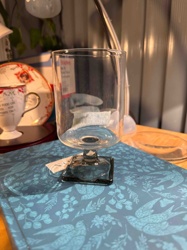
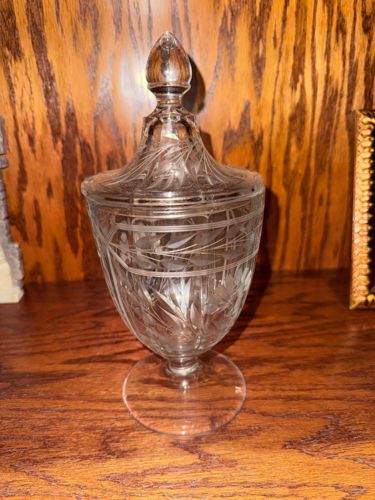
Vintage Gray-Cut Crystal Footed Candy Jar with Lid

Vintage Glassware / Collectibles

AI Estimated Value

·Not an official valuation·Verify before acting

$45 - $65

As of June 10, 2026

AI Item Analysis

·AI can make mistakes·Verify before acting
This is a vintage elegant glass candy or apothecary jar, composed of clear lead glass or high-quality soda-lime glass. It features a footed base with a short pedestal stem supporting a deep, tapered vessel. The exterior is decorated with a 'gray cut' floral pattern, specifically a laurel or wheat-leaf motif characterized by unpolished matte etchings against the polished clear glass. The design includes two horizontal bands of thin threading that encircle the upper third of the jar bowl, with delicate leaf sprays radiating diagonally. The matching lid is domed and culminates in a faceted or ribbed acorn-style finial. The construction exhibits characteristics typical of American Brilliant Period or Mid-Century Depression-era glass, likely dating between 1940 and 1960. The overall condition appears to be very good with no visible chips or significant clouding (sick glass) in the photograph, though minor surface scratches on the base would be consistent with age. The craftsmanship is refined, indicated by the symmetry of the cut pattern and the clarity of the glass. The finial is securely attached or molded as part of the lid structure, showing no signs of glue or repair. There are no immediate visible maker's marks, although such pieces were commonly produced by companies like Tiffin, Fostoria, or Heisey.

AI Appraisal Report

·AI can make mistakes·Verify before acting
Based on my visual examination of the provided imagery, I have assessed this vintage gray-cut crystal footed candy jar. The piece reflects the 'Elegant Glass' aesthetic popular between 1940 and 1960. The 'gray cut' laurel leaf motif suggests production by a high-quality American manufacturer such as Tiffin or Fostoria. The glass displays excellent clarity with no visible 'sick' clouding, and the hand-cut unpolished etchings show the precision expected of mid-century craftsmanship. The market for mid-century elegant glassware is currently stable but saturated. Comparables for footed apothecary jars with similar gray-cut floral motifs frequently realize between $40 and $75 at boutique antique venues or online marketplaces like Etsy and Ruby Lane. The acorn finial and faceted stem add approximately 20% to the base value compared to simpler molded alternatives. However, the lack of a definitive maker’s mark (common for these firms) caps the premium. Value is heavily dependent on the absence of 'flea bites' on the inner rim of the lid and the base. While the images show a well-maintained piece, a physical inspection is required to confirm the presence of a 'ring' indicative of lead crystal versus soda-lime glass. To fully authenticate the manufacturer, I would need to inspect for acid-etched signatures (often nearly invisible) or match the specific cutting pattern to a known company catalog. Furthermore, an in-person check for base wear—scratches consistent with age—is necessary to confirm this is not a modern reproduction. Without physical handling, this assessment remains a visual estimate based on archival comparisons.

Get your items appraised

Instant estimates of your treasures with AI-powered appraisals

Browse More Appraisals