AI Appraisal Estimate

AI-generated estimates · not official valuations

From the user

What was submitted

Photo and notes provided by the user — not generated by AI

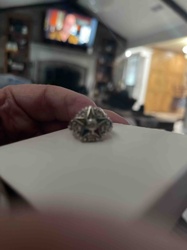
Submitted item photo
Submitted photo · June 20, 2026

User's notes

No additional notes provided.

AI analysis below

AI appraisal

AI analysis & estimate

AI-Generated · Verify before acting

Everything below is generated by AI for informational purposes only. AI can make mistakes — the AI may misidentify items or misattribute them (artist, maker, brand, designer, origin, era). This is not an official valuation and should not be used for insurance, sale, tax, estate, legal, or lending purposes — or any decision requiring a certified appraisal. It is not an authoritative claim about any person, brand, or rights holder — do not share or rely on it as a factual statement about a third party. Always consult qualified professionals before making financial decisions.

Read the full disclaimer

AI Identification

·Not independently authenticated·Verify before acting

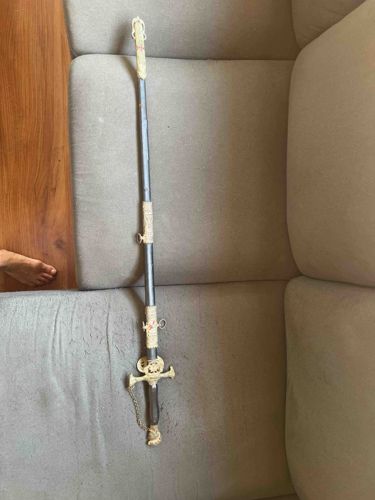
Knights Templar Masonic Ceremonial Sword and Scabbard

Militaria & Fraternal Organizations Collectibles

AI Estimated Value

·Not an official valuation·Verify before acting

$150 - $250

As of June 20, 2026

AI Item Analysis

·AI can make mistakes·Verify before acting
This is a late 19th to early 20th-century ceremonial dress sword typically associated with the Knights Templar, a branch of the York Rite of Freemasonry. The sword features a distinctive cross-shaped hilt with a cream-colored or faux-ivory grip, often composed of celluloid or wood covered in leather/wire, though here it appears to have a stylized knight's head pommel. The guard is a cruciform design with elaborate scrollwork and a central shield motif, likely displaying the 'Passion Cross within a Crown' emblem. A decorative guard chain connects the pommel to the cross-guard. The scabbard is constructed from polished steel or nickel-plated metal, featuring three ornate cream-colored gilded or enameled metal mounts. These mounts include two carrying rings for attachment to a belt frog and a decorative drag at the tip. The condition shows significant signs of age and patina; there is visible surface wear on the scabbard, including dark spots that may indicate oxidation or pitting of the metal plating. The cream-colored elements appear to have some staining and surface grime consistent with long-term storage and handling. The sword is a mass-produced fraternal item from prestigious makers of the era like Ames or Henderson-Ames, though specific maker marks are not visible without inspection of the blade ricasso.
AI Appraisal Report

·AI can make mistakes·Verify before acting
I have completed a visual examination of the Knights Templar Masonic Ceremonial Sword and Scabbard. Based on the ornate cruciform hilt, knight's head pommel, and the specific iconography on the scabbard mounts, I have identified this as a standard fraternal officer's sword dating from approximately 1890 to 1920. The item appears authentic to the period, likely manufactured by a firm such as Ames Sword Co. or M.C. Lilley & Co. The condition is 'fair to good.' I observed significant oxidation and pitting on the nickel-plated scabbard and age-related yellowing of the grip. The presence of the guard chain and all three scabbard mounts is a positive for value, though the surface grime suggests poor storage. In the current militaria market, these swords are quite common due to the high membership rates of the York Rite during the early 20th century; they were mass-produced rather than custom-forged, which limits rarity. Comparables for similar fraternal swords in this condition typically hammer at auction between $125 and $200, with retail gallery prices reaching $300 if the blade etching is pristine. The value is currently restrained by the condition issues on the scabbard plating. Final verification of this appraisal is subject to physical inspection. To confirm the upper end of the valuation, I would need to inspect the ricasso for a maker's mark and unsheathe the blade to check for acid-etched name attribution or structural integrity. A full authentication would also require checking the grip material (celluloid vs. ivory) via a thermal test, which cannot be determined from images alone.

Get your items appraised

Instant estimates of your treasures with AI-powered appraisals

Browse More Appraisals