Middle Paleolithic Chert Hand Axe Scraper Multi-Tool
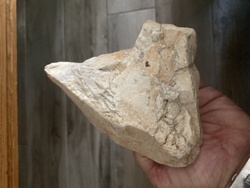
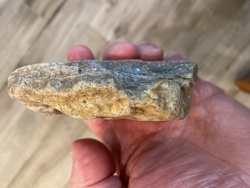
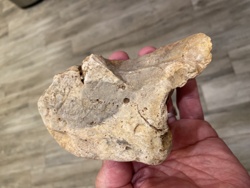
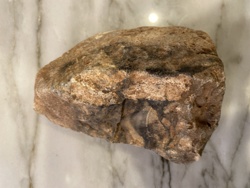
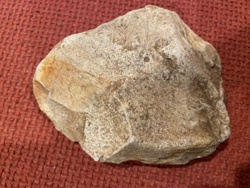
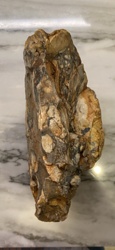
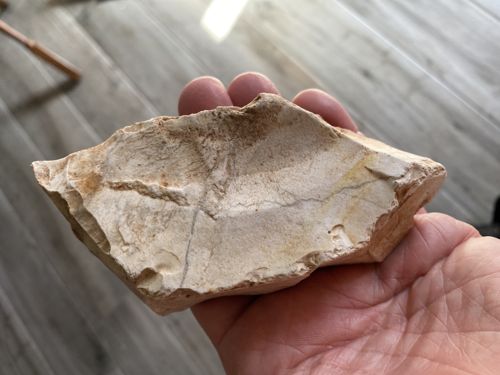
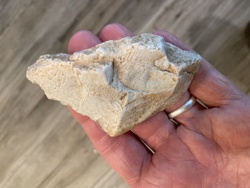
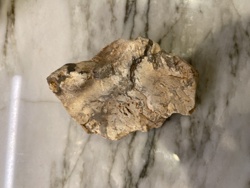
This is a Middle Paleolithic lithic artifact, specifically a bifacially worked hand axe and scraper multi-tool, measuring approximately 5 inches in length by 2 inches in width. The specimen is crafted from light-colored, tan-to-cream chert, featuring distinctive iron-oxide staining and a heavy desert-like patina consistent with significant subterranean age. The object displays clear evidence of percussion flaking, with visible bulbous scars where material was intentionally removed to create a sharp, functional edge along its perimeter. One end tapers to a crude point, while the broader edges exhibit unifacial retouching characteristic of scraping tools. The surface shows weathered fractures and mineral deposits, with a dull, matte finish that indicates long-term environmental exposure. The tool's ergonomic shape suggests it was designed to be held comfortably in the palm for varied tasks such as butchering, scraping hides, or wood processing. There are no modern maker's marks, as it is a prehistoric stone tool. The craftsmanship reflects typical Neanderthal or early Homo sapiens lithic technology, where utility and durability were prioritized. Despite some minor modern edge chipping due to environmental tumbling, the core morphology remains well-preserved, making it a significant archaeological representation of early North American lithic industry found in the Guthrie, Oklahoma region.
AI-Generated Appraisal Disclaimer
Estimated Value
$150 - $300
Basic Information
Category
Archaeological Artifacts / Prehistoric Stone Tools
Appraised On
February 19, 2026
Estimated Value
$150 - $300
Additional Details Provided By Owner
User Provided Information
Middle Paleolithic chert Hand axe scraper multi tool found in Guthrie OK 5" x 2"
Item Description
This is a Middle Paleolithic lithic artifact, specifically a bifacially worked hand axe and scraper multi-tool, measuring approximately 5 inches in length by 2 inches in width. The specimen is crafted from light-colored, tan-to-cream chert, featuring distinctive iron-oxide staining and a heavy desert-like patina consistent with significant subterranean age. The object displays clear evidence of percussion flaking, with visible bulbous scars where material was intentionally removed to create a sharp, functional edge along its perimeter. One end tapers to a crude point, while the broader edges exhibit unifacial retouching characteristic of scraping tools. The surface shows weathered fractures and mineral deposits, with a dull, matte finish that indicates long-term environmental exposure. The tool's ergonomic shape suggests it was designed to be held comfortably in the palm for varied tasks such as butchering, scraping hides, or wood processing. There are no modern maker's marks, as it is a prehistoric stone tool. The craftsmanship reflects typical Neanderthal or early Homo sapiens lithic technology, where utility and durability were prioritized. Despite some minor modern edge chipping due to environmental tumbling, the core morphology remains well-preserved, making it a significant archaeological representation of early North American lithic industry found in the Guthrie, Oklahoma region.
Get Your Items Appraised
Instant estimates of your treasures with AI-powered instant appraisals