AI Appraisal Estimate

AI-generated estimates · not official valuations

From the user

What was submitted

Photo and notes provided by the user — not generated by AI

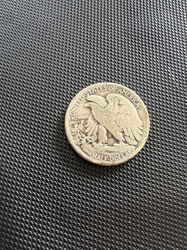
Submitted item photo
Submitted photo · May 25, 2026

User's notes

No additional notes provided.

AI analysis below

AI appraisal

AI analysis & estimate

AI-Generated · Verify before acting

Everything below is generated by AI for informational purposes only. AI can make mistakes — the AI may misidentify items or misattribute them (artist, maker, brand, designer, origin, era). This is not an official valuation and should not be used for insurance, sale, tax, estate, legal, or lending purposes — or any decision requiring a certified appraisal. It is not an authoritative claim about any person, brand, or rights holder — do not share or rely on it as a factual statement about a third party. Always consult qualified professionals before making financial decisions.

Read the full disclaimer

AI Identification

·Not independently authenticated·Verify before acting

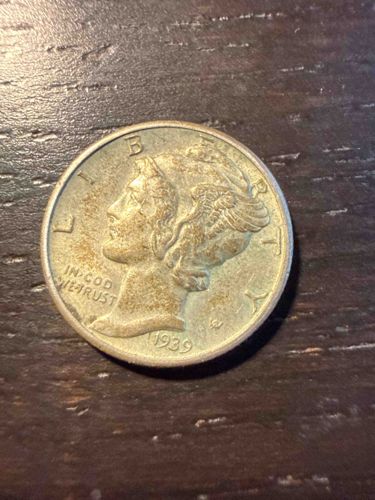
1939 Liberty Head 'Mercury' Dime

Numismatics / US Coins

AI Estimated Value

·Not an official valuation·Verify before acting

$4.00 - $7.00

As of May 25, 2026

AI Item Analysis

·AI can make mistakes·Verify before acting
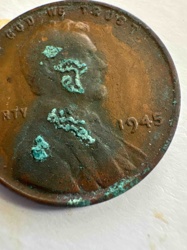
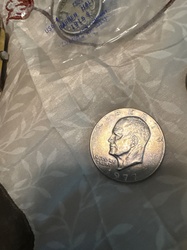
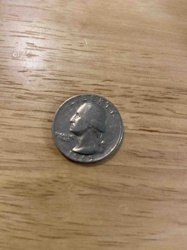
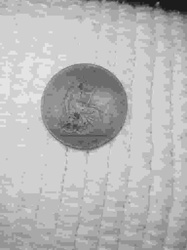
This is a 1939 United States ten-cent piece, commonly known as a Winged Liberty Head or 'Mercury' dime. Designed by Adolph A. Weinman, the coin is composed of 90% silver and 10% copper, with a standard diameter of 17.9 millimeters and a weight of approximately 2.50 grams. The obverse features a left-facing profile of Liberty wearing a Phrygian cap with wings, which was intended to symbolize liberty of thought but led to the popular misidentification of the figure as the Roman god Mercury. The word 'LIBERTY' is inscribed around the upper periphery, with 'IN GOD WE TRUST' appearing to the left of the neck and the date '1939' at the bottom. The artist's monogram 'AW' is faintly visible just behind the neck. In terms of condition, the coin displays significant signs of circulation and age. There is noticeable surface oxidation and toning, casting a yellowish-brown or 'gold-colored' patina over the silver base, which is unevenly distributed across the fields and raised relief. The high points of the design, particularly the wing feathers on the cap and the hair above the ear, show moderate wear, though the facial features remain distinct. The rim appears mostly intact with some minor softening from tactile use. No major scratches or deep gouges are immediately apparent in this view, though the overall luster is dull due to the heavy toning. This specimen represents a common date in the series, minted during the late Depression era leading into World War II.
AI Appraisal Report

·AI can make mistakes·Verify before acting
I have virtually examined this 1939 Liberty Head 'Mercury' Dime. Based on the visual evidence, the coin appears genuine, exhibiting the correct strike characteristics and 'AW' monogram placement consistent with Philadelphia Mint issues of this era. The condition aligns with a grade of 'Very Fine' (VF-20 to VF-30). While Liberty’s facial features remain clear, there is distinct smoothing on the wing feathers and hair—key high points for this series. The yellowish-brown patina is indicative of long-term storage in a sulfur-rich environment (such as an old coin folder), resulting in heavy toning that has suppressed the original mint luster. From a market perspective, the 1939 Philadelphia issue is a 'common date' with a high mintage of over 67 million. Consequently, it does not command a significant numismatic premium in circulated condition. Its value is primarily derived from its 90% silver content (melt value) plus a small premium for its age and historical appeal. In the current market, similar specimens sell frequently in bulk lots or as individual 'album fillers'. Notably, there is no evidence of 'Full Bands' on the reverse fasces—a major value driver for this series—and the heavy toning may be seen by some collectors as 'environmental damage' rather than attractive 'rainbow' toning, which limits the upside. Limitations: This appraisal is based on digital images. Without physical inspection, I cannot verify the exact weight, metallic composition (via XRF testing), or detect subtle professional cleaning or surface alterations. A definitive grade and authentication would require submission to a third-party service such as PCGS or NGC, though the coin's value likely does not justify the grading fees.

Get your items appraised

Instant estimates of your treasures with AI-powered appraisals

Browse More Appraisals