AI Appraisal Estimate

AI-generated estimates · not official valuations

From the user

What was submitted

Photo and notes provided by the user — not generated by AI

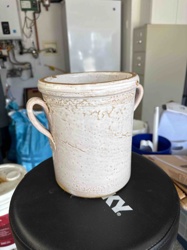
Submitted item photo
Submitted photo · June 20, 2026

User's notes

No additional notes provided.

AI analysis below

AI appraisal

AI analysis & estimate

AI-Generated · Verify before acting

Everything below is generated by AI for informational purposes only. AI can make mistakes — the AI may misidentify items or misattribute them (artist, maker, brand, designer, origin, era). This is not an official valuation and should not be used for insurance, sale, tax, estate, legal, or lending purposes — or any decision requiring a certified appraisal. It is not an authoritative claim about any person, brand, or rights holder — do not share or rely on it as a factual statement about a third party. Always consult qualified professionals before making financial decisions.

Read the full disclaimer

AI Identification

·Not independently authenticated·Verify before acting

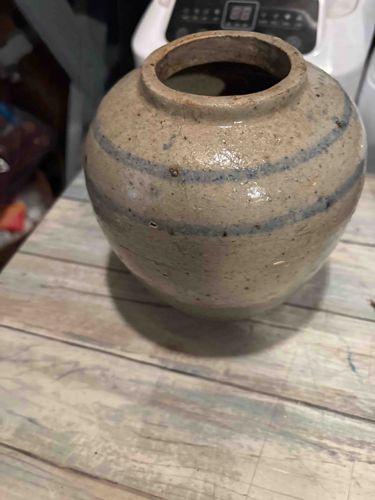
Antique Salt-Glazed Stoneware Ovoid Jar

Antique Ceramics and Pottery

AI Estimated Value

·Not an official valuation·Verify before acting

$450-650

As of June 20, 2026

AI Item Analysis

·AI can make mistakes·Verify before acting
This is an antique ovoid-shaped stoneware jar featuring a classic salt-glazed finish with distinctive blue cobalt banding. The vessel exhibits a rounded, bulbous body tapering down to a slightly narrower base, with a short, upright collar at the rim. The material is a dense, high-fired ceramic typically used for utilitarian storage in the 19th century. The exterior glaze possesses a characteristic 'orange peel' texture, a result of the salt-glazing process where common salt is thrown into the kiln during firing. There are two horizontal blue cobalt bands encircling the upper shoulder, which serve as simple folk-art decoration. The color is a neutral grey-tan with visible dark mineral inclusions and speckling known as 'peppering' throughout. In terms of condition, there are visible surface imperfections including kiln-born firing pits and minor abrasions consistent with age. Significant craquelure or fine glaze crazing is visible towards the neck and shoulder. No maker's marks are visible in this view, though the style is reminiscent of American Northeastern or Mid-Atlantic stoneware from the mid-to-late 1800s. The craftsmanship is robust and functional, showcasing the handmade nature of historical pottery through slightly irregular symmetry and varying glaze thickness.
AI Appraisal Report

·AI can make mistakes·Verify before acting
Based on my visual examination of this ovoid stoneware jar, I have identified it as a mid-19th-century American salt-glazed utilitarian vessel, likely originating from the Northeastern or Mid-Atlantic region (circa 1840–1860). The ovoid form indicates an earlier production period compared to the cylindrical shapes that dominated the late 19th century. The cobalt banding is a classic, albeit simple, decorative element that enhances its appeal to folk-art collectors. The item displays characteristic 'orange peel' texture and 'peppering' consistent with period kiln environments. Condition-wise, the visible firing pits and surface abrasions are consistent with age and typical of utilitarian use. However, the presence of significant craquelure and glaze crazing near the neck suggests some internal stresses, which can slightly temper the value compared to pristine examples. The market for 19th-century stoneware remains stable, though high premiums are generally reserved for items with elaborate figural decorations (birds, flowers) or rare potter marks. This piece is valued as a strong 'everyman' example of historical pottery. Comparable sales of banded ovoid jars without maker's marks typically fall in the $400 to $700 range. Limitation on Authenticity: This appraisal is based solely on digital images. Without an in-person inspection, I cannot verify the resonance 'ring' of the ceramic (to detect hidden cracks), the weight-to-density ratio, or the presence of modern chemical residues in the pits. A full authentication would require physical handling to inspect the basal wear patterns, provenance documentation, or a borescope inspection of the interior to ensure no modern restorations have been disguised by the heavy glaze.

Get your items appraised

Instant estimates of your treasures with AI-powered appraisals

Browse More Appraisals