From the user

What was submitted

Photo and notes provided by the user — not generated by AI

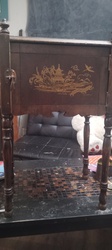
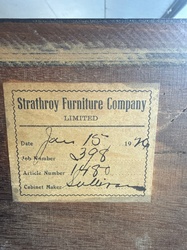
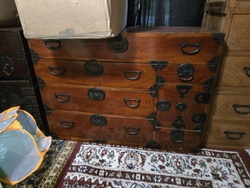
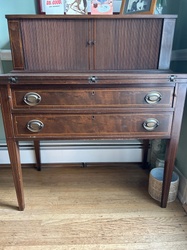
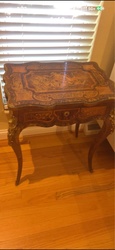
Submitted item photo
Submitted photo · May 16, 2026

User's notes

No additional notes provided.

AI analysis below

AI appraisal

AI analysis & estimate

AI-Generated · Verify before acting

Everything below is generated by AI for informational purposes only. AI can make mistakes — the AI may misidentify items or misattribute them (artist, maker, brand, designer, origin, era). This is not an official valuation and should not be used for insurance, sale, tax, estate, legal, or lending purposes — or any decision requiring a certified appraisal. It is not an authoritative claim about any person, brand, or rights holder — do not share or rely on it as a factual statement about a third party. Always consult qualified professionals before making financial decisions.

Read the full disclaimer

AI Identification

·Not independently authenticated·Verify before acting

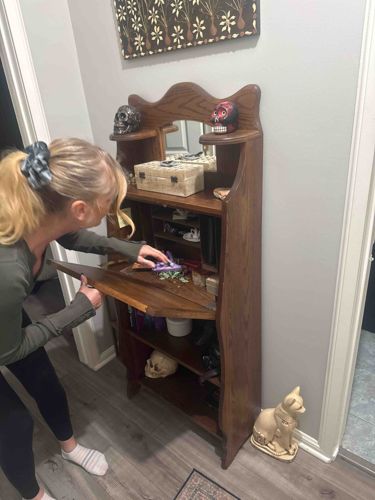
Late Victorian/Early Edwardian Style Oak Drop-Front Secretary Desk

Antique Furniture

AI Estimated Value

·Not an official valuation·Verify before acting

$450 - $650

As of May 16, 2026

AI Item Analysis

·AI can make mistakes·Verify before acting
This piece is a tall, slender drop-front secretary desk, commonly referred to as a 'lady’s desk' or 'parlor desk,' likely dating from the late 19th to early 20th century. Constructed from solid oak and oak veneers, it features a medium honey-colored finish that highlights the prominent cathedral grain patterns characteristic of flat-sawn oak. The silhouette is defined by an ornate, scalloped top crest (gallery) housing a small rectangular beveled mirror in the center, flanked by two elevated, rounded candle-stand shelves. Below this decorative top, the desk features a central drop-front writing surface that opens to reveal an interior fitted with pigeonholes for organization. The base consists of two open fixed shelves for books or displays. The side panels exhibit graceful, serpentine curved edges, terminating in short, simple bracket feet. Structurally, the piece shows traditional joinery techniques, though the presence of the beveled mirror suggests a mass-manufactured origin from the high-Victorian industrial era. The condition appears well-maintained with a consistent patina, though minor scuffs are visible along the base and edges consistent with age and regular use. The hardware for the drop-front hinges appears integrated and functional. No obvious maker's marks are visible from the exterior, but the craftsmanship level suggests a commercial production typical of the American East Coast or Midwest furniture centers of the 1900s.
AI Appraisal Report

·AI can make mistakes·Verify before acting
Upon visual examination of this Late Victorian/Early Edwardian oak drop-front secretary, I find it to be a quintessential example of American mass-produced 'Golden Oak' furniture, likely dating between 1895 and 1910. The use of flat-sawn oak, the scalloped gallery, and the integrated beveled mirror are characteristic of manufacturers such as Larkin or similar Midwest furniture collectives. The condition appears remarkably well-preserved for its age, retaining a consistent patina and original structural integrity, though minor abrasions at the base reflect its history of utility. The current market for 'brown furniture' remains soft, with high supply and localized demand. While these pieces were once premium collectibles in the 1980s, they now serve primarily as functional decorative accents. Comparable sales for similar mirrored parlor desks in today's secondary market generally fall within the $400 to $700 range, depending on the complexity of the interior pigeonholes and the presence of original hardware. The lack of a visible maker's mark and the assembly-line nature of the piece limit its rarity. Critically, this appraisal is based on image-based visual cues. Authentic verification requires an in-person inspection to examine the back panel construction (looking for circular saw marks versus hand-planing), drawer joinery (machine-cut dovetails), and the silvering on the mirror. Full authentication would also require checking the underside for stenciled model numbers or manufacturer labels which were common for this era. Without a physical tactile assessment of the finish and wood density, I cannot definitively rule out mid-20th-century reproductions, though the aging patterns suggest a genuine antique period piece.

Get your items appraised

Instant estimates of your treasures with AI-powered appraisals

Browse More Appraisals