Vintage Egyptian Pharaoh Tutankhamun Ring
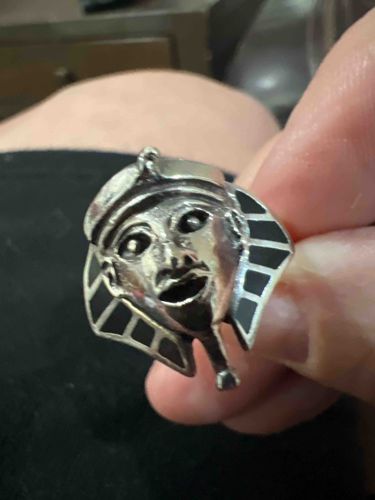
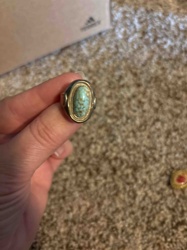
This is a vintage three-dimensional ring depicting an Egyptian Pharaoh, likely inspired by King Tutankhamun. The piece is constructed from a silver-toned metal, possibly sterling silver or a high-quality costume alloy, featuring a high-relief sculptural face. The pharaoh is depicted wearing the traditional Nemes headdress, which is accented with black enamel or resin inlay within geometric cells to create a striking contrast. Notable features include a stylized uraeus (cobra) symbol at the brow and a post-style ceremonial beard at the chin. The facial features are cast with slightly elongated eyes and an open mouth. Visible condition includes a significant dark patina and oxidation in the recessed areas, which adds depth to the casting, but also shows some surface abrasions and micro-scratching consistent with age and frequent wear. The style suggests an Egyptian Revival influence, common in jewelry from the mid-20th century. Craftsmanship details point to a lost-wax casting method followed by hand-finishing and inlay work. No visible hallmarks are present in this view, but the weight and luster suggest it may be a mid-range vintage accessory rather than modern mass-produced plastic.
AI-Generated Appraisal Disclaimer
Estimated Value
$45.00 - $85.00
Basic Information
Category
Jewelry / Vintage Fashion Accessories
Appraised On
February 16, 2026
Estimated Value
$45.00 - $85.00
Item Description
This is a vintage three-dimensional ring depicting an Egyptian Pharaoh, likely inspired by King Tutankhamun. The piece is constructed from a silver-toned metal, possibly sterling silver or a high-quality costume alloy, featuring a high-relief sculptural face. The pharaoh is depicted wearing the traditional Nemes headdress, which is accented with black enamel or resin inlay within geometric cells to create a striking contrast. Notable features include a stylized uraeus (cobra) symbol at the brow and a post-style ceremonial beard at the chin. The facial features are cast with slightly elongated eyes and an open mouth. Visible condition includes a significant dark patina and oxidation in the recessed areas, which adds depth to the casting, but also shows some surface abrasions and micro-scratching consistent with age and frequent wear. The style suggests an Egyptian Revival influence, common in jewelry from the mid-20th century. Craftsmanship details point to a lost-wax casting method followed by hand-finishing and inlay work. No visible hallmarks are present in this view, but the weight and luster suggest it may be a mid-range vintage accessory rather than modern mass-produced plastic.
Get Your Items Appraised
Instant estimates of your treasures with AI-powered instant appraisals