Majolica Glazed Grape Cluster Pitcher
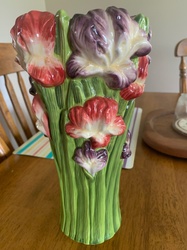
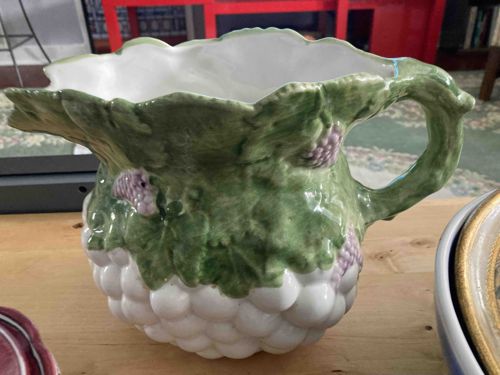
This is a decorative ceramic pitcher, characteristic of Majolica-style pottery, featuring a heavy sculptural relief design. The body of the vessel is molded to resemble a dense cluster of white grapes at the base, transitioning into large, verdant green grape leaves that form the upper neck and undulating, scalloped rim. A branch-like handle, also finished in green glaze, is attached to the side. Small clusters of purple grapes provide additional accents near the rim. The interior is finished with a smooth white glaze. Based on the craftsmanship and high-gloss lead-based style glaze, this likely dates from the late 19th to early 20th century. The piece shows minor surface wear consistent with age, specifically some light glaze crazing and potential small chips along the delicate edges of the scalloped rim and leaf tips. There are no visible maker's marks from this angle, but the distinct 'barbotine' style suggests a European origin, possibly English (Minton or George Jones) or Italian. The colors are well-preserved with vibrant greens and soft purples against a creamy white base.
AI-Generated Appraisal Disclaimer
Estimated Value
$450 - $650
Basic Information
Category
Antique Ceramics and Glassware
Appraised On
March 23, 2026
Estimated Value
$450 - $650
Item Description
This is a decorative ceramic pitcher, characteristic of Majolica-style pottery, featuring a heavy sculptural relief design. The body of the vessel is molded to resemble a dense cluster of white grapes at the base, transitioning into large, verdant green grape leaves that form the upper neck and undulating, scalloped rim. A branch-like handle, also finished in green glaze, is attached to the side. Small clusters of purple grapes provide additional accents near the rim. The interior is finished with a smooth white glaze. Based on the craftsmanship and high-gloss lead-based style glaze, this likely dates from the late 19th to early 20th century. The piece shows minor surface wear consistent with age, specifically some light glaze crazing and potential small chips along the delicate edges of the scalloped rim and leaf tips. There are no visible maker's marks from this angle, but the distinct 'barbotine' style suggests a European origin, possibly English (Minton or George Jones) or Italian. The colors are well-preserved with vibrant greens and soft purples against a creamy white base.
Related Tags
Explore similar items and categories:
Get Your Items Appraised
Instant estimates of your treasures with AI-powered instant appraisals