AI Appraisal Estimate

AI-generated estimates · not official valuations

From the user

What was submitted

Photo and notes provided by the user — not generated by AI

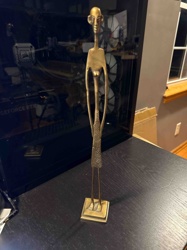
Submitted item photo
Submitted photo · June 21, 2026

User's notes

Unknown artist, untitled sculpture

AI analysis below

AI appraisal

AI analysis & estimate

AI-Generated · Verify before acting

Everything below is generated by AI for informational purposes only. AI can make mistakes — the AI may misidentify items or misattribute them (artist, maker, brand, designer, origin, era). This is not an official valuation and should not be used for insurance, sale, tax, estate, legal, or lending purposes — or any decision requiring a certified appraisal. It is not an authoritative claim about any person, brand, or rights holder — do not share or rely on it as a factual statement about a third party. Always consult qualified professionals before making financial decisions.

Note

This analysis also relies on unverified notes provided by the user, which may be incomplete or inaccurate and could affect the result.

Read the full disclaimer

AI Identification

·Not independently authenticated·Verify before acting

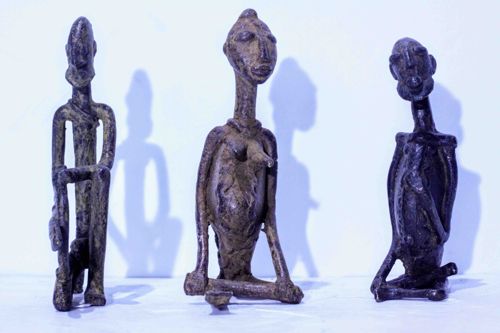
Trio of Bronze Dogon-Style Anthropomorphic Figures

African Tribal Art / Bronze Sculpture

AI Estimated Value

·Not an official valuation·Verify before acting

$150 - $350

As of June 21, 2026

AI Item Analysis

·AI can make mistakes·Verify before acting
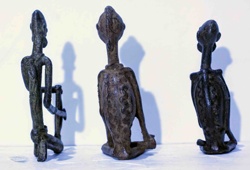
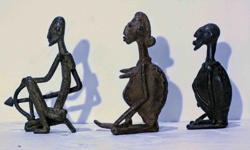
This set consists of three small-scale, cast bronze or copper alloy sculptures, deeply characteristic of the Dogon or Bamana people's stylistic traditions from the Mali region of West Africa. The figures exhibit the 'lost wax' casting method, resulting in unique, elongated, and highly stylized physical forms. The central figure, likely a female representation, features a distended abdomen and prominent breasts, symbolizing fertility, with slender, elongated arms resting on a horizontal base. The flanking figures represent seated or crouching male or androgynous forms with similarly thin, tubular limbs and exaggerated facial features including elongated noses and protruding lips. The metal displays a heavy, textured dark brown and verdigris patina, suggesting significant age or exposure to the elements to create a weathered, encrusted surface. Surface irregularities and pitting are visible throughout, which are typical of traditional West African casting techniques. There are no visible maker's marks or signatures, consistent with ritualistic or regional folk art. The craftsmanship is characterized by a balance of primitive abstraction and expressive geometry, likely dating from the mid-to-late 20th century. The condition appears stable, though the rough surface texture indicates a lack of modern polishing to preserve the archaic aesthetic.
AI Appraisal Report

·AI can make mistakes·Verify before acting
Having closely examined the visual evidence of this trio of Dogon-style bronze figures, I assess them primarily as mid-to-late 20th-century creations intended for the trade market rather than antique ritual objects. The figures exhibit the classic elongated iconography of the Dogon or Bamana peoples of Mali, utilizing the lost-wax casting technique. The grouping—a central standing female flanked by crouching figures—is visually striking and displays a deliberate, stylized geometry typical of the region's aesthetic. However, several indicators suggest these are later vintage reproductions. The patina, while heavy with dark oxidization and verdigris, appears somewhat uniform and chemically induced rather than developed slowly over decades of ritual handling or burial. The surface pitting and 'encrustation' look characteristic of pieces made to look archaic for the export market, often referred to as 'airport art' or decorative tribal style. The casting quality is rudimentary, lacking the nuanced wear patterns one expects on genuine 19th-century or early 20th-century ethnographic artifacts. In the current market, authentic pre-1950 Dogon bronzes command thousands of dollars. By contrast, decorative vintage examples like this set are valued for their aesthetic appeal rather than historical significance. They are relatively common in online auctions and estate sales. The value is driven by their decorative utility and the rising cost of bronze as a material. To authenticate these as genuine ritual artifacts, I would require in-person inspection to test the metal alloy composition and microscopic analysis of the patina layering to rule out rapid chemical aging, along with definitive provenance tracing the item back to a specific collection or date of export.

Get your items appraised

Instant estimates of your treasures with AI-powered appraisals

Browse More Appraisals