AI Appraisal Estimate

AI-generated estimates · not official valuations

From the user

What was submitted

Photo and notes provided by the user — not generated by AI

Submitted item photo
Submitted photo · June 15, 2026

User's notes

Ceramic bells

AI analysis below

AI appraisal

AI analysis & estimate

AI-Generated · Verify before acting

Everything below is generated by AI for informational purposes only. AI can make mistakes — the AI may misidentify items or misattribute them (artist, maker, brand, designer, origin, era). This is not an official valuation and should not be used for insurance, sale, tax, estate, legal, or lending purposes — or any decision requiring a certified appraisal. It is not an authoritative claim about any person, brand, or rights holder — do not share or rely on it as a factual statement about a third party. Always consult qualified professionals before making financial decisions.

Note

This analysis also relies on unverified notes provided by the user, which may be incomplete or inaccurate and could affect the result.

Read the full disclaimer

AI Identification

·Not independently authenticated·Verify before acting

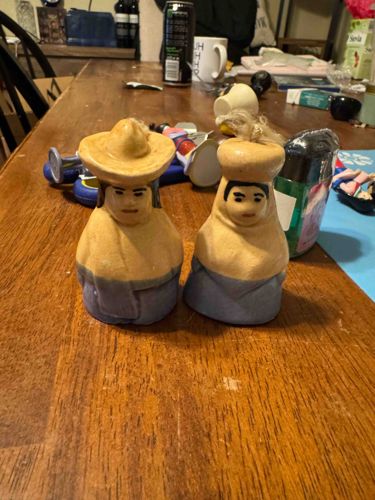
Vintage Anthropomorphic Ceramic Folk Art Clapper Bells

Collectibles - Folk Art Ceramics

AI Estimated Value

·Not an official valuation·Verify before acting

$15 - $30

As of June 15, 2026

AI Item Analysis

·AI can make mistakes·Verify before acting
This pair of figurative ceramic bells depicts a man and a woman in traditional Latin American or Southwestern attire. The male figure is characterized by a wide-brimmed sombrero and a tan poncho over a blue lower garment, while the female figure features a rounded headpiece or bundle and a similar tan-to-blue color gradient. Each bell stands approximately 4 to 5 inches tall and is crafted from a porous, matte-finished ceramic material, likely terracotta or earthenware. The facial features are hand-painted with simplistic black and red pigments, exhibiting a charming, naive folk art style. The construction is hollow with an internal clapper mechanism to function as a ringing bell. Notable features include a small twine loop at the top of each figure for hanging or manual ringing. In terms of condition, the surfaces show minor scuffing, surface dirt, and color fading consistent with age and handling. There is a visible matte patina that suggests they were manufactured in the mid-to-late 20th century as souvenir or decorative items. No prominent maker's marks or signatures are visible in the current view, but the craftsmanship suggests mass-produced yet hand-decorated artisanal cottage industry work common in regional Mexico.
AI Appraisal Report

·AI can make mistakes·Verify before acting
Based on my examination of the provided images, this pair of anthropomorphic ceramic bells appears to be a charming example of mid-to-late 20th-century folk art, likely originating as souvenir items from Mexico or the American Southwest. The figures, depicting a man in a sombrero and a woman in traditional garb, possess a distinct naive charm characteristic of regional cottage industry production. The porous, matte-finished ceramic—likely terracotta—along with the simple hand-painted facial features, suggests they were mass-produced but hand-finished. Condition-wise, the bells show expected signs of age, including minor surface scuffing, accumulated patina, and slight pigment fading. No significant chips or cracks are immediately visible, though the twine loops appear aged. The absence of a maker's mark or signature is typical for this category of souvenir ware, often referred to as 'Tlaquepaque style' or general Mexican folk pottery, though these examples lack the refinement of high-end collectable pieces by specific artisans. The market for such vintage travel souvenirs is generally soft, driven primarily by decorative appeal rather than investment potential. Comparables for similar undocumented Mexican folk art pottery of this size typically sell in the $15 to $30 range at online marketplaces or vintage shops. Their value is largely sentimental or aesthetic. It is important to note that without a physical inspection, I cannot verify the integrity of the internal clappers or detect restoration work. Definitive attribution to a specific region (like Oaxaca vs. Tlaquepaque) would require handling the clay body to assess density and firing technique. As common tourist ware, however, provenance documentation is rarely extant or required for valuation.

Get your items appraised

Instant estimates of your treasures with AI-powered appraisals

Browse More Appraisals