Obsidian Lanceolate Projectile Point
Antiquities & Artifacts

Obsidian Lanceolate Projectile Point

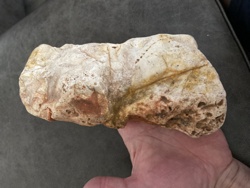
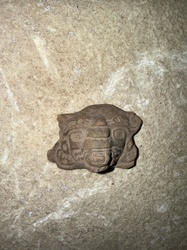
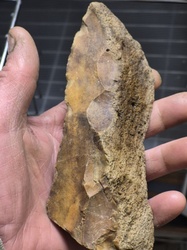
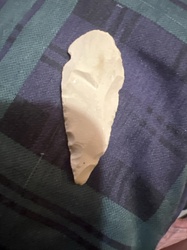
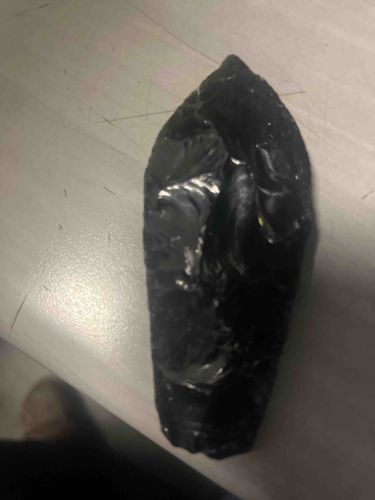
This item is a hand-crafted projectile point, traditionally referred to as an arrowhead or knife blade, fashioned from black obsidian. The object exhibits a teardrop or lanceolate shape with a tapered tip and a slightly narrower, unfinished base. Its physical characteristics are defined by the conchoidal fracture patterns characteristic of volcanic glass, resulting in sharp, translucent edges and a lustrous, vitreous surface that reflects light. The craftsmanship features bifacial pressure flaking, though the flake scars appear relatively large and somewhat irregular, suggesting it may be a preform or a utility tool rather than a finely finished ceremonial piece. The color is a deep, opaque black that transitions to a smoky transparency at the thinner edges. Measuring approximately several inches in length, the piece shows no significant modern post-manufacturing damage, though the edges have the characteristic micro-chipping associated with the knapping process. Determining a specific age or culture requires provenance or archaeological context, as obsidian knapping is a millennia-old technique still practiced by modern flintknappers. The lack of heavy weathering or 'caliche' mineral deposits suggests it may be of more recent manufacture or was well-preserved in a protected environment.
Estimated Value

$45.00 - $85.00

Basic Information

Category

Antiquities & Artifacts

Appraised On

January 19, 2026

Estimated Value

$45.00 - $85.00

Item Description

This item is a hand-crafted projectile point, traditionally referred to as an arrowhead or knife blade, fashioned from black obsidian. The object exhibits a teardrop or lanceolate shape with a tapered tip and a slightly narrower, unfinished base. Its physical characteristics are defined by the conchoidal fracture patterns characteristic of volcanic glass, resulting in sharp, translucent edges and a lustrous, vitreous surface that reflects light. The craftsmanship features bifacial pressure flaking, though the flake scars appear relatively large and somewhat irregular, suggesting it may be a preform or a utility tool rather than a finely finished ceremonial piece. The color is a deep, opaque black that transitions to a smoky transparency at the thinner edges. Measuring approximately several inches in length, the piece shows no significant modern post-manufacturing damage, though the edges have the characteristic micro-chipping associated with the knapping process. Determining a specific age or culture requires provenance or archaeological context, as obsidian knapping is a millennia-old technique still practiced by modern flintknappers. The lack of heavy weathering or 'caliche' mineral deposits suggests it may be of more recent manufacture or was well-preserved in a protected environment.

Get Your Items Appraised

Instant estimates of your treasures with AI-powered instant appraisals

Browse More Appraisals