Acheulean-Style Chert Biface Hand Axe
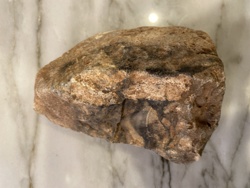
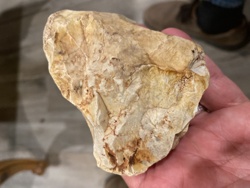
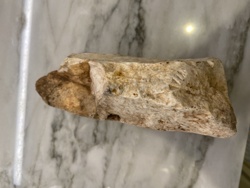
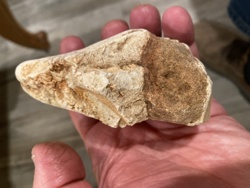
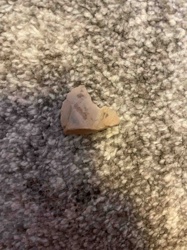
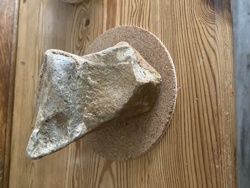
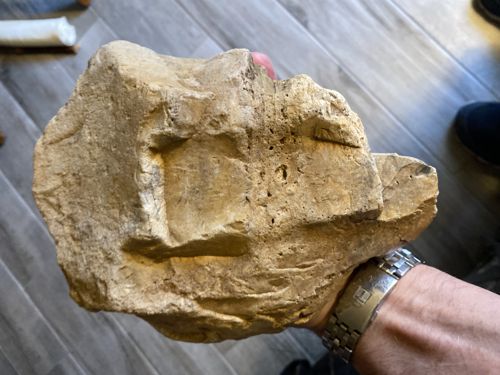
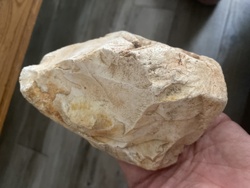
This is a substantial lithic specimen identified as a biface hand axe/scraper tool, measuring approximately 8 inches by 6 inches. The item is crafted from a heavy, tan-colored chert featuring a matte, weathered surface typical of long-term environmental exposure. Physically, the object is characterized by large, primary flake scars across its surface, indicative of a percussion flaking technique used to shape the raw material into a functional, teardrop-like or ovate silhouette. The construction shows a thick, robust cross-section with edges that have been roughly knapped to provide a gripped base and working edges. Notably, the surface displays a heavy patina and calcified deposits within the deeper crevices, suggestive of an archaeological find. Condition-wise, the stone shows significant edge wear and rounding, with various micro-fractures and step-fractures consistent with ancient use and geological pressure. While it lacks modern maker's marks, the rhythmic pattern of lithic reduction points to Lower Paleolithic Acheulean technology traditions usually associated with Homo erectus, though the provenance location of Guthrie, Oklahoma, would traditionally imply a much later North American prehistoric context if verified as an artifact. The craftsmanship is functional rather than refined, showcasing the transition from opportunistic tools to intentionally designed bifacial industry.
AI-Generated Appraisal Disclaimer
Estimated Value
$150 - $350
Basic Information
Category
Prehistoric Archaeological Artifact / Lithic Tool
Appraised On
February 19, 2026
Estimated Value
$150 - $350
Additional Details Provided By Owner
User Provided Information
Lower Paleolithic Acheulean Very large chert bi face hand axe scraper tool found in Guthie OK measuring 8"x 6"
Item Description
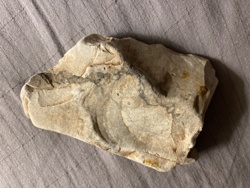
This is a substantial lithic specimen identified as a biface hand axe/scraper tool, measuring approximately 8 inches by 6 inches. The item is crafted from a heavy, tan-colored chert featuring a matte, weathered surface typical of long-term environmental exposure. Physically, the object is characterized by large, primary flake scars across its surface, indicative of a percussion flaking technique used to shape the raw material into a functional, teardrop-like or ovate silhouette. The construction shows a thick, robust cross-section with edges that have been roughly knapped to provide a gripped base and working edges. Notably, the surface displays a heavy patina and calcified deposits within the deeper crevices, suggestive of an archaeological find. Condition-wise, the stone shows significant edge wear and rounding, with various micro-fractures and step-fractures consistent with ancient use and geological pressure. While it lacks modern maker's marks, the rhythmic pattern of lithic reduction points to Lower Paleolithic Acheulean technology traditions usually associated with Homo erectus, though the provenance location of Guthrie, Oklahoma, would traditionally imply a much later North American prehistoric context if verified as an artifact. The craftsmanship is functional rather than refined, showcasing the transition from opportunistic tools to intentionally designed bifacial industry.
Related Tags
Get Your Items Appraised
Instant estimates of your treasures with AI-powered instant appraisals