Prehistoric Lithic Hand Axe and Scraper Tool
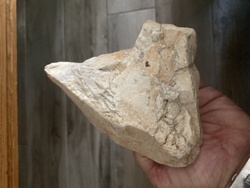
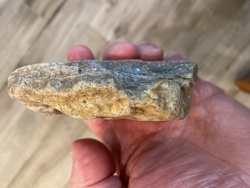
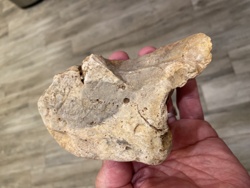
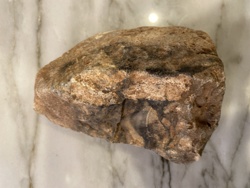
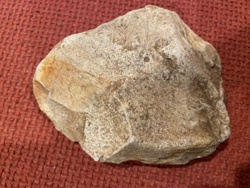
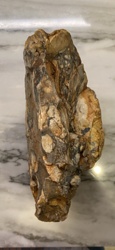
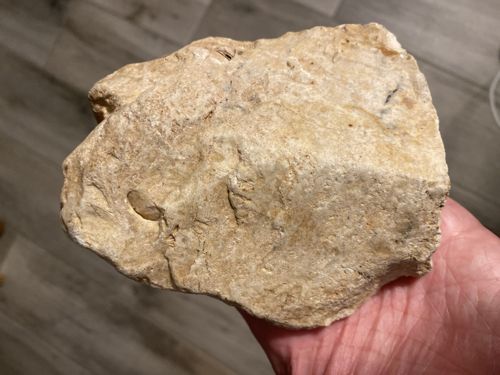
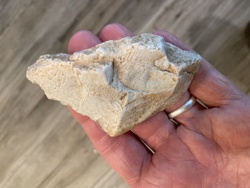
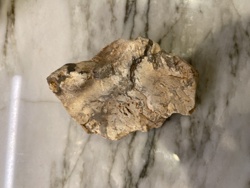
This is a large prehistoric lithic tool, identified as a hand axe and scraper, measuring approximately 5 inches by 4 inches. The artifact is crafted from a light tan to buff-colored sedimentary or silicate stone, likely a variety of chert or flint common to the Oklahoma region. Its construction shows clear evidence of percussion flaking, with broad, shallow flake scars across the dorsal surface creating a bifacial or unifacial working edge. The item's shape is roughly cordiform to sub-rectangular, featuring a thick, bulbous base intended to fit comfortably into the palm of the hand, while the tapering edges are worked into a functional scraping or chopping surface. Notable features include a prominent ridge and some remaining cortex, suggesting it was fashioned from a river cobble or local outcrop. The surface exhibits a heavy mineralized patina and some earthy encrustations consistent with long-term burial in the soil of Guthrie, OK. Condition-wise, the tool shows significant 'use-wear' along the margins, including micro-chipping and smoothing from repetitive tasks like hide scraping or woodworking. There are no modern maker's marks, as it is an ancient artifact likely dating back to the Woodland or Archaic period. The craftsmanship reflects an expedient but effective tool-making tradition, where utility outweighed aesthetic symmetry.
AI-Generated Appraisal Disclaimer
Estimated Value
$150 - $250
Basic Information
Category
Archaeological Artifacts / Prehistoric Stone Tools
Appraised On
February 18, 2026
Estimated Value
$150 - $250
Additional Details Provided By Owner
User Provided Information
Prehistoric stone hand axe scraper lithic tool found in Guthrie OK measuring 5" x 4"
Item Description
This is a large prehistoric lithic tool, identified as a hand axe and scraper, measuring approximately 5 inches by 4 inches. The artifact is crafted from a light tan to buff-colored sedimentary or silicate stone, likely a variety of chert or flint common to the Oklahoma region. Its construction shows clear evidence of percussion flaking, with broad, shallow flake scars across the dorsal surface creating a bifacial or unifacial working edge. The item's shape is roughly cordiform to sub-rectangular, featuring a thick, bulbous base intended to fit comfortably into the palm of the hand, while the tapering edges are worked into a functional scraping or chopping surface. Notable features include a prominent ridge and some remaining cortex, suggesting it was fashioned from a river cobble or local outcrop. The surface exhibits a heavy mineralized patina and some earthy encrustations consistent with long-term burial in the soil of Guthrie, OK. Condition-wise, the tool shows significant 'use-wear' along the margins, including micro-chipping and smoothing from repetitive tasks like hide scraping or woodworking. There are no modern maker's marks, as it is an ancient artifact likely dating back to the Woodland or Archaic period. The craftsmanship reflects an expedient but effective tool-making tradition, where utility outweighed aesthetic symmetry.
Related Tags
Get Your Items Appraised
Instant estimates of your treasures with AI-powered instant appraisals