AI Appraisal Estimate

AI-generated estimates · not official valuations

From the user

What was submitted

Photo and notes provided by the user — not generated by AI

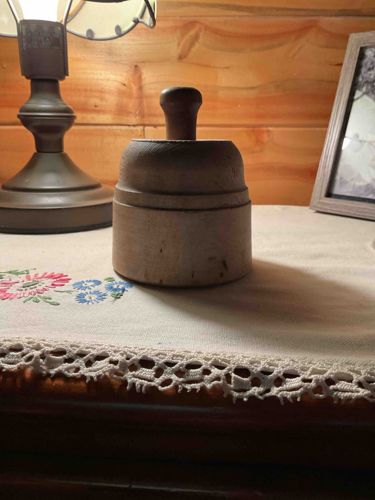
Submitted item photo
Submitted photo · May 22, 2026

User's notes

Butter mold

AI analysis below

AI appraisal

AI analysis & estimate

AI-Generated · Verify before acting

Everything below is generated by AI for informational purposes only. AI can make mistakes — the AI may misidentify items or misattribute them (artist, maker, brand, designer, origin, era). This is not an official valuation and should not be used for insurance, sale, tax, estate, legal, or lending purposes — or any decision requiring a certified appraisal. It is not an authoritative claim about any person, brand, or rights holder — do not share or rely on it as a factual statement about a third party. Always consult qualified professionals before making financial decisions.

Note

This analysis also relies on unverified notes provided by the user, which may be incomplete or inaccurate and could affect the result.

Read the full disclaimer

AI Identification

·Not independently authenticated·Verify before acting

Antique Hand-Turned Round Plunger Butter Mold

Antique Kitchenware / Treenware

AI Estimated Value

·Not an official valuation·Verify before acting

$75 - $125

As of May 22, 2026

AI Item Analysis

·AI can make mistakes·Verify before acting
This is an antique, hand-turned round butter mold, likely dating from the mid-to-late 19th century or early 20th century. Constructed from a dense hardwood, possibly maple or birch, it features a classic two-piece design consisting of a cylindrical casing (the sleeve) and an internal plunger with a turned wooden handle. The exterior exhibits a soft, aged patina with a naturally weathered, grayish-brown wood tone. The construction shows characteristic lathe-turned ridges and a bell-shaped transition at the top of the sleeve. The plunger handle is ergonomically rounded for manual pressing. In terms of condition, the wood shows significant signs of age with scattered dark spotting, surface abrasions, and minor dings consistent with historical farmstead use. There are no visible maker's marks or stamps in the current view, suggesting it may be a piece of folk art or produced by a small-scale local craftsman. The craftsmanship is utilitarian yet precise, demonstrating the durable quality required for daily dairy work. The interior block would typically feature an intaglio carved design (such as a wheat sheaf, acorn, or floral pattern) to deboss the butter, although the face is not visible here. This piece is a quintessential example of North American or European rural treenware.
AI Appraisal Report

·AI can make mistakes·Verify before acting
Based on my visual examination of the provided documentation, I have evaluated this hand-turned round plunger butter mold. The object demonstrates characteristic traits of late 19th-century treenware, specifically the tight grain of a hardwood like maple and the concentric lathe marks consistent with period production. The weathered patina and surface oxidation suggest authentic age rather than modern reproduction. While the exterior shows desirable historical wear, the absence of a visible intaglio design on the plunger face is a significant valuation variable; common patterns like wheat sheaves occupy the lower end of the price spectrum, while rare motifs like eagles or specific farmstead marks would command a premium. The market for rustic kitchen Americana remains stable, though prices have softened from their peak in the early 2000s. Similar examples in this condition, featuring standard patterns and 'as found' surfaces, typically realize between $75 and $125 at specialized antique auctions or through treenware collectors. Factors negatively impacting value include the dark spotting (potential mold or staining) and the lack of a known maker's mark. It is important to note that this appraisal is based on photographic evidence. A physical inspection is required to confirm the integrity of the wood, ensure the plunger face is original to the sleeve, and verify the absence of modern wood-staining agents. Full authentication would benefit from provenance detailing the specific region of origin or a bill of sale from a recognized collection.

Get your items appraised

Instant estimates of your treasures with AI-powered appraisals

Browse More Appraisals