Early American Pattern Glass (EAPG) Mini Creamer
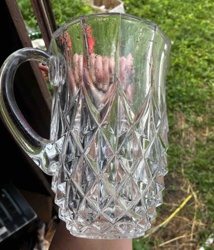
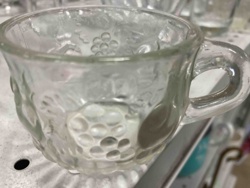
This item is a small molded clear glass creamer, likely part of an Early American Pattern Glass (EAPG) set or a mid-20th-century reproduction of a Victorian starburst pattern. The object is constructed from thick, pressed soda-lime glass, featuring a tapered body that flares slightly toward the rim. It is characterized by an ornate geometric star and daisy motif embossed into the exterior surface, which provides textural depth and enhances light refraction. A single, integrated C-shaped glass handle is attached to the rear, and a pinched spout is formed at the front for pouring. The base appears rounded with a starburst seal on the bottom. In terms of condition, the glass retains good clarity but exhibits typical manufacturing traits such as mold seams and some slight waviness in the finish. There is evidence of minor surface scratching consistent with age and domestic use. The style is reminiscent of patterns produced by companies like L.E. Smith or Federal Glass between 1920 and 1950. The craftsmanship represents a mass-produced but high-quality utilitarian aesthetic common in early 20th-century American households.
AI-Generated Appraisal Disclaimer
Estimated Value
$15.00 - $25.00
Basic Information
Category
Vintage Glassware / Kitchenware
Appraised On
March 10, 2026
Estimated Value
$15.00 - $25.00
Item Description
This item is a small molded clear glass creamer, likely part of an Early American Pattern Glass (EAPG) set or a mid-20th-century reproduction of a Victorian starburst pattern. The object is constructed from thick, pressed soda-lime glass, featuring a tapered body that flares slightly toward the rim. It is characterized by an ornate geometric star and daisy motif embossed into the exterior surface, which provides textural depth and enhances light refraction. A single, integrated C-shaped glass handle is attached to the rear, and a pinched spout is formed at the front for pouring. The base appears rounded with a starburst seal on the bottom. In terms of condition, the glass retains good clarity but exhibits typical manufacturing traits such as mold seams and some slight waviness in the finish. There is evidence of minor surface scratching consistent with age and domestic use. The style is reminiscent of patterns produced by companies like L.E. Smith or Federal Glass between 1920 and 1950. The craftsmanship represents a mass-produced but high-quality utilitarian aesthetic common in early 20th-century American households.
Related Tags
Get Your Items Appraised
Instant estimates of your treasures with AI-powered instant appraisals