AI estimate as of August 11, 2025 · verify with a professional before acting
AI-Generated · Verify before acting
Everything on this page is generated by AI for informational purposes only. AI can make mistakes — the AI may misidentify items or misattribute them (artist, maker, brand, designer, origin, era). This is not an official valuation and should not be used for insurance, sale, tax, estate, legal, or lending purposes — or any decision requiring a certified appraisal. It is not an authoritative claim about any person, brand, or rights holder — do not share or rely on it as a factual statement about a third party. Always consult qualified professionals before making financial decisions.
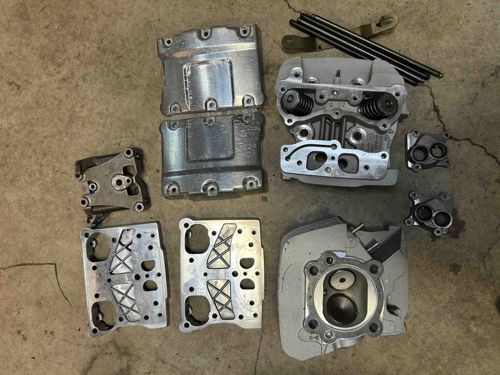
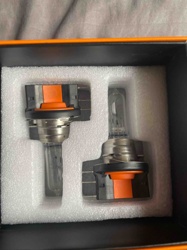
The image displays a collection of disassembled internal combustion engine components, consistent with those found in a V-twin motorcycle engine, possibly a Harley-Davidson or similar configuration due to the pushrod design visible. The parts primarily consist of cast aluminum alloy, exhibiting a natural, unpolished finish with some machined surfaces. The main components include two cylinder heads, each with visible intake and exhaust ports, valve springs, and what appear to be rocker arm supports. One cylinder head is shown from the top, revealing the valve train components, while the other is shown from the combustion chamber side, displaying the two large valve openings. There are also two polished or machined cover plates, likely rocker box covers, exhibiting some surface scratches and minor discoloration, indicative of either prior use or storage. Additionally, two smaller, intricately machined plates with cross-hatched patterns are visible, which may be cam covers or base plates for other engine components. A set of four long, slender pushrods made of dark metal (likely steel) are present, suggesting an overhead valve (OHV) or pushrod engine design. Two smaller, perhaps cam-related or auxiliary covers, with circular openings, are also part of the ensemble. The overall condition suggests that these parts are either used, undergoing a rebuild, or are new old stock; there are no signs of heavy corrosion or severe impact damage, but typical wear and tear associated with engine components are observable, such as oil residue and surface scuffs. The craftsmanship appears to be industrial standard for engine manufacturing, with precise machining on mating surfaces and well-formed castings. The absence of maker's marks or part numbers in the visible areas makes precise identification of the original manufacturer challenging.
AI Appraisal Report
Upon visual examination of the provided image, I assess this collection of disassembled V-twin engine components. The parts—two cylinder heads, two rocker covers, four pushrods, and various smaller covers—appear to be cast aluminum alloy, consistent with motorcycle engine construction, very likely from a Harley-Davidson or similar pushrod-actuated V-twin. The overall condition suggests prior use, indicated by surface scuffs, minor discoloration on the polished covers, and what appears to be oil residue. However, there are no signs of heavy corrosion, severe impact damage, or significant wear beyond what is expected for used engine components, suggesting they could be suitable for a rebuild or restoration project. The machining appears precise, typical of industrial engine manufacturing.
Authenticity verification solely from this image is limited. While the design strongly points to a V-twin, possibly Harley-Davidson, the absence of manufacturer's marks, part numbers, or casting codes prevents definitive identification. Without these, it's impossible to confirm the specific model or year, which significantly impacts value. For full authentication and accurate valuation, an in-person examination is crucial to identify casting numbers, inspect precise tolerances, and assess internal component wear. Provenance documentation (e.g., origin of the engine, service history) would also be highly beneficial.
Market conditions for used V-twin engine components are somewhat stable. Demand exists for components for rebuilding classic or even newer models, particularly for popular marques like Harley-Davidson. However, rarity is low unless these are specific to a very rare or highly sought-after model, which cannot be determined from the image. Comparable sales for used, disassembled cylinder heads and associated components of common V-twin engines typically range, especially when their exact origin and condition are not fully verified. Factors significantly impacting value include the positive identification of the manufacturer and model (especially if Harley-Davidson or Indian), the exact condition of valve seats, guides, and rocker arm internals (not visible), and whether the parts are new old stock versus used. Without definitive identification and a thorough in-person inspection, the value is tempered due to the inherent risks to a buyer.
Given these factors, my appraisal reflects the uncertainty regarding specific origin and precise internal condition.