Egyptian Revival Gilt-Bronze Drawer Pull
Antique Metalware / Furniture Hardware

Egyptian Revival Gilt-Bronze Drawer Pull

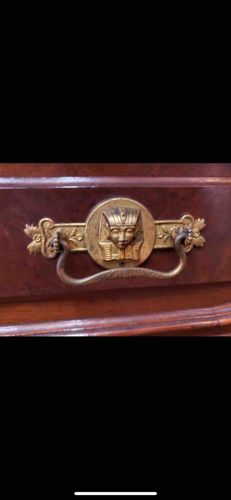
This item is an ornate Egyptian Revival style bail handle or drawer pull mounted on a polished burl wood surface. The hardware features a central circular boss cast in high relief with the pharaoh's head wearing a traditional nemes headdress. The pull is flanked by horizontal wings decorated with scrolling foliate motifs and anthemion-like patterns. The bail itself is a curved handle with textured detailing along the center grip. The metalwork is likely cast bronze or brass with a worn gold-gilt finish, showing a significant aged patina, surface oxidation, and darkened recessed areas that highlight the sculptural depth. Based on the stylistic elements, this belongs to the Egyptian Revival movement, likely from the late 19th or early 20th century (circa 1880-1925), a period when archaeological discoveries fueled a fascination with ancient Egyptian motifs in decorative arts. The craftsmanship is high, exhibiting fine casting detail in the face and headdress. Condition issues appear minimal, consisting primarily of surface wear, minor scratches, and tarnish consistent with age and frequent manual use. No specific maker's mark is visible in the provided image.
Estimated Value

$150 - $250

Basic Information

Category

Antique Metalware / Furniture Hardware

Appraised On

December 19, 2025

Estimated Value

$150 - $250

Item Description

This item is an ornate Egyptian Revival style bail handle or drawer pull mounted on a polished burl wood surface. The hardware features a central circular boss cast in high relief with the pharaoh's head wearing a traditional nemes headdress. The pull is flanked by horizontal wings decorated with scrolling foliate motifs and anthemion-like patterns. The bail itself is a curved handle with textured detailing along the center grip. The metalwork is likely cast bronze or brass with a worn gold-gilt finish, showing a significant aged patina, surface oxidation, and darkened recessed areas that highlight the sculptural depth. Based on the stylistic elements, this belongs to the Egyptian Revival movement, likely from the late 19th or early 20th century (circa 1880-1925), a period when archaeological discoveries fueled a fascination with ancient Egyptian motifs in decorative arts. The craftsmanship is high, exhibiting fine casting detail in the face and headdress. Condition issues appear minimal, consisting primarily of surface wear, minor scratches, and tarnish consistent with age and frequent manual use. No specific maker's mark is visible in the provided image.
Get Your Items Appraised

Instant estimates of your treasures with AI-powered instant appraisals

Browse More Appraisals