Mousterian-style Chert Multi-tool Scraper
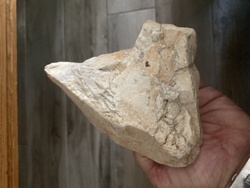
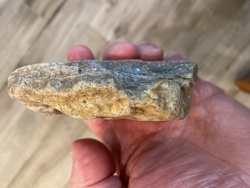
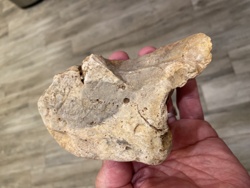
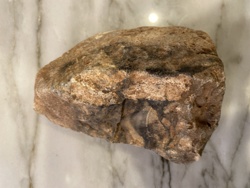
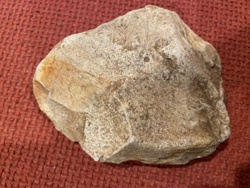
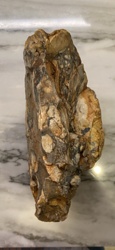
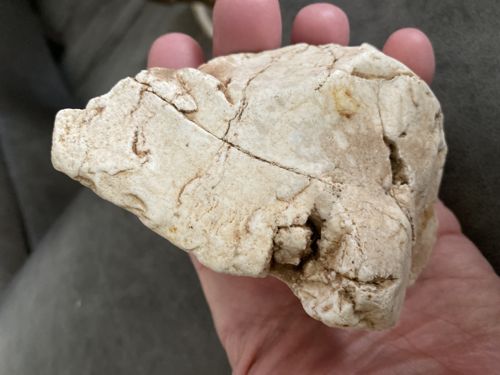
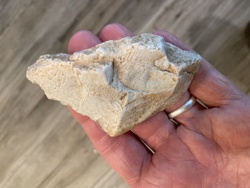
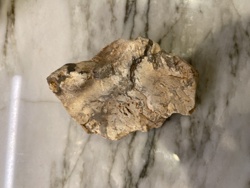
This artifact is a lithic multi-tool scraper measuring approximately 4 inches in length by 3 inches in width. It is composed of a cream-colored, opaque chert with subtle tan and orange-tinted inclusions. The physical construction displays a thick, bulky cross-section characteristic of Middle Paleolithic Mousterian technology, utilizing a heavy flake or core-based approach. The surface reveals a series of natural fractures and deep crystalline cavities, particularly visible in the lower-right quadrant, which suggests the raw material possessed internal geological flaws. Distinguishing features include a somewhat pointed distal end and evidence of possible marginal retouching along the lower edge to create a scraping surface. The condition shows heavy weathering with significant rounding of the edges, which may be a result of river-rolling or long-term environmental exposure rather than intentional grinding. There are no modern maker's marks, but the deep brown sediment accumulation within the crevices indicates it was buried for a significant duration. While identified by the source as found in Guthrie, Oklahoma, the 'Mousterian' stylistic label typically refers to Eurasian Neanderthal technologies dated between 300,000 and 30,000 years ago; its presence in North America would suggest either a stylistic parallel in Paleo-Indian lithic reduction or a misidentification of a natural geofact. The craftsmanship is utilitarian and opportunistic, focused on functionality rather than refined aesthetics.
AI-Generated Appraisal Disclaimer
Estimated Value
$40 - $75
Basic Information
Category
Archaeological Artifacts / Prehistoric Stone Tools
Appraised On
February 20, 2026
Estimated Value
$40 - $75
Additional Details Provided By Owner
User Provided Information
Middle Paleolithic Mousterian chert multi tool scraper tool found in Guthrie OK measuring 4" x 3"
Item Description
This artifact is a lithic multi-tool scraper measuring approximately 4 inches in length by 3 inches in width. It is composed of a cream-colored, opaque chert with subtle tan and orange-tinted inclusions. The physical construction displays a thick, bulky cross-section characteristic of Middle Paleolithic Mousterian technology, utilizing a heavy flake or core-based approach. The surface reveals a series of natural fractures and deep crystalline cavities, particularly visible in the lower-right quadrant, which suggests the raw material possessed internal geological flaws. Distinguishing features include a somewhat pointed distal end and evidence of possible marginal retouching along the lower edge to create a scraping surface. The condition shows heavy weathering with significant rounding of the edges, which may be a result of river-rolling or long-term environmental exposure rather than intentional grinding. There are no modern maker's marks, but the deep brown sediment accumulation within the crevices indicates it was buried for a significant duration. While identified by the source as found in Guthrie, Oklahoma, the 'Mousterian' stylistic label typically refers to Eurasian Neanderthal technologies dated between 300,000 and 30,000 years ago; its presence in North America would suggest either a stylistic parallel in Paleo-Indian lithic reduction or a misidentification of a natural geofact. The craftsmanship is utilitarian and opportunistic, focused on functionality rather than refined aesthetics.
Get Your Items Appraised
Instant estimates of your treasures with AI-powered instant appraisals