Mid-Century Modern Die-Cast Aluminum Stacking Chair
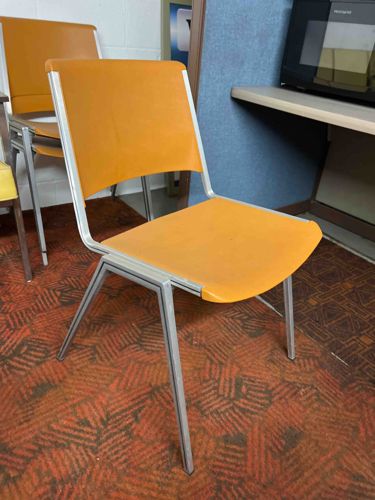
This is a mid-century modern style institutional stacking chair, likely produced in the late 1960s to mid-1970s. The chair features a distinctive die-cast aluminum frame with a matte silver finish, characterized by angular, geometric legs that taper toward the floor for a 'butterfly' or splayed footprint. The seat and backrest are constructed from molded plastic or fiberglass-reinforced resin in a vibrant mustard-yellow or harvest-orange hue, popular in communal seating during this era. The backrest is framed by the aluminum structure on the sides and top, while the seat is cantilevered over the forward frame assembly. Notable condition issues include visible surface dirt, scuffing on the plastic surfaces, and moderate oxidation or pitting on the aluminum frame, particularly at the joints and lower legs. The industrial craftsmanship is evident in the visible mechanical fasteners and the stackable design, which was intended for schools, offices, or community centers. While no maker's mark is visible in the image, the design is highly reminiscent of work by manufacturers like Castelli or Cramer. The chair displays a functionalist aesthetic with high durability, though it shows clear signs of heavy usage and age-related patina.
AI-Generated Appraisal Disclaimer
Estimated Value
$150-$250
Basic Information
Category
Furniture
Appraised On
February 14, 2026
Estimated Value
$150-$250
Item Description
This is a mid-century modern style institutional stacking chair, likely produced in the late 1960s to mid-1970s. The chair features a distinctive die-cast aluminum frame with a matte silver finish, characterized by angular, geometric legs that taper toward the floor for a 'butterfly' or splayed footprint. The seat and backrest are constructed from molded plastic or fiberglass-reinforced resin in a vibrant mustard-yellow or harvest-orange hue, popular in communal seating during this era. The backrest is framed by the aluminum structure on the sides and top, while the seat is cantilevered over the forward frame assembly. Notable condition issues include visible surface dirt, scuffing on the plastic surfaces, and moderate oxidation or pitting on the aluminum frame, particularly at the joints and lower legs. The industrial craftsmanship is evident in the visible mechanical fasteners and the stackable design, which was intended for schools, offices, or community centers. While no maker's mark is visible in the image, the design is highly reminiscent of work by manufacturers like Castelli or Cramer. The chair displays a functionalist aesthetic with high durability, though it shows clear signs of heavy usage and age-related patina.

Get Your Items Appraised
Instant estimates of your treasures with AI-powered instant appraisals