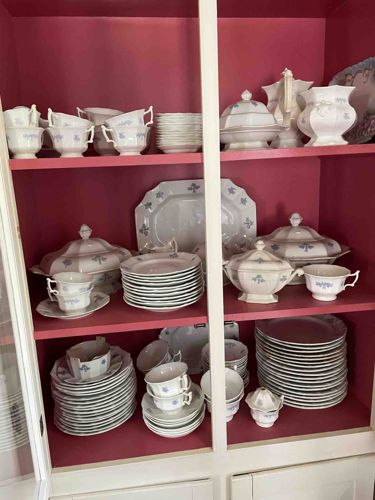
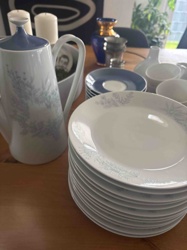
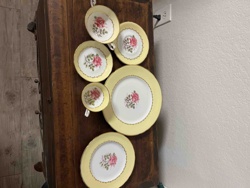
Chelsea iron wear from England dated around 1850s; complete set. A few with stain seeping through from iron.
These notes were written by the person who submitted this item. Appraiser.AI has not verified them, and the AI's identification and estimate may rely on them.
AI Estimated Value
Not an official valuation
$600-900
AI estimate as of September 22, 2025 · verify with a professional before acting
AI-Generated · Verify before acting
Everything on this page is generated by AI for informational purposes only. AI can make mistakes — the AI may misidentify items or misattribute them (artist, maker, brand, designer, origin, era). This is not an official valuation and should not be used for insurance, sale, tax, estate, legal, or lending purposes — or any decision requiring a certified appraisal. It is not an authoritative claim about any person, brand, or rights holder — do not share or rely on it as a factual statement about a third party. Always consult qualified professionals before making financial decisions.
This analysis also relies on unverified notes provided by the user, which may be incomplete or inaccurate and could affect the result.
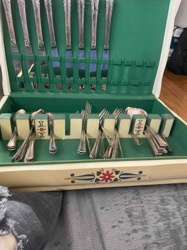
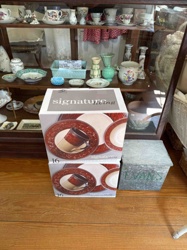
This is a comprehensive set of Chelsea ironstone dinnerware, originating from England and estimated to date around the 1850s, based on the provided context. The set displays a consistent white body color with a delicate, light blue transfer-printed or hand-painted decorative motif, primarily featuring the iconic fleur-de-lis symbol. The service includes a wide array of pieces, indicating a complete set for dining. Observable items include numerous dinner plates, salad plates, bread plates, saucers, and various serving pieces such as covered tureens (likely for soup or vegetables), a large oval serving platter, tea or coffee cups with handles, and possibly a creamer and sugar bowl set, as well as a taller, lidded serving vessel (possibly a coffee pot). Some pieces, particularly the cups, feature a faceted design or fluted sides, adding a touch of elegance. The overall construction appears robust, characteristic of ironstone, which was designed for durability. Some pieces exhibit visible staining, described as 'stain seeping through from iron,' which is a common condition issue with historical ironstone, especially older pieces where iron impurities in the clay or glazes can leach over time, resulting in brown or rust-colored discoloration. This 'iron bleed' indicates age and historical use. The craftsmanship, though mass-produced for the era, suggests a good quality everyday or semi-formal dinner service. The consistent pattern across all pieces confirms it is a matched set. The design aesthetic is typical of mid-19th century European ceramics, leaning towards Rococo revival or a more simplified, classic form. No specific maker's marks are visible in the images, but Chelsea ironstone often bears characteristic backstamps. The quantity of pieces suggests a service for at least eight to twelve settings, providing significant utility and historical value as a complete collection.
AI Appraisal Report
I have thoroughly examined the images of this Chelsea Ironstone Dinnerware Set with the Fleur-de-Lis Pattern, dated to approximately the 1850s and originating from England. The set's completeness, encompassing numerous dinnerware and serving pieces, is a significant value enhancer. The light blue transfer-printed or hand-painted fleur-de-lis motif is a classic and appealing design, typical of the mid-19th century. The robust nature of ironstone, designed for durability, is evident.
Condition-wise, the visible "stain seeping through from iron" (iron bleed) on some pieces is a common and expected characteristic of historical ironstone, often indicating age rather than severe damage. While pristine condition would command a higher premium, this specific aging is generally accepted by collectors. Authenticity is strongly suggested by the style, pattern consistency, and the reported age and origin, aligning well with known Chelsea ironstone production.
In terms of market conditions, complete antique dinner services like this, especially those with a desirable pattern and in fair to good condition, generally maintain steady interest. Comparable sets of English ironstone from this period, particularly those with a full complement of pieces, typically fetch values in the mid to high hundreds. The demand for historical ironstone remains consistent among collectors of period ceramics. The rarity of a genuinely complete set from this era adds to its appeal.
Factors significantly impacting value are the completeness of the set, the classic design, and the age. The iron bleed, while common, does slightly temper the value compared to a spotless set. To fully authenticate beyond aesthetic and historical consistency, an in-person examination would be crucial to look for specific maker's marks or glaze characteristics. Provenance documentation would also provide irrefutable evidence of its history. Finally, scientific testing could confirm material composition and age, though this is rarely pursued for ironstone unless significant discrepancies exist.