Lower Paleolithic Chert Multi-Tool Scraper
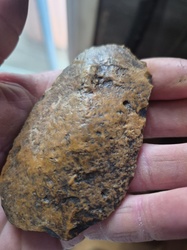
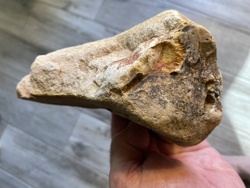
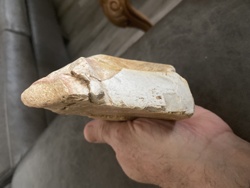
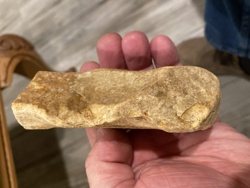
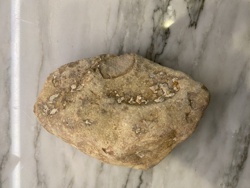
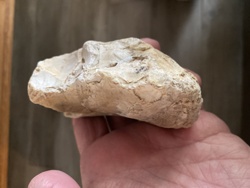
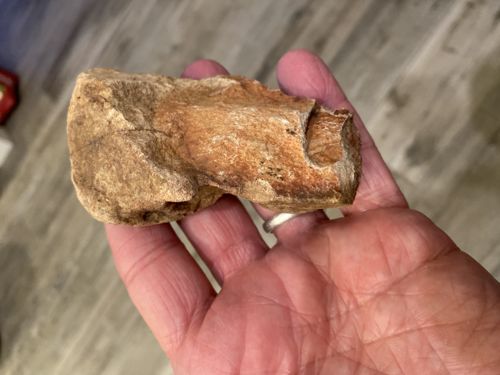
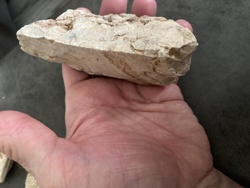
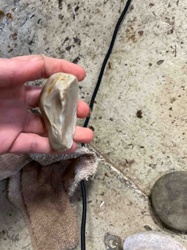
This artifact is a prehistoric stone tool measuring approximately 3.5 inches by 2.0 inches, recovered from Guthrie, Oklahoma. The item is crafted from high-silica chert, exhibiting a range of earthy tones including ochre, burnt sienna, and tan. This coloration is a result of long-term environmental exposure and mineral leaching, which has created a heavy, authentic desert varnish or patina over the exterior surfaces. The tool features a thick, robust dorsal section that tapers into several functional edges. One side displays intentional unifacial flaking characteristic of a side-scraper, while another area shows a notched or 'spokeshave' indentation, suggesting it served as a versatile multi-tool for woodworking or hide processing. The distal end shows evidence of crushing and impact, potentially functioning as an adze or heavy-duty scraper. The craftsmanship is typical of the Lower Paleolithic style, characterized by large, primary flakes and minimal secondary retouching, indicating a pragmatic and ancient manufacturing technique. There is significant weathering on the flake scars, which are smoothed by thousands of years of exposure. No modern tool marks are visible; the fractures follow natural bedding planes and typical bulb-of-percussion patterns common in lithic reduction. The overall condition is remarkably stable, with a dense, heavy feel that indicates high mineral content in the stone.
AI-Generated Appraisal Disclaimer
Estimated Value
$45 - $85
Basic Information
Category
Archaeological Artifacts / Lithic Tools
Appraised On
February 19, 2026
Estimated Value
$45 - $85
Additional Details Provided By Owner
User Provided Information
Lower Paleolithic chert scraper knife multi tool found in Guthrie OK measuring 3.5" x 2.0
Item Description
This artifact is a prehistoric stone tool measuring approximately 3.5 inches by 2.0 inches, recovered from Guthrie, Oklahoma. The item is crafted from high-silica chert, exhibiting a range of earthy tones including ochre, burnt sienna, and tan. This coloration is a result of long-term environmental exposure and mineral leaching, which has created a heavy, authentic desert varnish or patina over the exterior surfaces. The tool features a thick, robust dorsal section that tapers into several functional edges. One side displays intentional unifacial flaking characteristic of a side-scraper, while another area shows a notched or 'spokeshave' indentation, suggesting it served as a versatile multi-tool for woodworking or hide processing. The distal end shows evidence of crushing and impact, potentially functioning as an adze or heavy-duty scraper. The craftsmanship is typical of the Lower Paleolithic style, characterized by large, primary flakes and minimal secondary retouching, indicating a pragmatic and ancient manufacturing technique. There is significant weathering on the flake scars, which are smoothed by thousands of years of exposure. No modern tool marks are visible; the fractures follow natural bedding planes and typical bulb-of-percussion patterns common in lithic reduction. The overall condition is remarkably stable, with a dense, heavy feel that indicates high mineral content in the stone.
Related Tags
Get Your Items Appraised
Instant estimates of your treasures with AI-powered instant appraisals