AI estimate as of November 5, 2025 · verify with a professional before acting
AI-Generated · Verify before acting
Everything on this page is generated by AI for informational purposes only. AI can make mistakes — the AI may misidentify items or misattribute them (artist, maker, brand, designer, origin, era). This is not an official valuation and should not be used for insurance, sale, tax, estate, legal, or lending purposes — or any decision requiring a certified appraisal. It is not an authoritative claim about any person, brand, or rights holder — do not share or rely on it as a factual statement about a third party. Always consult qualified professionals before making financial decisions.
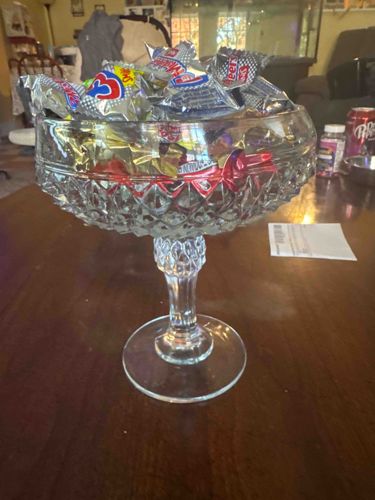
This item is a clear glass candy dish, often referred to as a compote, characterized by its intricate cut or pressed glass patterns. The overall construction suggests a multi-part assembly, likely with the bowl and stem joined. The bowl itself is shallow and wide, designed to hold a quantity of confectionery, as evidenced by the assorted wrapped candies currently filling it. The exterior of the bowl features a prominent, repeating diamond-cut or pressed pattern, indicative of a classic 'hobnail' or 'pineapple' motif, which catches and refracts light. The top rim of the bowl appears to be smooth, contrasting with the textured body. Below the bowl, there is a distinct stem that is also patterned, possibly with vertical fluting or a similar geometric design, transitioning into a more elaborate, perhaps faceted, section closer to the bowl. The stem terminates into a clear, circular, and unadorned base or foot, providing stability. Based on the visible patterns and common manufacturing techniques for this style of dish, it is most likely made from pressed glass, though finer examples could be cut crystal. The visible condition appears good, with no obvious chips, cracks, or significant wear marks discernible from the image, suggesting it has been well-maintained. There are no discernible maker's marks or signatures visible in the provided views. The style is typical of glassware produced from the late 19th to mid-20th century, a period when such decorative pressed glass items were popular for domestic use. The craftsmanship appears to be of standard quality for mass-produced decorative glassware of that era, focusing on aesthetic appeal through light refraction.
AI Appraisal Report
Upon my virtual examination of the provided image, I assess this clear glass candy dish, or compote, to be in very good condition. There are no apparent chips, cracks, or significant abrasions. The intricate diamond-cut or pressed pattern, likely a 'hobnail' or 'pineapple' style, is well-defined, suggesting minimal wear from handling or cleaning. This item appears to be a classic example of pressed glass from the late 19th to mid-20th century, a period of prolific production for such decorative tableware. The multi-part construction, with a distinct bowl, patterned stem, and plain circular foot, is typical for mass-produced items of that era designed to mimic cut crystal. While the pattern effectively catches and refracts light, consistent with its design intent, the manufacturing marks (e.g., mold lines) that would definitively distinguish pressed glass from true cut crystal are not discernible from images alone. My assessment of authenticity is that it is a period piece of decorative glassware. However, without in-hand inspection, it's impossible to confirm if it's true cut crystal or differentiate between specific pressed glass manufacturers.
Market conditions for such vintage pressed glass compotes are generally stable but with moderate demand. These items are common at antique malls, estate sales, and online marketplaces. Comparable pieces, often referred to as 'Early American Pattern Glass' (EAPG) or similar styles, typically retail in the $25-$50 range, depending on pattern rarity and condition. This particular pattern appears relatively common. Rarity is low, as these were produced in large quantities. The primary factors influencing its value are its excellent apparent condition and decorative appeal. The absence of maker's marks, which are rare on such pieces anyway, does not significantly detract from its value given its likely origin. To fully authenticate the manufacturing method (pressed vs. cut) and potentially identify a specific pattern or maker, an in-person examination, including tactile inspection for mold lines, weight assessment, and detailed pattern recognition, would be necessary.