AI Appraisal Estimate

AI-generated estimates · not official valuations

From the user

What was submitted

Photo and notes provided by the user — not generated by AI

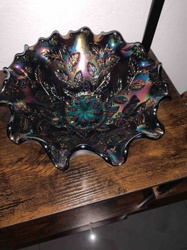
Submitted item photo
Submitted photo · May 18, 2026

User's notes

Carnival glass

AI analysis below

AI appraisal

AI analysis & estimate

AI-Generated · Verify before acting

Everything below is generated by AI for informational purposes only. AI can make mistakes — the AI may misidentify items or misattribute them (artist, maker, brand, designer, origin, era). This is not an official valuation and should not be used for insurance, sale, tax, estate, legal, or lending purposes — or any decision requiring a certified appraisal. It is not an authoritative claim about any person, brand, or rights holder — do not share or rely on it as a factual statement about a third party. Always consult qualified professionals before making financial decisions.

Note

This analysis also relies on unverified notes provided by the user, which may be incomplete or inaccurate and could affect the result.

Read the full disclaimer

AI Identification

·Not independently authenticated·Verify before acting

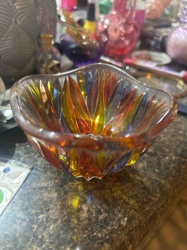
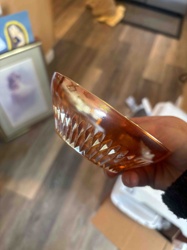
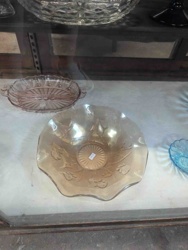
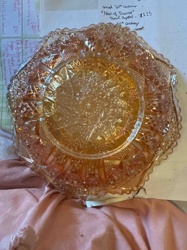
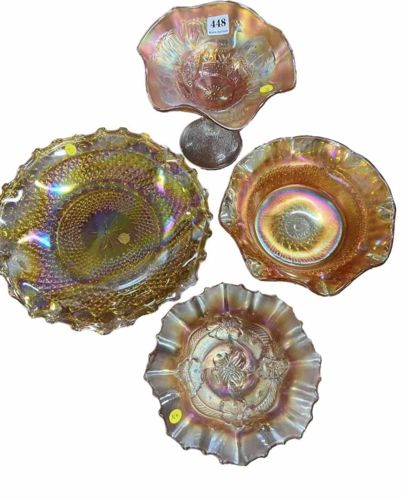
Four-Piece Collection of Marigold Carnival Glass Bowls and Compote

Collectible Glassware / Antique Carnival Glass

AI Estimated Value

·Not an official valuation·Verify before acting

$125 - $200

As of May 18, 2026

AI Item Analysis

·AI can make mistakes·Verify before acting
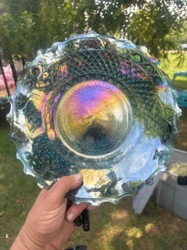
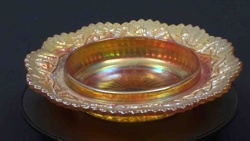
This collection consists of four distinct pieces of Marigold Carnival Glass, likely dating from the early 20th century (c. 1910-1930). The group includes a footed compote with a ruffled rim, two low bowls with fluted or crimped edges, and a large shallow bowl or charger. All pieces exhibit the characteristic iridescent metallic glaze known as 'Marigold' applied over pressed orange-hued glass, which creates a spectrum of gold, pink, and pearl-like lusters. These items feature dense, molded patterns including geometric hobnails, floral motifs, and potentially a 'Peacock and Urn' pattern on the compote. The craftsmanship is typical of major American glass manufacturers of the era such as Fenton, Northwood, or Dugan. The pieces vary in diameter, with the large bowl appearing to be approximately 9-10 inches across. Condition appears generally good with a vibrant luster; however, there is typical shelf wear on the base rings and small manufacturing anomalies like straw marks or cooling lines common to pressed glass. A few small yellow auction stickers and a numbered lot tag (448) are visible, indicating they were recently part of an estate sale or auction inventory. No major chips or cracks are immediately visible from the top view, though the crimped edges are prone to 'flea bites'.
AI Appraisal Report

·AI can make mistakes·Verify before acting
Upon visual examination of this four-piece Marigold Carnival Glass ensemble, I find the collection to be authentic early 20th-century pressed glass, likely produced by Fenton or Northwood between 1910 and 1925. The marigold iridescence—achieved by spraying metallic salts onto hot orange glass—shows good saturation and minimal 'rubbing' or loss of luster, which is critical for value. The 'Peacock' and 'Thistle/Floral' motifs suggest popular patterns that remain staples in the collector market. The current market for Carnival Glass has stabilized but is softer than its peak in the early 2000s. Common marigold pieces are widely available; therefore, value is driven by pattern rarity and edge treatment. This set consists of 'production era' staples rather than rare experimental colors or 'ice' finishes. Comparable auction results for similar multi-piece lots typically range from $30 to $60 per piece, depending on the specific pattern identification of the footed compote. The primary value drivers here are the lack of visible heat checks or internal bruising. However, the crimped edges are notorious for 'flea bites' that often go unnoticed in photographs. While the luster appears vibrant, the presence of auction lot stickers suggests recent market movement. Limitations: Verification from images cannot confirm the presence of high-quality 'Northwood' maker marks (the 'N' in a circle) often hidden in the pattern. A physical inspection is required to check for 'sick glass' (internal clouding), ground-down chips on the base rings, and to differentiate between authentic Fenton and modern reproductions (though these patterns look period-correct). No scientific testing is required, but provenance from the estate sale mentioned would bolster the timeline of ownership.

Get your items appraised

Instant estimates of your treasures with AI-powered appraisals

Browse More Appraisals