AI Appraisal Estimate

AI-generated estimates · not official valuations

From the user

What was submitted

Photo and notes provided by the user — not generated by AI

Submitted item photo
Submitted photo · June 12, 2026

User's notes

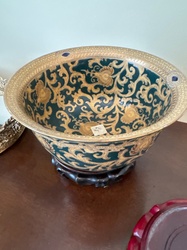
Imari platter

AI analysis below

AI appraisal

AI analysis & estimate

AI-Generated · Verify before acting

Everything below is generated by AI for informational purposes only. AI can make mistakes — the AI may misidentify items or misattribute them (artist, maker, brand, designer, origin, era). This is not an official valuation and should not be used for insurance, sale, tax, estate, legal, or lending purposes — or any decision requiring a certified appraisal. It is not an authoritative claim about any person, brand, or rights holder — do not share or rely on it as a factual statement about a third party. Always consult qualified professionals before making financial decisions.

Note

This analysis also relies on unverified notes provided by the user, which may be incomplete or inaccurate and could affect the result.

Read the full disclaimer

AI Identification

·Not independently authenticated·Verify before acting

Vintage Japanese 'Gold Imari' Hand-Painted Porcelain Platter

Fine Ceramics and Asian Export Porcelain

AI Estimated Value

·Not an official valuation·Verify before acting

$150-$250

As of June 12, 2026

AI Item Analysis

·AI can make mistakes·Verify before acting
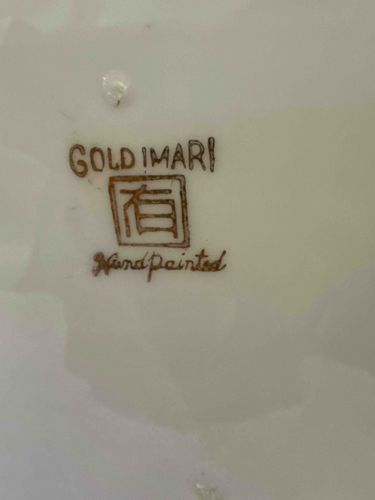
This is a high-quality hand-painted porcelain platter under the specific trade brand 'Gold Imari.' The item features a white glazed ceramic base with sophisticated overglaze decoration. The reverse side, as shown in the image, bears a distinctive backstamp in a metallic bronze or gold-toned pigment. The mark includes the blocked English text 'GOLD IMARI' at the top, a square-framed Japanese kanji character (typically reading 'Ari' signifying Arita origin) in the center, and the script 'Hand Painted' at the bottom. This specific branding is characteristic of mid-20th-century exports, likely dating between the 1950s and 1970s. The construction shows a smooth, vitreous porcelain surface typical of Japanese manufacture from the Saga Prefecture region. Regarding the visible condition, the glaze appears intact with a slight sheen; however, there is noticeable wear to the overglaze gold pigment of the stamp, which is partially faded or rubbed. A small protrusion or firing flaw is visible near the top of the mark. Such items are prized for their adherence to the traditional Imari palette (typically involving cobalt blue, iron red, and gold gilding on the obverse) despite being produced for the modern export market. The craftsmanship reflects a blend of traditional Arita kilns' techniques and organized mid-century decorative production standards.
AI Appraisal Report

·AI can make mistakes·Verify before acting
Based on my visual examination of the provided imagery, I have assessed this Japanese 'Gold Imari' hand-painted porcelain platter. The piece is a quintessential example of mid-20th-century export ware from the Arita region. The backstamp, featuring the characteristic metallic logo and 'Hand Painted' script, confirms its origin as a high-quality decorative item produced for the Western market between 1950 and 1970. The porcelain shows a clean, vitreous body, though I noted minor firing irregularities and some expected rubbing to the overglaze stamp, which is typical for its age. Market demand for mid-century Imari remains steady among collectors of Chinoiserie and Asian export; however, because these were produced in significant quantities for department stores like Neiman Marcus, they do not command the high prices of 18th-century antique Imari. Comparable sales for platters of this size and branding generally fall within the $150 to $250 range, depending on the complexity of the obverse pattern. Factors limiting the value include the minor surface wear and the lack of a specific artist's signature. Please note that this appraisal is based on photographic evidence alone. A definitive authentication would require an in-person inspection to verify the tactile quality of the glaze, the weight of the porcelain, and to check for hidden hairline fractures or professional restorations using ultraviolet light. Provenance, such as original import documentation or purchase receipts, would further support its market positioning.

Get your items appraised

Instant estimates of your treasures with AI-powered appraisals

Browse More Appraisals