Prehistoric Chert Bifacial Scraper / Multi-tool
Archaeological Lithic Artifacts

Prehistoric Chert Bifacial Scraper / Multi-tool

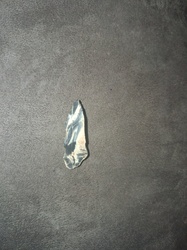
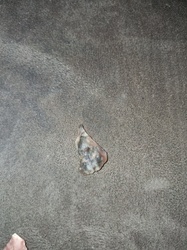
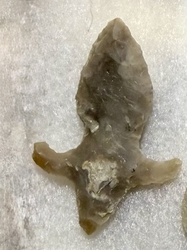
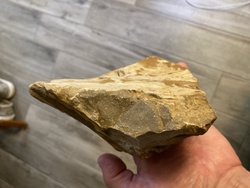
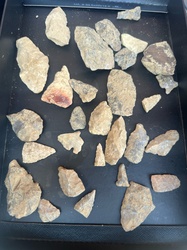
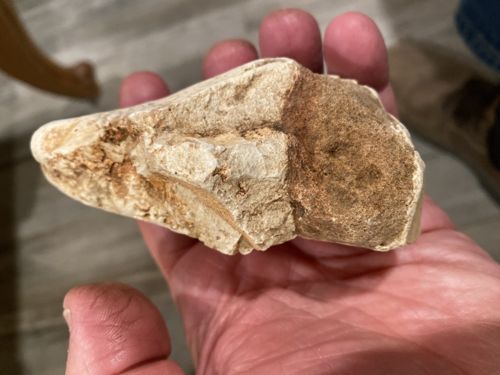
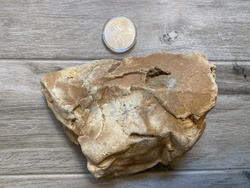
This item is a suspected prehistoric stone tool, measuring approximately 4 inches in length and 2 inches in width. It appears to be a bifacially worked tool, likely serving as a scraper or hand-held cutting implement. The primary material is a light-colored, tan-to-cream chert or flint which exhibits a varying degree of iron-oxide staining and mineralized patina, indicative of long-term exposure to soil and natural elements. The construction shows evidence of percussion flaking, with secondary pressure flaking along the margins to create a functional edge. One end tapers to a semi-blunt point, while the wider base retains a significant portion of the natural cortical surface (cortex), providing an ergonomic grip for a human hand. The condition is consistent with an archaeological find; there is significant surface weathering and some rounding of the flake scars due to geological processes or stream wear. There are no modern maker's marks or signatures, which is expected for a lithic artifact. The craftsmanship displays intentional reduction and shaping typical of an opportunistic prehistoric industry. Given the find location in Guthrie, Oklahoma, this may belong to an archaic or woodland period, though definitive dating requires stratigraphic context. The tool shows signs of heavy use-wear along the distal edges, though some jagged areas may be post-depositional damage.

Estimated Value

$45.00 - $75.00

Basic Information

Category

Archaeological Lithic Artifacts

Appraised On

February 18, 2026

Estimated Value

$45.00 - $75.00

Additional Details Provided By Owner

User Provided Information

Prospective Prehistoric bi face hand axe scraper tool found in Guthrie, OK 4" x 2"

Item Description

This item is a suspected prehistoric stone tool, measuring approximately 4 inches in length and 2 inches in width. It appears to be a bifacially worked tool, likely serving as a scraper or hand-held cutting implement. The primary material is a light-colored, tan-to-cream chert or flint which exhibits a varying degree of iron-oxide staining and mineralized patina, indicative of long-term exposure to soil and natural elements. The construction shows evidence of percussion flaking, with secondary pressure flaking along the margins to create a functional edge. One end tapers to a semi-blunt point, while the wider base retains a significant portion of the natural cortical surface (cortex), providing an ergonomic grip for a human hand. The condition is consistent with an archaeological find; there is significant surface weathering and some rounding of the flake scars due to geological processes or stream wear. There are no modern maker's marks or signatures, which is expected for a lithic artifact. The craftsmanship displays intentional reduction and shaping typical of an opportunistic prehistoric industry. Given the find location in Guthrie, Oklahoma, this may belong to an archaic or woodland period, though definitive dating requires stratigraphic context. The tool shows signs of heavy use-wear along the distal edges, though some jagged areas may be post-depositional damage.
Get Your Items Appraised

Instant estimates of your treasures with AI-powered instant appraisals

Browse More Appraisals