AI Appraisal Estimate

AI-generated estimates · not official valuations

From the user

What was submitted

Photo and notes provided by the user — not generated by AI

Submitted item photo
Submitted photo · June 15, 2026

User's notes

No additional notes provided.

AI analysis below

AI appraisal

AI analysis & estimate

AI-Generated · Verify before acting

Everything below is generated by AI for informational purposes only. AI can make mistakes — the AI may misidentify items or misattribute them (artist, maker, brand, designer, origin, era). This is not an official valuation and should not be used for insurance, sale, tax, estate, legal, or lending purposes — or any decision requiring a certified appraisal. It is not an authoritative claim about any person, brand, or rights holder — do not share or rely on it as a factual statement about a third party. Always consult qualified professionals before making financial decisions.

Read the full disclaimer

AI Identification

·Not independently authenticated·Verify before acting

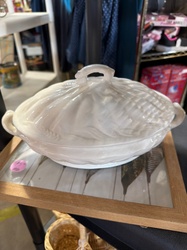
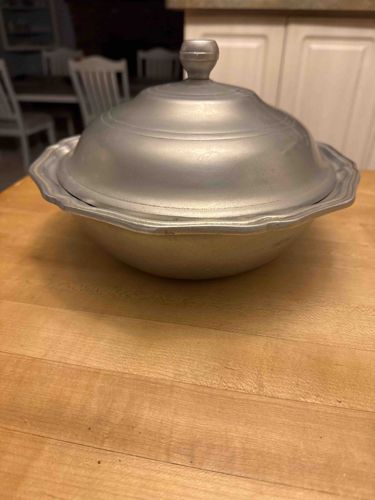
Vintage Pewter or Tooled Aluminum Covered Casserole Serving Dish

Antique and Vintage Kitchenware

AI Estimated Value

·Not an official valuation·Verify before acting

$35.00 - $65.00

As of June 15, 2026

AI Item Analysis

·AI can make mistakes·Verify before acting
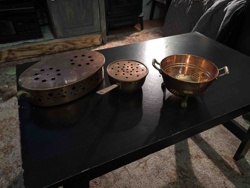
This is a vintage covered serving dish, likely constructed from pewter or cast aluminum, featuring a matte, satin finish characteristic of mid-20th-century metalware. The item consists of two main pieces: a deep circular base and a high-domed lid. The base features a distinctive scalloped or gadrooned rim that extends outward, providing both a decorative flourish and a practical grip surface. The lid is designed with a stepped, domed profile and is topped with a simple, rounded finial knob. Two concentric incised lines encircle the lid, adding a subtle geometric detail to the otherwise smooth surface. The metal displays a consistent grey patina throughout, with visible surface wear including fine scratches, minor pitting, and light scuffing consistent with domestic use and age. There are no immediate signs of deep denting or significant structural repairs, though slight irregularities in the rim suggest the soft nature of the metal alloy. This style is closely associated with American Colonial Revival or Mid-Century traditional aesthetics, likely dating from the 1940s to the 1960s. The craftsmanship indicates a utilitarian yet elegant mass-produced kitchenware item designed for heat retention and tabletop presentation. While no maker's mark is visible on the exterior, pieces of this design were commonly produced by mid-market metalware companies such as Wilton Columbia or similar regional foundries.
AI Appraisal Report

·AI can make mistakes·Verify before acting
I have examined the provided details and images for this vintage metalware covered casserole dish. My assessment identifies it as a mid-20th-century piece, likely constructed from sand-cast aluminum rather than pewter, given the distinctive surface pitting and matte grey patina typical of 'Hammered Aluminum' or Colonial Revival kitchenware. The condition is fair to good; while the structural integrity remains intact, the visible scuffing, fine surface scratches, and minor oxidation denote significant household use which reduces its premium value. The market for mid-century aluminum is currently stable but saturated; comparable pieces from makers like Wilton, Continental, or Rodney Kent frequently appear in the secondary market at modest price points. The value is driven primarily by its utilitarian charm and 'shabby chic' aesthetic rather than rarity, as these were produced in high volumes between 1940 and 1960. A major factor limiting the valuation is the lack of a visible maker's mark and the presence of surface wear. I must note that a definitive appraisal is limited through visual inspection alone. To fully authenticate the alloy composition and confirm the foundry of origin, an in-person examination is required to locate stamps on the underside and to test the metal's weight and heat-retention properties. Scientific testing like X-ray fluorescence (XRF) would be necessary to distinguish between high-grade pewter and aluminum alloys, though the cost of such testing would likely exceed the item's market value.

Get your items appraised

Instant estimates of your treasures with AI-powered appraisals

Browse More Appraisals