AI Appraisal Estimate

AI-generated estimates · not official valuations

From the user

What was submitted

Photo and notes provided by the user — not generated by AI

Submitted item photo
Submitted photo · June 12, 2026

User's notes

Coin

AI analysis below

AI appraisal

AI analysis & estimate

AI-Generated · Verify before acting

Everything below is generated by AI for informational purposes only. AI can make mistakes — the AI may misidentify items or misattribute them (artist, maker, brand, designer, origin, era). This is not an official valuation and should not be used for insurance, sale, tax, estate, legal, or lending purposes — or any decision requiring a certified appraisal. It is not an authoritative claim about any person, brand, or rights holder — do not share or rely on it as a factual statement about a third party. Always consult qualified professionals before making financial decisions.

Note

This analysis also relies on unverified notes provided by the user, which may be incomplete or inaccurate and could affect the result.

Read the full disclaimer

AI Identification

·Not independently authenticated·Verify before acting

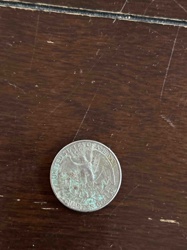
Queen Elizabeth II Canadian Bronze Cent

Numismatics / Currency

AI Estimated Value

·Not an official valuation·Verify before acting

$0.01 - $0.05

As of June 12, 2026

AI Item Analysis

·AI can make mistakes·Verify before acting
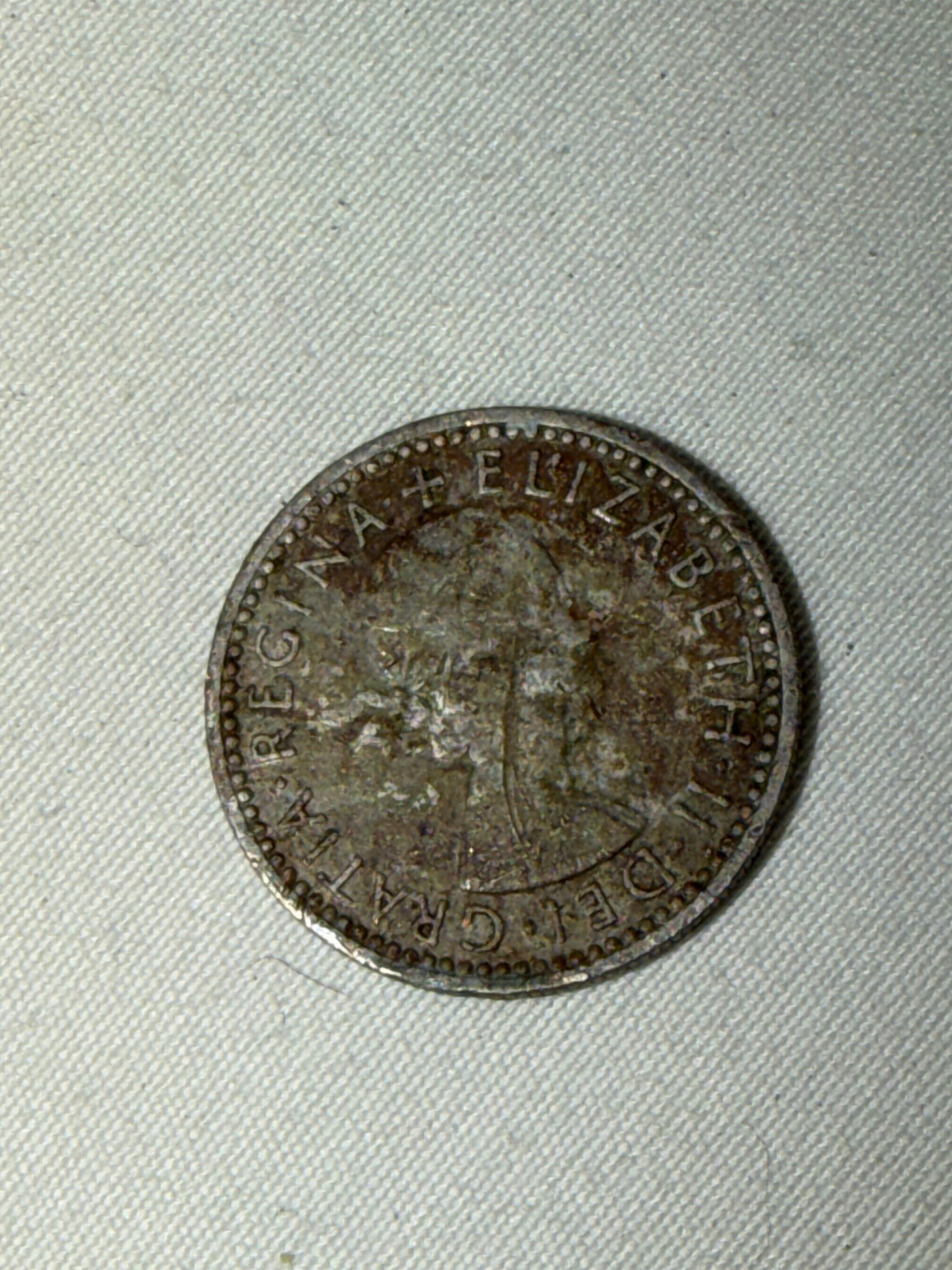
This is a circular bronze-composition coin, specifically a Canadian one-cent piece featuring the laureate effigy of Queen Elizabeth II in her youth (the first portrait used on Canadian coinage). The obverse side displays the Latin legend 'ELIZABETH II DEI GRATIA REGINA', which translates to 'Elizabeth II, by the Grace of God, Queen'. The coin depicts the Queen facing right, with her hair tied with a laurel wreath and ribbons. Based on the style of the portrait and the legend structure, this coin was likely minted between 1953 and 1964. The physical condition is poor, showing significant environmental damage, heavy oxidation, and irregular crusty patination that obscures much of the central surface detail. There is notable wear on the high points of the hair and the edges of the lettering. The rim shows a beaded border which remains largely intact despite the surface corrosion. The color is a characteristic dull brownish-grey common to heavily circulated and weathered copper/bronze alloys. The craftsmanship is typical of high-volume government minting of the mid-20th century, though the current state of preservation significantly impacts the clarity of the original strike.
AI Appraisal Report

·AI can make mistakes·Verify before acting
I have examined the descriptions and images of this Queen Elizabeth II Canadian Bronze Cent. The coin features the Mary Gillick laureate portrait, identifying it as a 'Young Head' variety minted between 1953 and 1964. While the design is historically significant as the first effigy of her late Majesty's reign, this specific specimen is in extremely poor numismatic condition. I observe heavy oxidation, environmental damage, and 'crusty' corrosion that has compromised the integrity of the bronze surfaces. Such damage is irreversible and negates any potential collector premium typically found in higher-grade or 'Red' uncirculated examples. From a market perspective, these coins were produced by the Royal Canadian Mint in the hundreds of millions. Consequently, high-circulated or environmentally damaged examples carry no rarity value and are typically traded at their face value or their negligible scrap metal content. There are no indications from the visual evidence of rare varieties, such as the 1953 'Shoulder Fold' or 'No Shoulder Fold' nuances, that would elevate its status beyond a common pocket piece. Authenticity appears consistent with a genuine government-issued strike based on the beaded border and legend spacing; however, a definitive verification is limited by the surface corrosion. A full authentication would require an in-person examination to verify weight (3.24 grams), diameter (19.05 mm), and a microscopic inspection to rule out cast replicas or altered dates. Given the commonality of the issue and its current state of preservation, professional grading or scientific testing is not financially justifiable. The item retains its primary value as a historical curiosity rather than a financial investment.

Get your items appraised

Instant estimates of your treasures with AI-powered appraisals

Browse More Appraisals