Maori Pounamu (Greenstone) Kuru Pendant
Cultural Artifacts & Jewelry

Maori Pounamu (Greenstone) Kuru Pendant

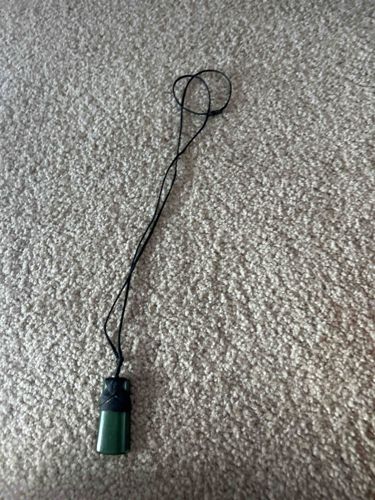
This item is a traditional New Zealand Maori pounamu (nephrite jade) pendant, known as a 'Kuru' or 'Niho' style drop pendant. The jade features a deep forest green hue, often referred to as 'Kawaka' or 'Inanga' depending on the specific translucency and inclusions, though the dark saturation suggests high mineral density typical of the West Coast South Island deposits. The pendant is shaped into a rectangular block with slight tapering and rounded edges, exhibiting a high-polish finish that enhances its natural reflective quality. It is secured with a black cord, specifically a traditional lashing technique that crisscrosses the top portion of the stone to ensure stability without the need for drilling through the center of the jade piece. The cord appears to be a modern synthetic or waxed fiber, likely a replacement for the original organic fibers like muka (flax) given the provided 100-year provenance. The stone itself displays smooth surfaces with no visible fractures or large chips, suggesting a well-preserved condition despite its age. The craftsmanship is refined, following the minimalism of classical Maori stone carving where the natural beauty of the pounamu is the primary focus. While no maker's marks are visible—which is standard for indigenous carvings of this era—the soft rounding of the corners indicates manual polishing. This piece serves as both a cultural taonga (treasure) and a prestige ornament, symbolizing strength and connection to the land.
Estimated Value

$1,400 - $2,200 USD

Basic Information

Category

Cultural Artifacts & Jewelry

Appraised On

January 12, 2026

Estimated Value

$1,400 - $2,200 USD

Additional Details Provided By Owner

User Provided Information

Greenstone rope 100 years

Item Description

This item is a traditional New Zealand Maori pounamu (nephrite jade) pendant, known as a 'Kuru' or 'Niho' style drop pendant. The jade features a deep forest green hue, often referred to as 'Kawaka' or 'Inanga' depending on the specific translucency and inclusions, though the dark saturation suggests high mineral density typical of the West Coast South Island deposits. The pendant is shaped into a rectangular block with slight tapering and rounded edges, exhibiting a high-polish finish that enhances its natural reflective quality. It is secured with a black cord, specifically a traditional lashing technique that crisscrosses the top portion of the stone to ensure stability without the need for drilling through the center of the jade piece. The cord appears to be a modern synthetic or waxed fiber, likely a replacement for the original organic fibers like muka (flax) given the provided 100-year provenance. The stone itself displays smooth surfaces with no visible fractures or large chips, suggesting a well-preserved condition despite its age. The craftsmanship is refined, following the minimalism of classical Maori stone carving where the natural beauty of the pounamu is the primary focus. While no maker's marks are visible—which is standard for indigenous carvings of this era—the soft rounding of the corners indicates manual polishing. This piece serves as both a cultural taonga (treasure) and a prestige ornament, symbolizing strength and connection to the land.
Get Your Items Appraised

Instant estimates of your treasures with AI-powered instant appraisals

Browse More Appraisals