Middle Paleolithic Chert Biface Hand Axe / Side Scraper
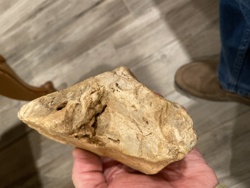
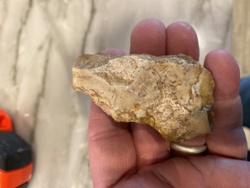
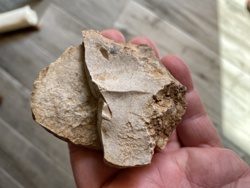
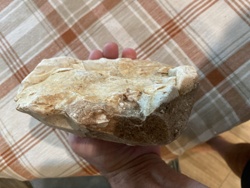
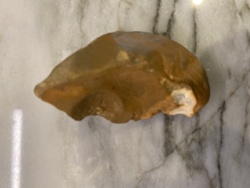
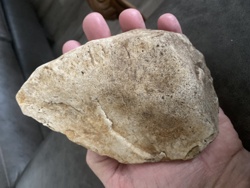
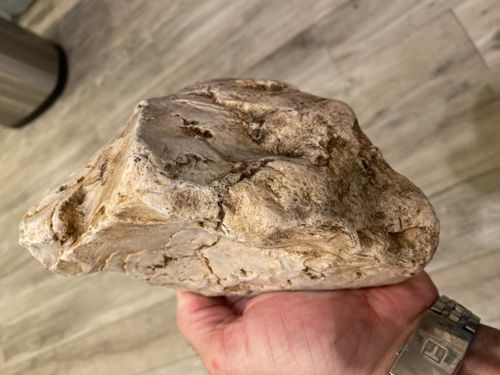
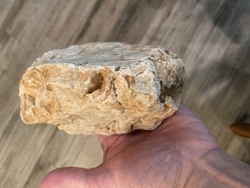
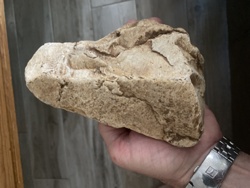
This is a substantial lithic artifact measuring approximately 6 inches by 5 inches, identified as a bifacial hand axe or side scraper. Crafted from chert, the tool exhibits a semi-triangular, robust form with significant thickness at the base to allow for a secure grip during use. The material displays a creamy tan and light brown coloration with visible mineral staining and a weathered patina consistent with long-term environmental exposure in Oklahoma soil. The surface shows evidence of percussion flaking, creating several worked edges, though the specimen appears heavily weathered, which has smoothed the original sharp flake scars. Structurally, the hunk of chert retains its integrity with no major recent fractures, but displays significant ancient micro-chipping along the primary working edge, suggesting heavy use-wear. The craftsmanship reflects Middle Paleolithic technology, prioritizing functional durability over refined aesthetics. The tool lacks maker marks as is typical for prehistoric lithics, but its provenance in Guthrie, OK, provides critical geographical context for North American archaeological study.
AI-Generated Appraisal Disclaimer
Estimated Value
$150 - $300
Basic Information
Category
Prehistoric Artifacts / Lithic Tools
Appraised On
February 19, 2026
Estimated Value
$150 - $300
Additional Details Provided By Owner
User Provided Information
Middle Paleolithic chert bi face hand axe side scraper tool found in Guthrie OK measuring 6" x 5"
Item Description
This is a substantial lithic artifact measuring approximately 6 inches by 5 inches, identified as a bifacial hand axe or side scraper. Crafted from chert, the tool exhibits a semi-triangular, robust form with significant thickness at the base to allow for a secure grip during use. The material displays a creamy tan and light brown coloration with visible mineral staining and a weathered patina consistent with long-term environmental exposure in Oklahoma soil. The surface shows evidence of percussion flaking, creating several worked edges, though the specimen appears heavily weathered, which has smoothed the original sharp flake scars. Structurally, the hunk of chert retains its integrity with no major recent fractures, but displays significant ancient micro-chipping along the primary working edge, suggesting heavy use-wear. The craftsmanship reflects Middle Paleolithic technology, prioritizing functional durability over refined aesthetics. The tool lacks maker marks as is typical for prehistoric lithics, but its provenance in Guthrie, OK, provides critical geographical context for North American archaeological study.
Get Your Items Appraised
Instant estimates of your treasures with AI-powered instant appraisals