AI Appraisal Estimate

AI-generated estimates · not official valuations

From the user

What was submitted

Photo and notes provided by the user — not generated by AI

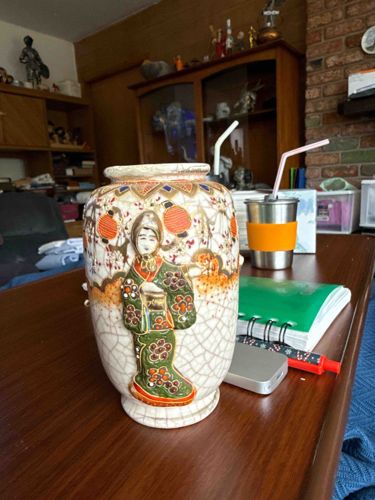
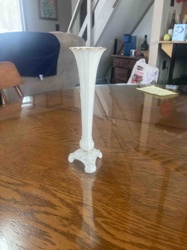
Submitted item photo
Submitted photo · June 30, 2026

User's notes

No additional notes provided.

AI analysis below

AI appraisal

AI analysis & estimate

AI-Generated · Verify before acting

Everything below is generated by AI for informational purposes only. AI can make mistakes — the AI may misidentify items or misattribute them (artist, maker, brand, designer, origin, era). This is not an official valuation and should not be used for insurance, sale, tax, estate, legal, or lending purposes — or any decision requiring a certified appraisal. It is not an authoritative claim about any person, brand, or rights holder — do not share or rely on it as a factual statement about a third party. Always consult qualified professionals before making financial decisions.

Read the full disclaimer

AI Identification

·Not independently authenticated·Verify before acting

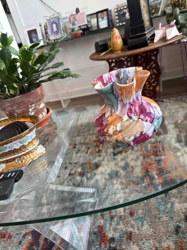
Satsuma-style Moriage Vase with Geisha Motif

Decorative Arts - Ceramics

AI Estimated Value

·Not an official valuation·Verify before acting

$350-550

As of June 30, 2026

AI Item Analysis

·AI can make mistakes·Verify before acting
This appears to be a Satsuma-style earthenware vase, characterized by its crackled glaze and extensive enamel decoration, incorporating the "moriage" technique which creates raised, three-dimensional elements. The vase is medium-sized, with a classic amphora-like body that tapers slightly towards the base and features a wider mouth. The primary color of the glaze is an off-white or cream, exhibiting a distinct and intentional crackle pattern across its surface, a hallmark of Satsuma ware. The hand-painted decorations are vibrant and intricate, dominated by oranges, browns, greens, blues, reds, and gold accents. A prominent feature is the depiction of a geisha-like figure in traditional attire, rendered in raised moriage enamel, providing textural depth. Her kimono is adorned with floral patterns in green, orange, and gold. Other decorative elements include stylized floral or geometric patterns around the rim and on the body of the vase, often in circular or fan-like motifs. The gold accents suggest the use of gilt enamel, adding to the opulent appearance. The condition appears good, with no immediately visible chips or cracks beyond the inherent crackle glaze. The moriage work suggests a higher level of craftsmanship. While specific maker's marks are not visible, the style is consistent with late 19th to early 20th-century Japanese export pottery, possibly Meiji or Taisho period, reflecting a blend of traditional Japanese aesthetic with decorative appeal for Western markets.
AI Appraisal Report

·AI can make mistakes·Verify before acting
Based on my visual examination of the provided image, this appears to be a late 19th to early 20th-century Japanese Satsuma-style Moriage vase. The crackled off-white glaze and the intricate, vibrant hand-painted decoration, featuring a geisha-like figure rendered in raised moriage enamel, are consistent with this period's export wares. The detailed floral patterns, gold accents, and overall craftsmanship suggest a good quality piece. The condition appears to be very good, with no visible chips, cracks (beyond the intentional crackle glaze), or significant losses to the enamel from the image provided, which positively impacts its value. Market conditions for Satsuma-style ware of this period are stable, though not experiencing the peaks of decades past. Demand is consistent for good quality, well-preserved examples with appealing figural or detailed scenes. This vase's "moriage" technique adds a desirable textural element and generally commands slightly higher prices than flatter decorated Satsuma. Comparables for similar mid-sized Satsuma-style vases with Moriage decoration and figural motifs typically fall within the $300-$600 range at auction and retail. It is crucial to note that this appraisal is based solely on visual inspection of an image. Full authentication would require in-person examination to verify the ceramic body, assess the quality and application of enamels and gilding, and inspect for any repairs or restorations that are not visible in photographs. The presence of a maker's mark, while not visible in the image, would be critical for more precise attribution and could significantly impact value. Without provenance documentation or physical inspection, I cannot definitively confirm its authenticity beyond stylistic attribution.

Get your items appraised

Instant estimates of your treasures with AI-powered appraisals

Browse More Appraisals