Agra Marble Parchin Kari Inlay Bowl
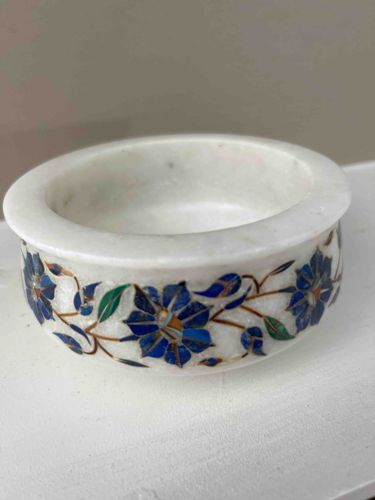
This is a hand-carved decorative bowl crafted from white Makrana marble, featuring traditional 'Parchin Kari' or Pietra Dura inlay work. The bowl is circular with a thick, rounded rim and a low profile. The exterior is ornately decorated with a continuous floral vine motif. The flowers are primarily composed of vibrant blue semi-precious stones, likely Lapis Lazuli or similar composites, accented with orange centers and green malachite-style leaves. The stems are finely inlaid with thin strips of brown stone. The craftsmanship indicates a high level of skill, with the semi-precious stones precisely cut and fitted into the marble surface without visible gaps, characteristic of traditional artisans from Agra, India. The marble itself shows a fine grain with some natural greyish-beige inclusions. In terms of condition, the piece appears well-preserved with no major chips or cracks visible on the rim or the body, though there is a slight dullness to the polish suggesting some age or light surface handling. This style is inspired by the legendary architecture of the Taj Mahal and likely dates from the late 20th century to the present day. It serves as both a functional dish and a significant piece of Indian decorative art.
AI-Generated Appraisal Disclaimer
Estimated Value
$450 - $650
Basic Information
Category
Decorative Arts / Stoneware
Appraised On
March 13, 2026
Estimated Value
$450 - $650
Item Description
This is a hand-carved decorative bowl crafted from white Makrana marble, featuring traditional 'Parchin Kari' or Pietra Dura inlay work. The bowl is circular with a thick, rounded rim and a low profile. The exterior is ornately decorated with a continuous floral vine motif. The flowers are primarily composed of vibrant blue semi-precious stones, likely Lapis Lazuli or similar composites, accented with orange centers and green malachite-style leaves. The stems are finely inlaid with thin strips of brown stone. The craftsmanship indicates a high level of skill, with the semi-precious stones precisely cut and fitted into the marble surface without visible gaps, characteristic of traditional artisans from Agra, India. The marble itself shows a fine grain with some natural greyish-beige inclusions. In terms of condition, the piece appears well-preserved with no major chips or cracks visible on the rim or the body, though there is a slight dullness to the polish suggesting some age or light surface handling. This style is inspired by the legendary architecture of the Taj Mahal and likely dates from the late 20th century to the present day. It serves as both a functional dish and a significant piece of Indian decorative art.
Get Your Items Appraised
Instant estimates of your treasures with AI-powered instant appraisals