AI Appraisal Estimate

AI-generated estimates · not official valuations

From the user

What was submitted

Photo and notes provided by the user — not generated by AI

Submitted item photo
Submitted photo · June 13, 2026

User's notes

No additional notes provided.

AI analysis below

AI appraisal

AI analysis & estimate

AI-Generated · Verify before acting

Everything below is generated by AI for informational purposes only. AI can make mistakes — the AI may misidentify items or misattribute them (artist, maker, brand, designer, origin, era). This is not an official valuation and should not be used for insurance, sale, tax, estate, legal, or lending purposes — or any decision requiring a certified appraisal. It is not an authoritative claim about any person, brand, or rights holder — do not share or rely on it as a factual statement about a third party. Always consult qualified professionals before making financial decisions.

Read the full disclaimer

AI Identification

·Not independently authenticated·Verify before acting

Vintage Lithographed Tin Turtle Clicker Toy

Vintage Toys and Collectibles

AI Estimated Value

·Not an official valuation·Verify before acting

$10 - $20

As of June 13, 2026

AI Item Analysis

·AI can make mistakes·Verify before acting
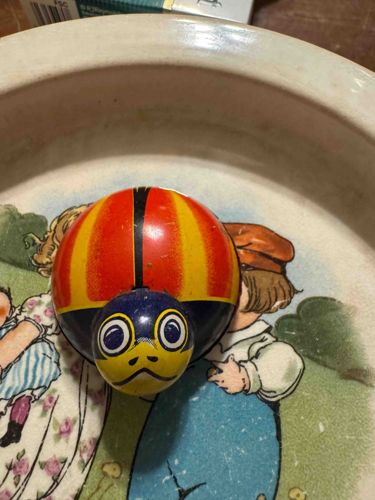
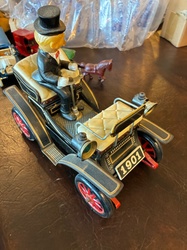
This item is a small, mid-20th-century novelty clicker toy, also known as a cricket, fashioned in the shape of a stylized turtle. It is constructed from thin, pressed tinplate (lithographed steel) with a spring-metal mechanism on the underside that produces a sharp clicking sound when pressed. The toy features vibrant lithographed graphics including a red and yellow striped shell divided by a central black line, a dark blue body, and a bright yellow face with large, exaggerated wide-set eyes and a simple mouth. The colors are characteristic of early to mid-century mass-produced toys, likely dating from the 1940s to the early 1960s. Physically, the item shows signs of age-appropriate wear including minor surface scratches on the dome of the shell, small areas of paint loss or chipping along the seam edges, and a light patina typical of vintage metal toys. There is no visible maker's mark in the top-down view, though these were frequently produced in Japan or Germany during the post-war era. The craftsmanship is simple but effective, utilizing tab-and-slot construction to secure the metal components. The item is resting within a ceramic dish featuring a transferware design of children, which provides a sense of the toy's small, handheld scale (approximately 1.5 to 2 inches in length).
AI Appraisal Report

·AI can make mistakes·Verify before acting
Based on my visual examination of this vintage lithographed tin turtle clicker, I date it to the mid-20th century, likely between 1945 and 1960. The piece appears to be an authentic 'cricket' noisemaker, a popular category of penny toys often produced in Japan or Germany for the export market. The lithography remains vibrant, showcasing the characteristic red and yellow striped shell and the whimsical facial features typical of the era's aesthetic. Condition is the primary driver of value for these mass-produced items. This example shows honest age wear; I note minor surface scratches on the shell's dome and expected paint loss along the crimson seams where the metal was folded. There is no significant rust visible on the lithographed side, though the underside mechanism would need inspection to confirm functionality and corrosion levels. The lack of a visible maker's mark (like 'Made in Japan' or a specific company logo like Kirby or Chein) slightly limits its premium potential compared to marked examples. Market demand for tin crickets remains steady but niche, appealing largely to general vintage toy enthusiasts rather than high-end investors. These were originally ephemeral, disposable items, so survival in decent condition is notable, yet they are not exceedingly rare. Comparables in this condition generally sell in the $10 to $20 range in online marketplaces or antique shops. To provide a definitive higher-end valuation, I would need to physically handle the item to test the 'click' mechanism's spring tension and inspect the underside for hidden manufacturer stamps. Without provenance indicating a unique origin, this remains a charming but common shelf piece.

Get your items appraised

Instant estimates of your treasures with AI-powered appraisals

Browse More Appraisals