AI Appraisal Estimate

AI-generated estimates · not official valuations

From the user

What was submitted

Photo and notes provided by the user — not generated by AI

Submitted item photo
Submitted photo · June 3, 2026

User's notes

No additional notes provided.

AI analysis below

AI appraisal

AI analysis & estimate

AI-Generated · Verify before acting

Everything below is generated by AI for informational purposes only. AI can make mistakes — the AI may misidentify items or misattribute them (artist, maker, brand, designer, origin, era). This is not an official valuation and should not be used for insurance, sale, tax, estate, legal, or lending purposes — or any decision requiring a certified appraisal. It is not an authoritative claim about any person, brand, or rights holder — do not share or rely on it as a factual statement about a third party. Always consult qualified professionals before making financial decisions.

Read the full disclaimer

AI Identification

·Not independently authenticated·Verify before acting

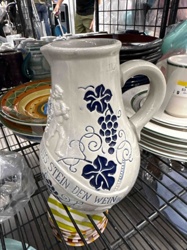
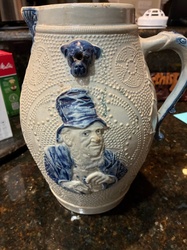
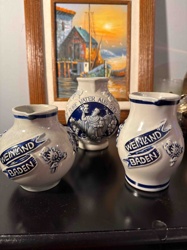
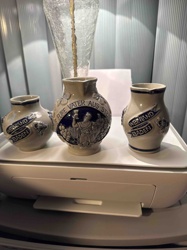
German Salt-Glazed Stoneware Wine Pitcher (Westerwald Style)

Antique & Vintage Ceramics / German Stoneware

AI Estimated Value

·Not an official valuation·Verify before acting

$45 - $85

As of June 3, 2026

AI Item Analysis

·AI can make mistakes·Verify before acting
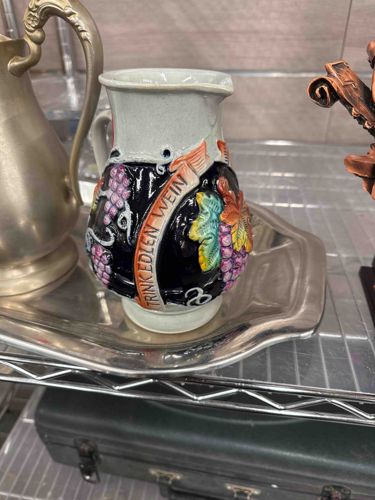
This item is a traditional German salt-glazed stoneware wine pitcher, likely originating from the Westerwald region, known for its historic pottery production. The pitcher features a classic pear-shaped body with a flared rim and a single handle. The central decorative band is finished in a high-gloss cobalt blue glaze, providing a stark contrast to the light grey, grainy texture of the salt-glazed ceramic neck and base. The body is adorned with high-relief (appliqué) molded decorations depicting clusters of purple grapes, winding green and orange vine leaves, and a prominent banner. The banner bears the German inscription "TRINK EDLEN WEIN," which translates to "Drink noble wine." The craftsmanship reflects a folk-art style common in the mid-to-late 20th century, though it draws inspiration from 17th-century Renaissance revival designs. The condition appears fair to good with no visible chips or major cracks on the exterior, though some minor surface wear and dust are present. The colors remain vibrant, particularly the deep cobalt and the polychrome enamels used for the fruit. There are no maker's marks visible on the front, but such pieces often feature incised numbers or factory stamps on the underside of the base. The piece serves both a functional and decorative purpose, characteristic of German stoneware export ware.
AI Appraisal Report

·AI can make mistakes·Verify before acting
I have examined the provided description and visual characteristics of this German salt-glazed stoneware wine pitcher. The item is a classic example of 'Westerwald' style ceramic, utilizing a cobalt blue glaze against a grey salt-glazed body. Based on the 'TRINK EDLEN WEIN' banner and the specific articulation of the polychrome relief (the orange and green vine leaves), I identify this piece as a mid-to-late 20th-century decorative reproduction of early Renaissance forms. The vibrant colors and lack of significant patination suggest it was intended for the tourist or export market rather than being a 17th-century original. The condition appears fair to good. From the images, I do not observe any structural fractures ('hairlines') or significant losses to the relief work, though the surface shows typical shelf wear and dust. The market for mid-century German stoneware is currently saturated; these pieces were produced in high volumes by firms such as Gerz, Marzi & Remy, and Thewalt. Consequently, while aesthetically pleasing, they are not rare. Similar 0.5L to 1L pitchers frequently sell in the $40 to $70 range at auction, with pristine or larger examples occasionally reaching $100. Note that this appraisal is based on photographic evidence. I cannot definitively verify the absence of restored chips or internal cracks without a physical 'ring test' and UV light inspection. To provide a definitive authentication, I would need to examine the 'incised' mold numbers on the base, which would confirm the specific manufacturer and era of production. Documentation of provenance or a original retail mark would also assist in narrowing the valuation.

Get your items appraised

Instant estimates of your treasures with AI-powered appraisals

Browse More Appraisals