Vintage German Porta Nigra Westerwald Style Ceramic Beer Stein
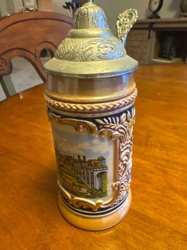
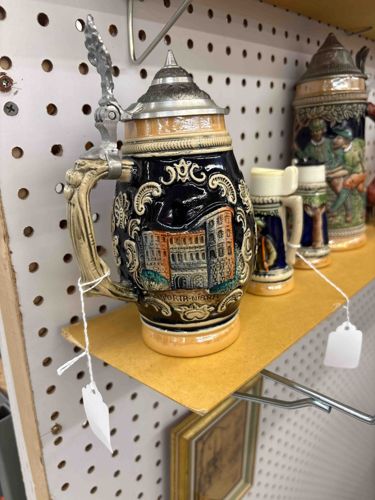
A decorative ceramic beer stein featuring a prominent relief depiction of the Porta Nigra in Trier, Germany. This vessel is crafted in the classic Westerwald style with a deep cobalt blue high-gloss background, accented by earthy ochre/beige tones on the rim, base, and relief carvings. The central scene shows the Roman city gate with detailed architectural textures, inscribed below with 'PORTA-NIGRA'. Flanking the image are intricate cream-colored floral and scrollwork flourishes. The stein is equipped with a conical, domed pewter lid featuring an ornate thumb lift and decorative metal banding attached to a branched, textured ceramic handle. Judging by the style and wear, this piece likely dates to the mid-20th century. The glaze appears largely intact with no visible large cracks or chips, though there is a slight natural patina and minor oxidation on the pewter lid consistent with age. The craftsmanship exhibits typical mass-produced quality from the post-WWII German souvenir market, though it maintains a sturdy, high-relief aesthetic characteristic of Traditional German stoneware.

AI-Generated Appraisal Disclaimer
Estimated Value
$35.00 - $60.00
Basic Information
Category
Collectibles - Breweriana & Barware
Appraised On
January 10, 2026
Estimated Value
$35.00 - $60.00
Item Description
A decorative ceramic beer stein featuring a prominent relief depiction of the Porta Nigra in Trier, Germany. This vessel is crafted in the classic Westerwald style with a deep cobalt blue high-gloss background, accented by earthy ochre/beige tones on the rim, base, and relief carvings. The central scene shows the Roman city gate with detailed architectural textures, inscribed below with 'PORTA-NIGRA'. Flanking the image are intricate cream-colored floral and scrollwork flourishes. The stein is equipped with a conical, domed pewter lid featuring an ornate thumb lift and decorative metal banding attached to a branched, textured ceramic handle. Judging by the style and wear, this piece likely dates to the mid-20th century. The glaze appears largely intact with no visible large cracks or chips, though there is a slight natural patina and minor oxidation on the pewter lid consistent with age. The craftsmanship exhibits typical mass-produced quality from the post-WWII German souvenir market, though it maintains a sturdy, high-relief aesthetic characteristic of Traditional German stoneware.

Get Your Items Appraised
Instant estimates of your treasures with AI-powered instant appraisals