AI Appraisal Estimate

AI-generated estimates · not official valuations

From the user

What was submitted

Photo and notes provided by the user — not generated by AI

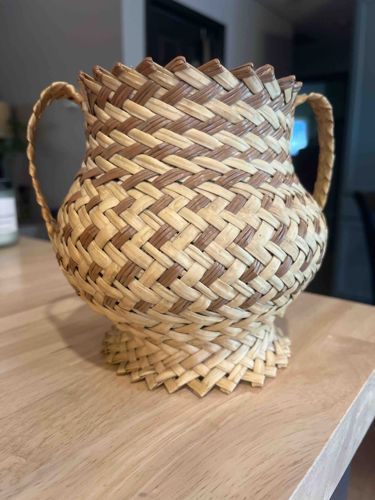
Submitted item photo
Submitted photo · May 28, 2026

User's notes

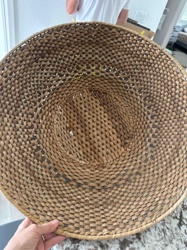
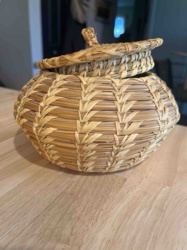
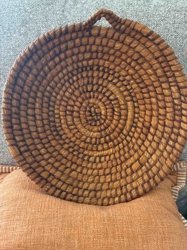
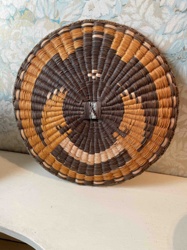
handwoven basket designed and crafted by the Tarahumara Indians of Barranca del Cobre, a region in Mexico known for its unique location and one of North America’s last aboriginal tribes. The basket is made with only local materials, as noted on the accompanying label, and features a distinctive woven pattern with two handles, showcasing traditional craftsmanship. 6 inches tall and 7 inches wide (including handles)

AI analysis below

AI appraisal

AI analysis & estimate

AI-Generated · Verify before acting

Everything below is generated by AI for informational purposes only. AI can make mistakes — the AI may misidentify items or misattribute them (artist, maker, brand, designer, origin, era). This is not an official valuation and should not be used for insurance, sale, tax, estate, legal, or lending purposes — or any decision requiring a certified appraisal. It is not an authoritative claim about any person, brand, or rights holder — do not share or rely on it as a factual statement about a third party. Always consult qualified professionals before making financial decisions.

Note

This analysis also relies on unverified notes provided by the user, which may be incomplete or inaccurate and could affect the result.

Read the full disclaimer

AI Identification

·Not independently authenticated·Verify before acting

Tarahumara Handwoven Basket

Basketry

AI Estimated Value

·Not an official valuation·Verify before acting

$100-150

As of May 28, 2026

AI Item Analysis

·AI can make mistakes·Verify before acting
This is a handwoven basket crafted by the Tarahumara Indians of Barranca del Cobre, Mexico. The basket is constructed entirely from local plant fibers, as indicated by the accompanying label. It features a bulbous body tapering down to a narrower foot and flares outward at the rim. The intricate weaving exhibits a diagonal pattern alternating between light tan and reddish-brown fibers, creating a visually appealing design around the upper portion and the majority of the body. The base is woven with a similar pattern but with a more tightly packed, radiating design culminating in a decorative, serrated edge. Two handles, also woven from the same fibers, are attached to the upper body of the basket, offering a functional element. The overall condition appears very good with no obvious signs of significant wear, damage, or repairs visible in the provided image. The natural materials exhibit a soft patina consistent with a handcrafted item made from plant matter. The craftsmanship is evident in the tight, consistent weave and the well-formed shape of the basket, highlighting traditional Tarahumara techniques. The piece measures approximately 6 inches in height and 7 inches in width, including the handles. Its origin with the Tarahumara people, one of North America's last aboriginal tribes in a unique region, adds significant cultural and historical context.
AI Appraisal Report

·AI can make mistakes·Verify before acting
Upon examining the provided images and description of this Tarahumara handwoven basket, I can attest to its fine craftsmanship and cultural significance. The item presents in very good condition, with a tight, consistent weave and no apparent damage, breakage, or repairs. The alternating light tan and reddish-brown fibers create a classic, aesthetically pleasing diagonal pattern characteristic of Tarahumara basketry from the Barranca del Cobre region. The use of local plant fibers, as noted on the label, is consistent with traditional practices and adds to its authenticity. The basket's form, featuring a bulbous body and two woven handles, is typical and well-executed. Its value is supported by a steady market for authentic Native American and Mexican folk art. Similar contemporary Tarahumara baskets of this size and quality typically sell in the $75 to $150 range in galleries and online marketplaces specializing in ethnographic arts. The primary value driver is its excellent condition and clear representation of a traditional craft. It is important to note that this appraisal is based on digital images alone. A definitive authentication would require in-person examination to assess the fiber's age and specific type, as well as any provenance documentation that would confirm its origin and history, which could potentially increase its value.

Get your items appraised

Instant estimates of your treasures with AI-powered appraisals

Browse More Appraisals