AI estimate as of August 13, 2025 · verify with a professional before acting
AI-Generated · Verify before acting
Everything on this page is generated by AI for informational purposes only. AI can make mistakes — the AI may misidentify items or misattribute them (artist, maker, brand, designer, origin, era). This is not an official valuation and should not be used for insurance, sale, tax, estate, legal, or lending purposes — or any decision requiring a certified appraisal. It is not an authoritative claim about any person, brand, or rights holder — do not share or rely on it as a factual statement about a third party. Always consult qualified professionals before making financial decisions.
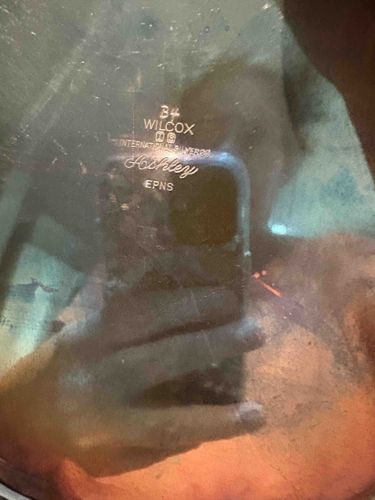
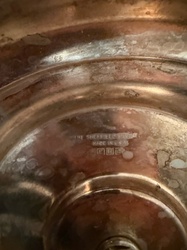
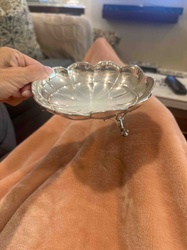
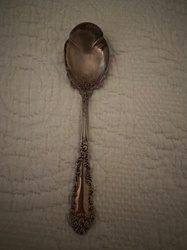
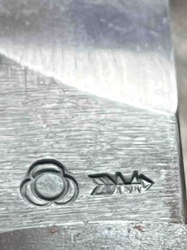
The image displays the underside or base of a metalware item, likely a tray, bowl, or serving dish, given the impression of a reflective surface and the presence of identifying marks. The primary material is identifiable as electroplated nickel silver (EPNS), indicated by the 'EPNS' stamp, suggesting a silver-plated base metal composition. The surface exhibits a metallic sheen, characteristic of silver or silverplate, but also shows significant signs of wear, including numerous scratches, scuffs, and possibly some tarnishing or discoloration, giving it a somewhat dull and aged appearance. The reflection of a hand and what appears to be a cell phone clearly visible on the surface suggests a highly reflective finish, albeit one that has lost some of its original luster due to superficial damage. The visible manufacturing details are crucial for identification: 'B4', 'WILCOX', the International Silver Company's logo (a circle with 'IS' intertwined and 'INTERNATIONAL SILVER CO.' below), and the pattern name 'Ashley' in a cursive script. 'Wilcox' refers to the Wilcox Silver Plate Co., which later became part of the International Silver Company. The presence of 'B4' might denote a specific model number, size, or production batch. The font of 'Ashley' in a cursive style indicates a particular pattern series from the manufacturer. Based on these markings, the item likely dates from the early to mid-20th century, a period when International Silver Co. was a prolific producer of silver-plated goods. The craftsmanship appears to be standard for mass-produced silverplate of that era, valuing utility and decorative appeal. The overall condition, while showing cosmetic wear, does not reveal major structural damage like dents or cracks, though severe plating loss cannot be fully assessed without a clearer view.
AI Appraisal Report
Upon examining the provided image of the Wilcox 'Ashley' Pattern EPNS Silverplate item, I can confirm its authenticity based on the clear manufacturer's marks: 'WILCOX', the 'IS' logo of International Silver Co., and the 'Ashley' pattern name. The 'EPNS' stamp further identifies the material as electroplated nickel silver. The 'B4' mark likely signifies a model or batch number. The item appears to be in fair condition. While it retains its reflective quality, as evidenced by the clear reflection of a hand and phone, there are numerous surface scratches, scuffs, and a general dullness indicating significant cosmetic wear and probable plating loss, though the extent of the latter cannot be fully assessed from a single image. There are no apparent major structural damages like dents or cracks.
In terms of market conditions, silverplate from the early to mid-20th century, particularly common patterns like 'Ashley', generally holds modest value. Demand is present but not high, primarily from collectors or individuals seeking vintage decorative pieces. Rarity is low as these items were mass-produced. Factors significantly impacting value include the extent of silver plating loss, which can drastically reduce desirability, and significant polishing marks.
My appraisal is limited by the visual nature of the examination. A physical inspection would be crucial to determine the true extent of plating loss, assess for any hidden damage, and confirm the item's weight and gauge, which can slightly influence value. Provenance documentation would be beneficial but is rarely available or necessary for items of this type and value range. No scientific testing is typically required for authentication of such common silverplate.