AI Appraisal Estimate

AI-generated estimates · not official valuations

From the user

What was submitted

Photo and notes provided by the user — not generated by AI

Submitted item photo
Submitted photo · May 27, 2026

User's notes

No additional notes provided.

AI analysis below

AI appraisal

AI analysis & estimate

AI-Generated · Verify before acting

Everything below is generated by AI for informational purposes only. AI can make mistakes — the AI may misidentify items or misattribute them (artist, maker, brand, designer, origin, era). This is not an official valuation and should not be used for insurance, sale, tax, estate, legal, or lending purposes — or any decision requiring a certified appraisal. It is not an authoritative claim about any person, brand, or rights holder — do not share or rely on it as a factual statement about a third party. Always consult qualified professionals before making financial decisions.

Read the full disclaimer

AI Identification

·Not independently authenticated·Verify before acting

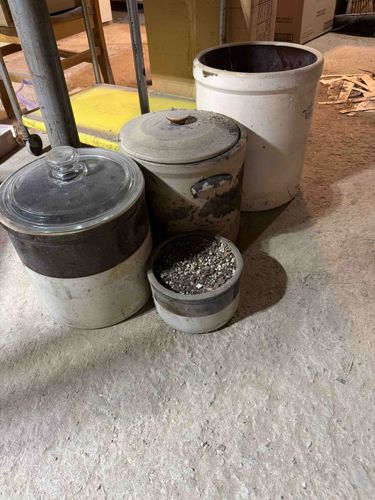
Collection of Vintage Salt-Glazed Stoneware Crocks

Antique Utilitarian Stoneware

AI Estimated Value

·Not an official valuation·Verify before acting

$225.00-$350.00

As of May 27, 2026

AI Item Analysis

·AI can make mistakes·Verify before acting
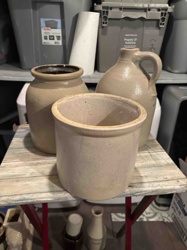
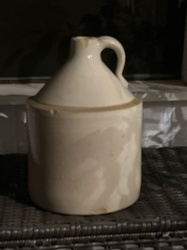
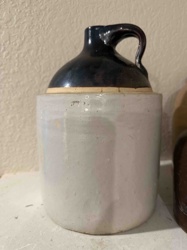
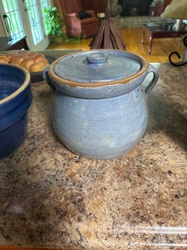
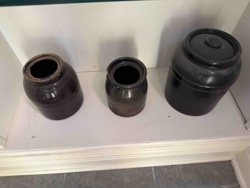
This is a grouping of four vintage American stoneware crocks of varying sizes and styles, typical of domestic utilitarian pottery from the late 19th to early 20th centuries. The largest vessel is a tall, white salt-glazed open crock with a dark brown Albany-slip interior. Adjacent to it are two medium-sized crocks; one features a two-tone design with a rich brown glaze on the upper shoulder and a cream base, topped with a contemporary or replacement clear glass lid. The other medium crock is a classic cylindrical form with integrated handles and a matching stoneware lid, showing significant surface dirt and possible mineral deposits. A smaller, shallow stoneware bowl with a dark rim sits in the foreground, currently filled with what appears to be gravel or potting soil. The pieces exhibit a salt-glazed finish, characterized by a 'pitted' or orange-peel texture. Condition varies across the set: the lidded stoneware crock shows heavy surface grim and staining, while the glass-lidded piece appears relatively cleaner but with visible surface wear and scuffing on the cream base. The largest open crock shows minor rim chips common for its age. These items represent classic mid-western or eastern US pottery manufacturing, though specific maker's marks are not visible from this angle. Their heavy construction and thick walls indicate durable craftsmanship intended for food preservation such as pickling or salted meats.
AI Appraisal Report

·AI can make mistakes·Verify before acting
Upon visual examination of this four-piece collection of American utilitarian stoneware, I have determined these to be authentic late 19th-century to early 20th-century domestic vessels. The set represents a typical cross-section of rural kitchenware, featuring both slip-glazed and salt-glazed finishes. The two-tone shoulder jug style and the Albany-slip interiors are hallmarks of Midwestern production, likely from centers like Red Wing or Ohio-based potteries. The condition is fair to good; while the heavy grime on the lidded cylindrical crock suggests it has been stored in an outbuilding, the integrity of the clay appears sound. Common rim chipping on the open crock and the use of a non-original glass lid on the cream-and-brown jar are factors that modestly suppress the collective value. In the current market, decorative demand for 'farmhouse' aesthetics remains steady, though values for unmarked pieces have plateaued compared to pieces with cobalt floral decorations or 'blue stamps.' Comparables for unmarked, undecorated crocks of these sizes typically range from $40 to $120 per piece depending on the presence of matching lids. Limitations of this digital appraisal include the inability to inspect the bases for manufacturer stamps or hair-line fractures that are often invisible under surface dirt. A full authentication would require cleaning the surfaces to inspect for 'spider cracks' and a physical examination of the rim seats to determine if the stoneware lid is original to the crock. Provenance regarding the geographical origin would further refine the valuation, as specific regional glazes can command premiums from local collectors.

Get your items appraised

Instant estimates of your treasures with AI-powered appraisals

Browse More Appraisals