Lower Paleolithic Style Chert Biface Hand Axe / Scraper
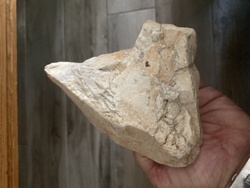
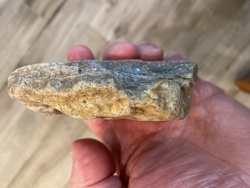
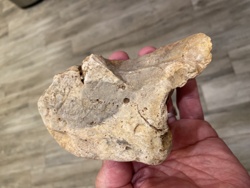
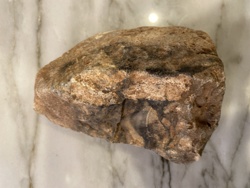
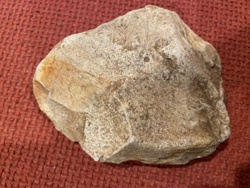
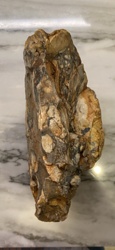
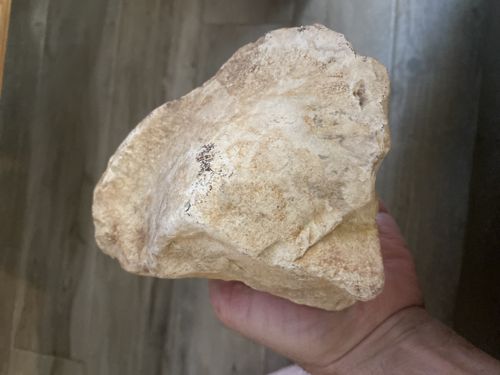
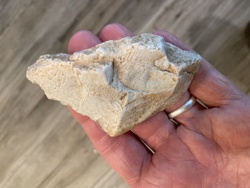
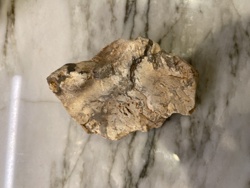
This is a substantial lithic specimen identified as a biface hand axe and scraper tool, measuring approximately 5 inches by 5 inches. The item is crafted from a light cream to tan-colored chert, showcasing a matte, unpolished surface typical of raw sedimentary silicate stones found in North America. Its physical construction is characterized by percussion flaking along the margins to create a functional cutting or scraping edge. The tool features a bulky, ergonomic shape designed for a hand-held grip, with one side displaying more intentional thinning than the other. Visible on the surface are distinct bulbous percussion points and conchoidal fracture scars, though the edges appear significantly weathered. Significant surface patina and mineralization are evident, including dark dendritic-like inclusions and staining, likely resulting from long-term burial in acidic or mineral-rich Oklahoma soil. While the tool shows signs of heavy use-wear and blunt edges consistent with a scraper-type implement, it lacks the refined pressure flaking seen in later Neolithic periods, aligning it with Lower Paleolithic production styles. There are no modern tool marks or signatures, which is expected for an artifact of this age. The overall craftsmanship reflects a utilitarian focus, utilized for heavy tasks such as butchering or hide preparation.
AI-Generated Appraisal Disclaimer
Estimated Value
$150 - $300
Basic Information
Category
Archaeological Artifacts / Prehistoric Stone Tools
Appraised On
February 19, 2026
Estimated Value
$150 - $300
Additional Details Provided By Owner
User Provided Information
Lower Paleolithic Chert Bi face Hand axe scraper tool found in Guthrie OK measuring 5" x 5"
Item Description
This is a substantial lithic specimen identified as a biface hand axe and scraper tool, measuring approximately 5 inches by 5 inches. The item is crafted from a light cream to tan-colored chert, showcasing a matte, unpolished surface typical of raw sedimentary silicate stones found in North America. Its physical construction is characterized by percussion flaking along the margins to create a functional cutting or scraping edge. The tool features a bulky, ergonomic shape designed for a hand-held grip, with one side displaying more intentional thinning than the other. Visible on the surface are distinct bulbous percussion points and conchoidal fracture scars, though the edges appear significantly weathered. Significant surface patina and mineralization are evident, including dark dendritic-like inclusions and staining, likely resulting from long-term burial in acidic or mineral-rich Oklahoma soil. While the tool shows signs of heavy use-wear and blunt edges consistent with a scraper-type implement, it lacks the refined pressure flaking seen in later Neolithic periods, aligning it with Lower Paleolithic production styles. There are no modern tool marks or signatures, which is expected for an artifact of this age. The overall craftsmanship reflects a utilitarian focus, utilized for heavy tasks such as butchering or hide preparation.
Related Tags
Get Your Items Appraised
Instant estimates of your treasures with AI-powered instant appraisals