AI Appraisal Estimate

AI-generated estimates · not official valuations

From the user

What was submitted

Photo and notes provided by the user — not generated by AI

Submitted item photo
Submitted photo · June 25, 2026

User's notes

125 year old Chinese carved cedar chest

AI analysis below

AI appraisal

AI analysis & estimate

AI-Generated · Verify before acting

Everything below is generated by AI for informational purposes only. AI can make mistakes — the AI may misidentify items or misattribute them (artist, maker, brand, designer, origin, era). This is not an official valuation and should not be used for insurance, sale, tax, estate, legal, or lending purposes — or any decision requiring a certified appraisal. It is not an authoritative claim about any person, brand, or rights holder — do not share or rely on it as a factual statement about a third party. Always consult qualified professionals before making financial decisions.

Note

This analysis also relies on unverified notes provided by the user, which may be incomplete or inaccurate and could affect the result.

Read the full disclaimer

AI Identification

·Not independently authenticated·Verify before acting

Late Qing Dynasty Carved Camphor or Cedar Chest

Antique Furniture / East Asian Art

AI Estimated Value

·Not an official valuation·Verify before acting

$1,200 - $1,800 USD

As of June 25, 2026

AI Item Analysis

·AI can make mistakes·Verify before acting
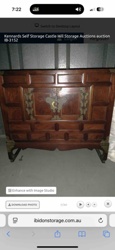
This is a large, rectangular Chinese storage chest, traditionally used for linens and dowries, estimated to date from the late 19th century (Late Qing Dynasty, circa 1890-1900). The piece is constructed from solid aromatic wood, likely cedar or camphorwood, known for its insect-repellent properties. The exterior is heavily embellished with deep, hand-carved relief panels featuring traditional Chinese motifs, which typically include scenic landscapes, floral patterns, or mythological narratives. The wood exhibits a dark, rich browning of the grain, likely enhanced by a historical lacquer or shellac finish that has developed a deep patina over various decades. Centered on the front face is a traditional brass butterfly or circular-shaped escutcheon plate intended for a padlock. The cabinetry shows robust joinery consistent with the period, though the current lighting obscures finer details of the lid's edge. Regarding condition, the chest appears structurally sound, though there is visible surface wear to the finish on the top edges, and the wood shows general signs of age consistent with a 125-year-old utilitarian object. The deep carvings appear largely intact with some possible dust accumulation in the crevices, which is typical for items of this vintage. Currently, the top is protected by a clear plastic cover and a white lace doily, suggesting its use as a display surface in a residential setting.
AI Appraisal Report

·AI can make mistakes·Verify before acting
I have conducted a visual inspection of this Late Qing Dynasty relief-carved camphorwood/cedar chest. Based on the deep relief carving techniques and the specific oxidation of the grain, the piece appears to be a genuine export-style dowry chest dating to circa 1890-1910. The craftsmanship reflects the high-demand period of the late 19th-century trade, featuring classic motifs likely representing the 'Twelve Views of the West Lake' or similar mythological narratives. The brass hardware appears period-correct, showing a natural aged patina rather than chemical stripping. The condition is generally good; while top-surface wear and finish thinning are evident on the lid edges, the structural integrity of the joinery remains robust. Market demand for such chests remains steady, though values have softened from their 1990s peak. Current collectors prioritize deep, multi-layered carvings and original aromatic scent. Comparables for chests of this size and carving depth typically range from $1,000 to over $2,500 depending on the complexity of the narrative scenes. Limitations of this appraisal: A photograph cannot confirm wood density or the presence of interior trays, nor can it identify modern chemical sealants that may have been applied to 'refresh' the finish. Full authentication would require a tactile search for hand-planing marks on the interior floor and the characteristic 'pungent' aroma of aged camphor. Provenance documentation, such as original maritime receipts or family records of acquisition, would significantly bolster the valuation. If the carvings are found to be machine-assisted upon physical inspection, the valuation would drop 40%.

Get your items appraised

Instant estimates of your treasures with AI-powered appraisals

Browse More Appraisals