Ficus Benjamina Bonsai Style Potted Plant
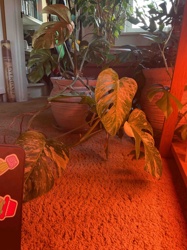
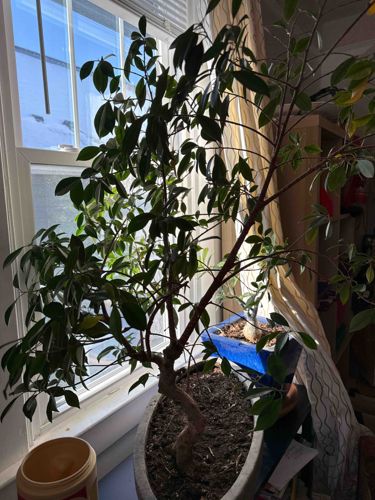
This is a large, indoor potted plant identified as a Ficus benjamina, commonly known as a Weeping Fig, cultivated with a distinctive gnarled, singular trunk typical of basic bonsai styling. The plant features a thick, light-brown woody trunk with a gentle S-curve (moyogi style) that tapers as it ascends into a multi-branched canopy. The leaves are ovate with acuminate tips, displaying a deep glossy green hue. It is housed in an oval, light-grey unglazed or matte-finished concrete or ceramic planter that appears to measure approximately 15-20 inches in length. The potting medium is a dark, organic soil mixture. The plant shows significant growth, with thin secondary branches extending towards the light source, indicating a healthy but somewhat leggy condition that may require pruning to maintain a tight bonsai aesthetic. Some slight yellowing is visible on distant leaves, which is common for this species when reacting to environmental changes. No significant pests or mechanical damage are immediately visible on the bark or foliage. The craftsmanship of the initial trunk training suggests commercial bonsai production rather than competition-grade specimen training, likely aged between 5 to 10 years based on trunk girth and bark texture.
AI-Generated Appraisal Disclaimer
Estimated Value
$150 - $225
Basic Information
Category
Horticultural / Indoor Plants
Appraised On
February 1, 2026
Estimated Value
$150 - $225
Item Description
This is a large, indoor potted plant identified as a Ficus benjamina, commonly known as a Weeping Fig, cultivated with a distinctive gnarled, singular trunk typical of basic bonsai styling. The plant features a thick, light-brown woody trunk with a gentle S-curve (moyogi style) that tapers as it ascends into a multi-branched canopy. The leaves are ovate with acuminate tips, displaying a deep glossy green hue. It is housed in an oval, light-grey unglazed or matte-finished concrete or ceramic planter that appears to measure approximately 15-20 inches in length. The potting medium is a dark, organic soil mixture. The plant shows significant growth, with thin secondary branches extending towards the light source, indicating a healthy but somewhat leggy condition that may require pruning to maintain a tight bonsai aesthetic. Some slight yellowing is visible on distant leaves, which is common for this species when reacting to environmental changes. No significant pests or mechanical damage are immediately visible on the bark or foliage. The craftsmanship of the initial trunk training suggests commercial bonsai production rather than competition-grade specimen training, likely aged between 5 to 10 years based on trunk girth and bark texture.
Related Tags
Get Your Items Appraised
Instant estimates of your treasures with AI-powered instant appraisals