AI Appraisal Estimate

AI-generated estimates · not official valuations

From the user

What was submitted

Photo and notes provided by the user — not generated by AI

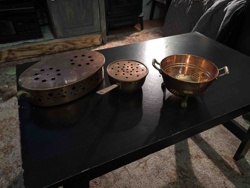
Submitted item photo
Submitted photo · June 12, 2026

User's notes

No additional notes provided.

AI analysis below

AI appraisal

AI analysis & estimate

AI-Generated · Verify before acting

Everything below is generated by AI for informational purposes only. AI can make mistakes — the AI may misidentify items or misattribute them (artist, maker, brand, designer, origin, era). This is not an official valuation and should not be used for insurance, sale, tax, estate, legal, or lending purposes — or any decision requiring a certified appraisal. It is not an authoritative claim about any person, brand, or rights holder — do not share or rely on it as a factual statement about a third party. Always consult qualified professionals before making financial decisions.

Read the full disclaimer

AI Identification

·Not independently authenticated·Verify before acting

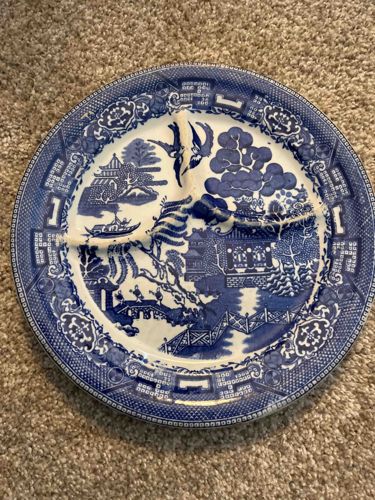
Blue Willow Pattern Divided Grill Plate

Antique and Vintage Kitchenware

AI Estimated Value

·Not an official valuation·Verify before acting

$10 - $20

As of June 12, 2026

AI Item Analysis

·AI can make mistakes·Verify before acting
This is a circular ceramic grill plate featuring the classic Blue Willow Chinoiserie pattern. The central design includes traditional iconography such as the two doves in flight, a willow tree, a bridge with three figures, a pagoda, and a small boat, all rendered in a deep cobalt blue transfer print on a white earthenware body. The plate is divided into three sections by raised ceramic ridges, a design characteristic of the mid-20th century typically used for serving separate portions of food. The rim is decorated with an intricate geometric and floral border involving butterfly and fret motifs. Physically, the glaze appears glossy but shows signs of age-related wear, including some scratching on the surface and minor glaze loss or roughness along the dividing ridges. There is a significant visible hairline crack or repair extending from the right side towards the center ridge, which impacts the structural integrity and value. The craftsmanship suggests a mass-produced piece from a manufacturer like Churchill or Johnson Brothers, likely dating from the 1940s to 1960s. The transfer application shows slight misalignment typical of vintage production methods.
AI Appraisal Report

·AI can make mistakes·Verify before acting
Upon examining the images of this Blue Willow divided grill plate, I observe a classic mid-20th-century piece, likely produced by an English Staffordshire pottery such as Johnson Brothers, Churchill, or a similar manufacturer, dating to the 1940s-1960s. The transfer printing displays the standard 'Willow' narrative elements—pagoda, bridge, and doves—rendered in a deep cobalt blue. The three-section divided form is characteristic of post-war dining trends, often marketed as 'grill plates' or 'TV plates.' Condition is the primary factor limiting the value of this specific piece. While the glaze retains some gloss, the significant hairline crack or repair extending from the rim toward the center ridge is a critical flaw. In the world of collected ceramics, structural damage of this magnitude typically reduces value by 70-90%. Additionally, the noted surface scratching and glaze roughness on the ridges indicate heavy utilitarian use. While Blue Willow is one of the most collected patterns in history, its ubiquity means only pristine, rare, or very early examples command high prices. Divided plates are moderately desirable as nostalgic items, but supply far exceeds demand. Comparable examples in mint condition generally sell between $25 and $45; however, damaged examples have negligible commercial value and serve primarily as study pieces or sentimental decor. To confirm the specific manufacturer and precise date, I would need to physically inspect the backstamp on the underside, which is not visible here. Without this, I am valuing it based on generic Staffordshire production standards. From images alone, I cannot detect restoration that might be hidden by UV light, but the visible damage renders further testing financially completely unnecessary.

Get your items appraised

Instant estimates of your treasures with AI-powered appraisals

Browse More Appraisals