Middle Paleolithic Mousterian Biface Hand Axe Scraper
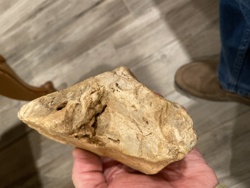
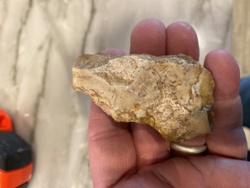
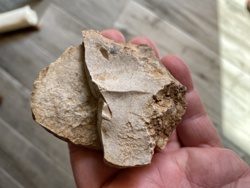
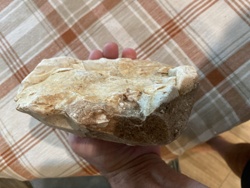
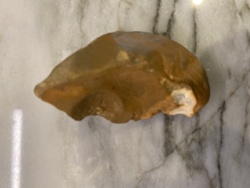
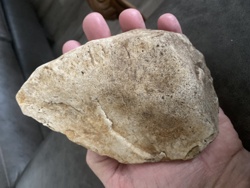
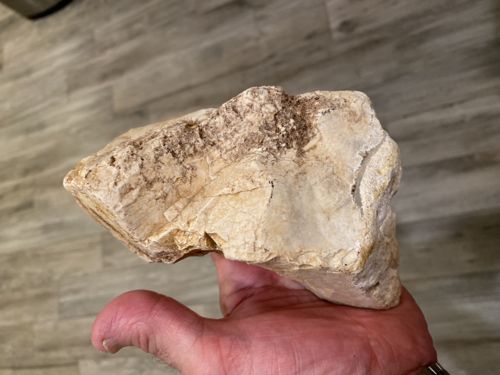
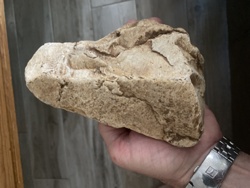
This artifact is a lithic biface tool, identified as a hand axe or scraper, measuring approximately 5 inches by 4 inches. Crafted from a high-silica stone, likely chert or a similar lithic material found in the Guthrie, Oklahoma area, the item exhibits an off-white to creamy tan coloration with significant dark brown mineral staining and patina across its upper dorsal surface. The tool is bifacially worked, showing evidence of intentional percussion flaking to create sharp, functional edges. Its morphology features a sub-triangular to ovate shape with a thick, robust butt for hand gripping and a tapered working edge. Visible condition indicators include heavy weathering, rounded edges from environmental exposure, and typical Neolithic/Paleolithic patina. While the 'Mousterian' label traditionally refers to European Neanderthal cultures, this North American find represents a similar utilitarian technology of Indigenous origin, likely an Archaic-period biface. The craftsmanship reflects an expedient but effective knapping technique, designed for heavy-duty cutting or scraping tasks. There are no modern tool marks or signatures, consistent with ancient lithic production.
AI-Generated Appraisal Disclaimer
Estimated Value
$150 - $250
Basic Information
Category
Prehistoric Artifacts / Lithic Tools
Appraised On
February 19, 2026
Estimated Value
$150 - $250
Additional Details Provided By Owner
User Provided Information
Middle Paleolithic Mousterian Bi face hand axe scraper tool found in Guthrie OK measuring 5" x 4"
Item Description
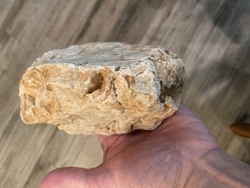
This artifact is a lithic biface tool, identified as a hand axe or scraper, measuring approximately 5 inches by 4 inches. Crafted from a high-silica stone, likely chert or a similar lithic material found in the Guthrie, Oklahoma area, the item exhibits an off-white to creamy tan coloration with significant dark brown mineral staining and patina across its upper dorsal surface. The tool is bifacially worked, showing evidence of intentional percussion flaking to create sharp, functional edges. Its morphology features a sub-triangular to ovate shape with a thick, robust butt for hand gripping and a tapered working edge. Visible condition indicators include heavy weathering, rounded edges from environmental exposure, and typical Neolithic/Paleolithic patina. While the 'Mousterian' label traditionally refers to European Neanderthal cultures, this North American find represents a similar utilitarian technology of Indigenous origin, likely an Archaic-period biface. The craftsmanship reflects an expedient but effective knapping technique, designed for heavy-duty cutting or scraping tasks. There are no modern tool marks or signatures, consistent with ancient lithic production.
Get Your Items Appraised
Instant estimates of your treasures with AI-powered instant appraisals