Anchor Hocking 'Philbe' Pattern Press-Glass Plate
Vintage Glassware / Kitchenware

Anchor Hocking 'Philbe' Pattern Press-Glass Plate

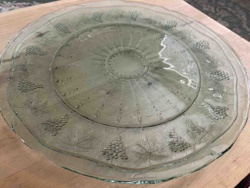
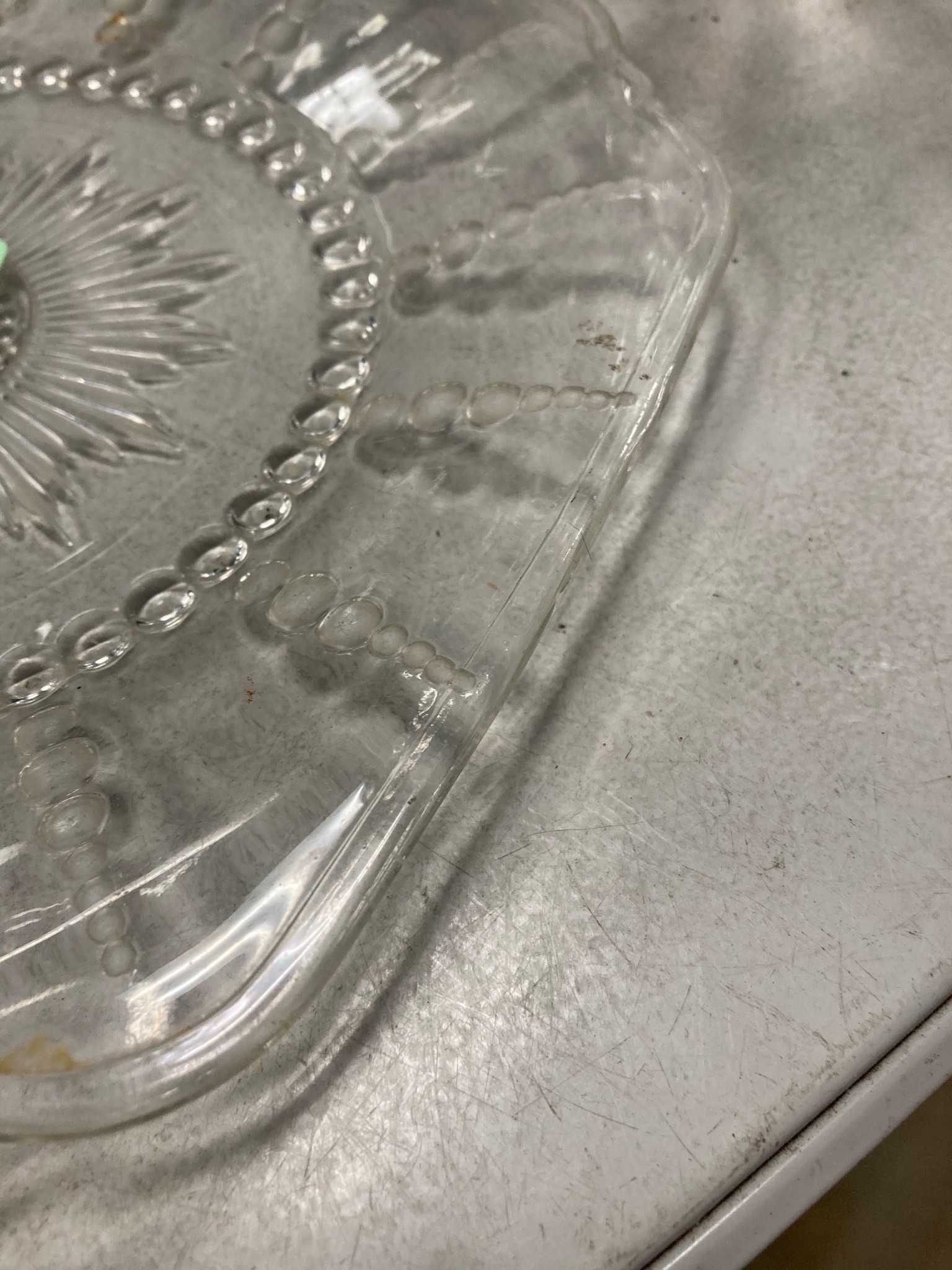
This is a vintage square-shaped plate made of thick, pressed clear glass, identified as the 'Philbe' pattern (also known as the Sapphire Blue or Crystal line) by Anchor Hocking. The plate features a complex molded design consisting of a central sunburst or starburst motif from which rays extend outward. Surrounding this central element is a circular band of beaded or 'hobnail' dots. Additional lines of graduated beads radiate toward the corners of the plate. The rim is gently scalloped with rounded corners, giving it a soft geometric silhouette. The glass displays a heavy, durable construction characteristic of mid-20th-century Depression-era or early post-war kitchenware (circa 1930s-1940s). The surface shows signs of age and use, including visible surface grime, some minor pitting, and light scratching consistent with table use. Small bubbles (seeds) within the glass indicate the mass-production pressing process used by Anchor Hocking. There are no visible maker marks on this section of the plate, which is typical for this pattern as branding was often omitted or placed on central bases.
Estimated Value

$10.00 - $18.00

Basic Information

Category

Vintage Glassware / Kitchenware

Appraised On

April 26, 2026

Estimated Value

$10.00 - $18.00

Additional Details Provided By Owner

User Provided Information

glass plate

Item Description

This is a vintage square-shaped plate made of thick, pressed clear glass, identified as the 'Philbe' pattern (also known as the Sapphire Blue or Crystal line) by Anchor Hocking. The plate features a complex molded design consisting of a central sunburst or starburst motif from which rays extend outward. Surrounding this central element is a circular band of beaded or 'hobnail' dots. Additional lines of graduated beads radiate toward the corners of the plate. The rim is gently scalloped with rounded corners, giving it a soft geometric silhouette. The glass displays a heavy, durable construction characteristic of mid-20th-century Depression-era or early post-war kitchenware (circa 1930s-1940s). The surface shows signs of age and use, including visible surface grime, some minor pitting, and light scratching consistent with table use. Small bubbles (seeds) within the glass indicate the mass-production pressing process used by Anchor Hocking. There are no visible maker marks on this section of the plate, which is typical for this pattern as branding was often omitted or placed on central bases.
Get Your Items Appraised

Instant estimates of your treasures with AI-powered instant appraisals

Browse More Appraisals